
Discover Water-Soluble Stabilizer: What It Is & Which Type to Use

Stitching on something tricky like knits, sheer fabrics, yarn, or even loose fibres like wool can be a challenge! I was amazed when I discovered that there is a product that will keep everything stable without leaving anything behind when you are done. That’s exactly what water-soluble stabilizer (WSS) does. It supports your work while you stitch… and then disappears with water, how great is that?! (I’ve given them quite the challenge projects!)
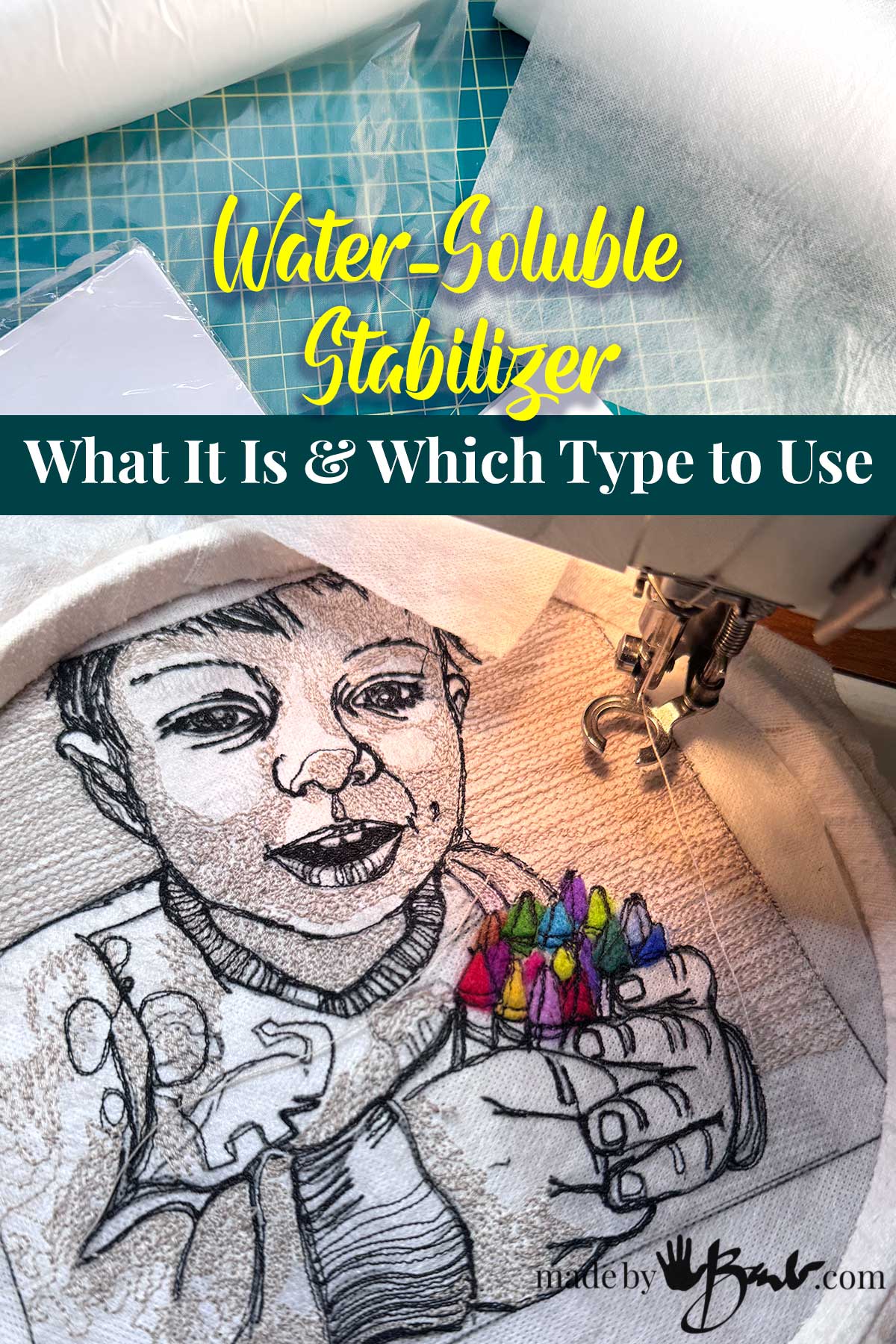
What Is Water-Soluble Stabilizer?
Water-soluble stabilizer is a temporary backing or topping used in sewing, embroidery, and fibre art that;
- Prevents stretching and distortion
- Keeps stitches crisp and even
- Holds delicate or textured surfaces in place
- Washes away completely when you’re done
It’s especially useful when you don’t want a permanent stabilizer inside your project.
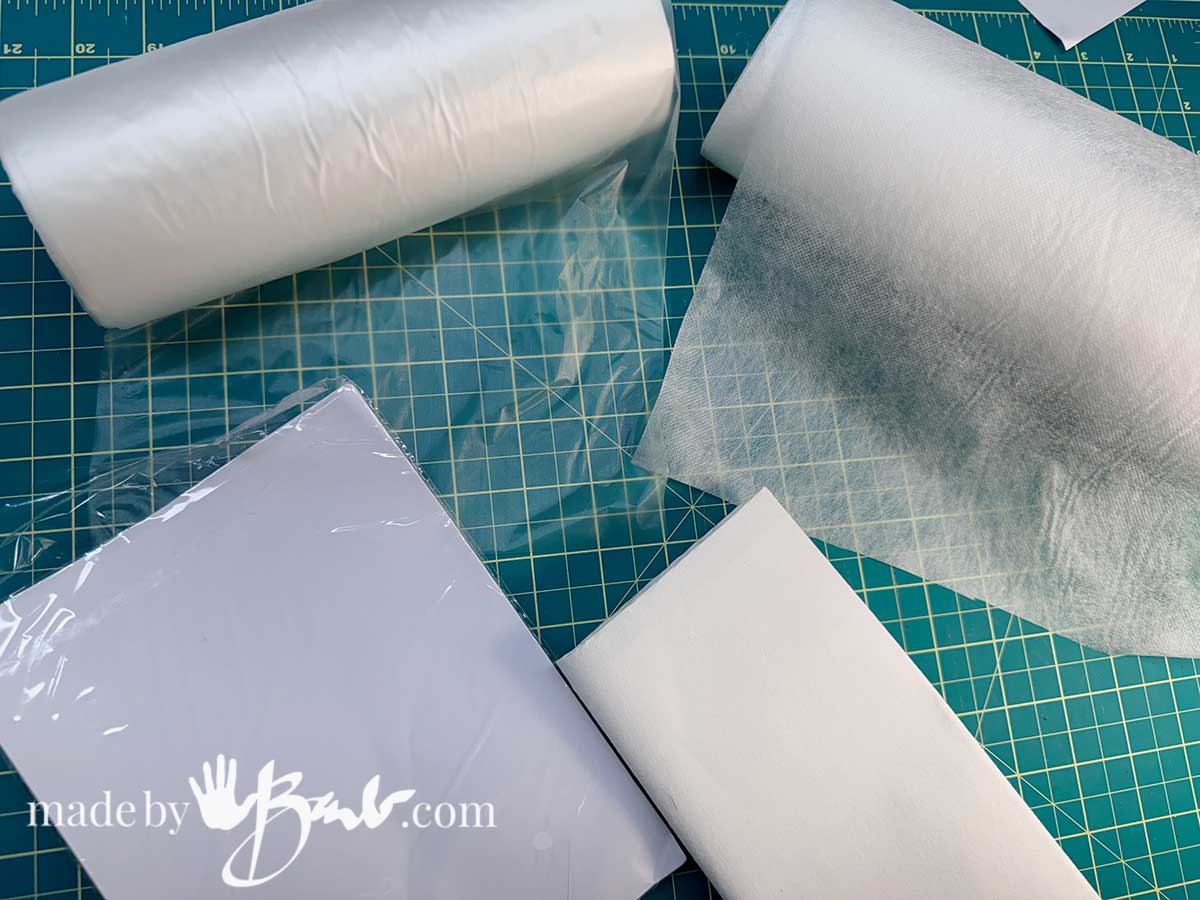
When Would You Use It?
Water-soluble stabilizer shines in situations like:
- Machine embroidery on knits or stretchy fabrics
- Towels or fleece (keeps stitches from sinking into the pile)
- Sheer or delicate fabrics
- Freestanding lace embroidery
- Thread sketching or decorative stitching
- Needle felting onto fabric (to help anchor fibers before full felting)
Types of Water-Soluble Stabilizer
Not all WSS is the same. Choosing the right type makes a big difference.
1. Transparent Film (Topping Stabilizer)
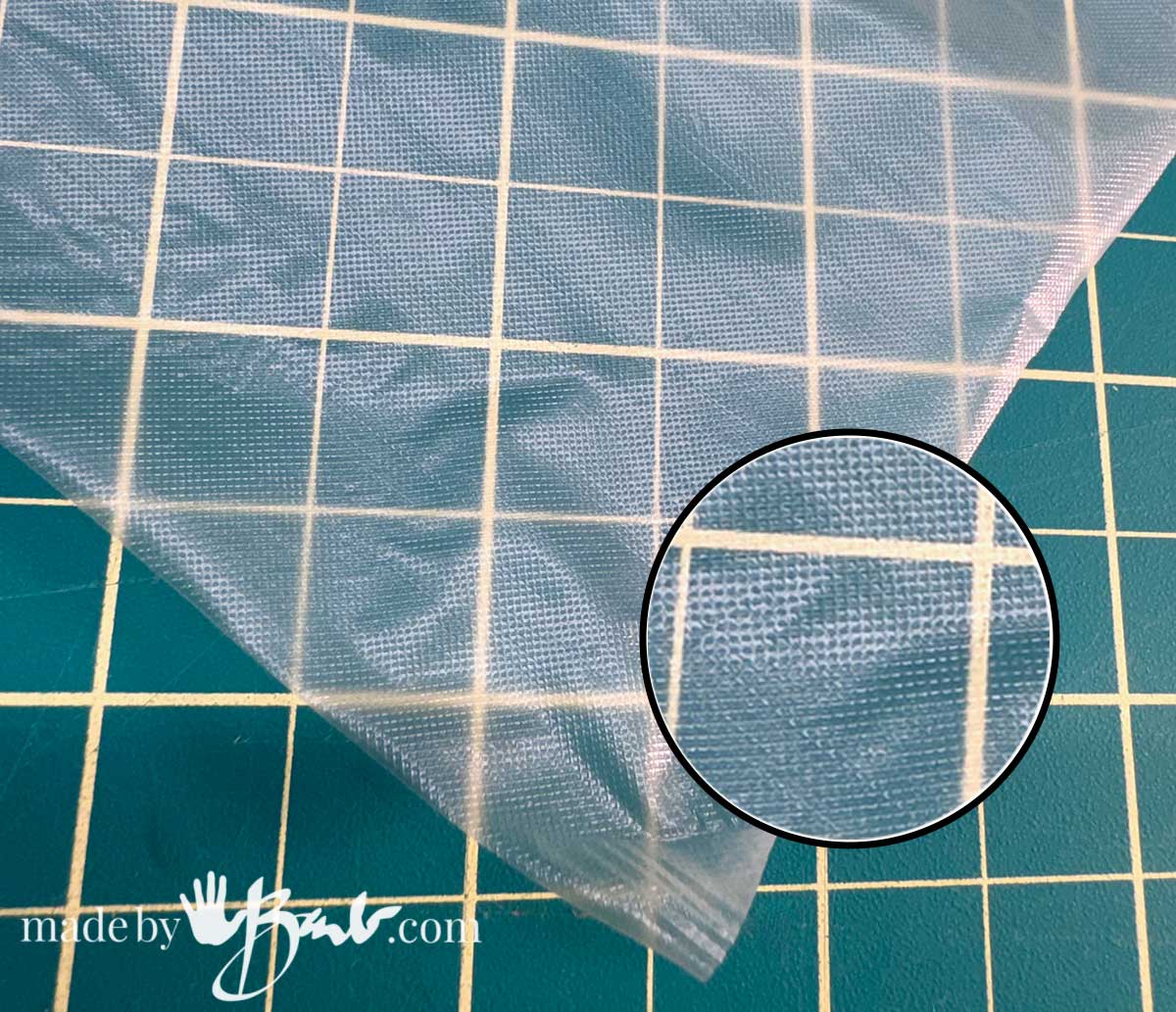
Looks like: Clear plastic sheet
Feel: Thin, slightly crisp
Best for:
- Placing on top of fabric (especially towels, velvet, fleece)
- Preventing stitches from sinking deep into textured surfaces
- Placing over yarns or fabric scraps prior to sewing
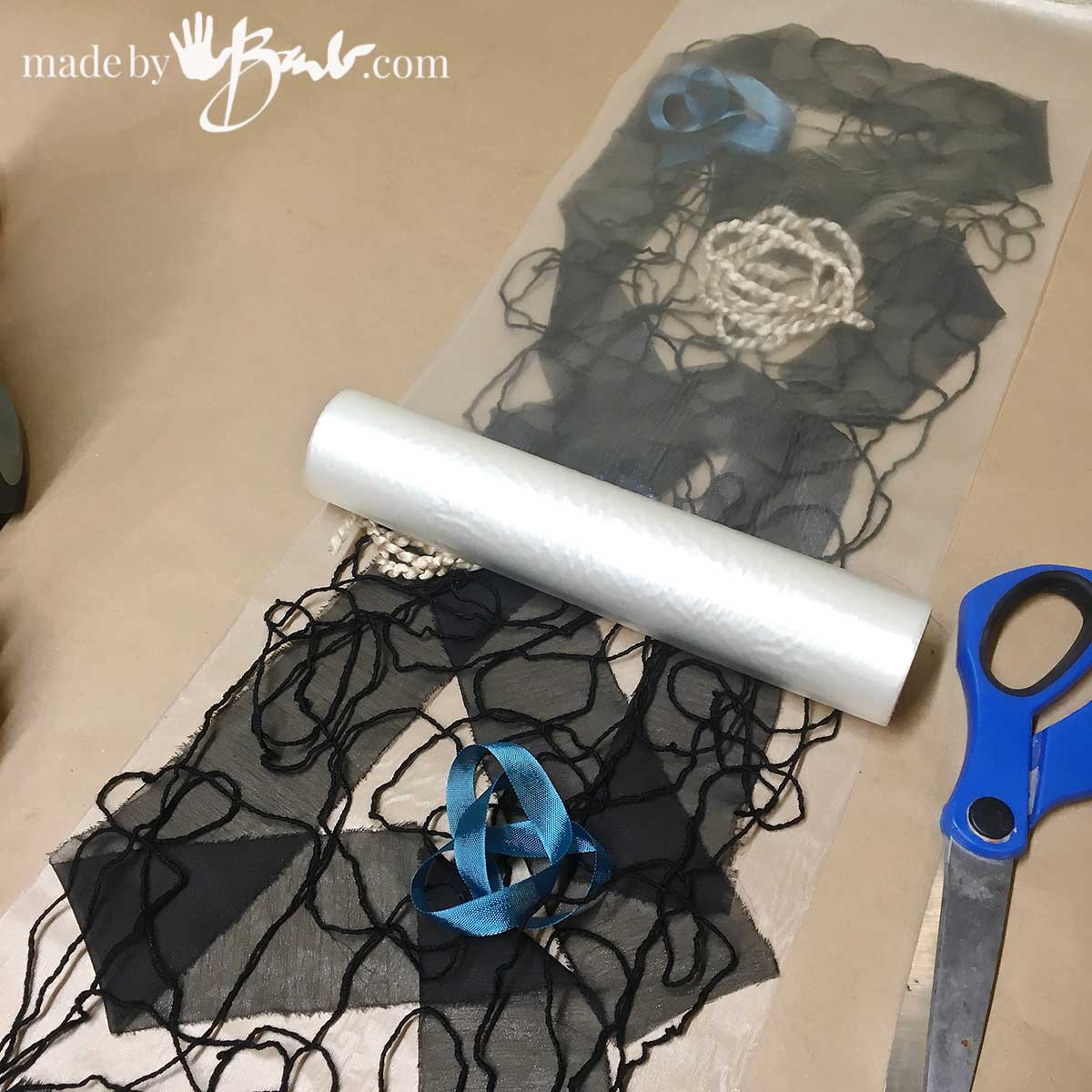
Here this clear stabilizer helps the loose yarn and pieces stay in place during sewing to eventually be locked into one combined piece as in this Crazy Sewn Scarf
Why use it:
It keeps your stitches sitting on the surface so designs stay sharp and the pieces can be held in place. Think of it as a temporary “skin” over textured fabric or pieces.
2. Fabric-Like (Nonwoven or Fibrous)
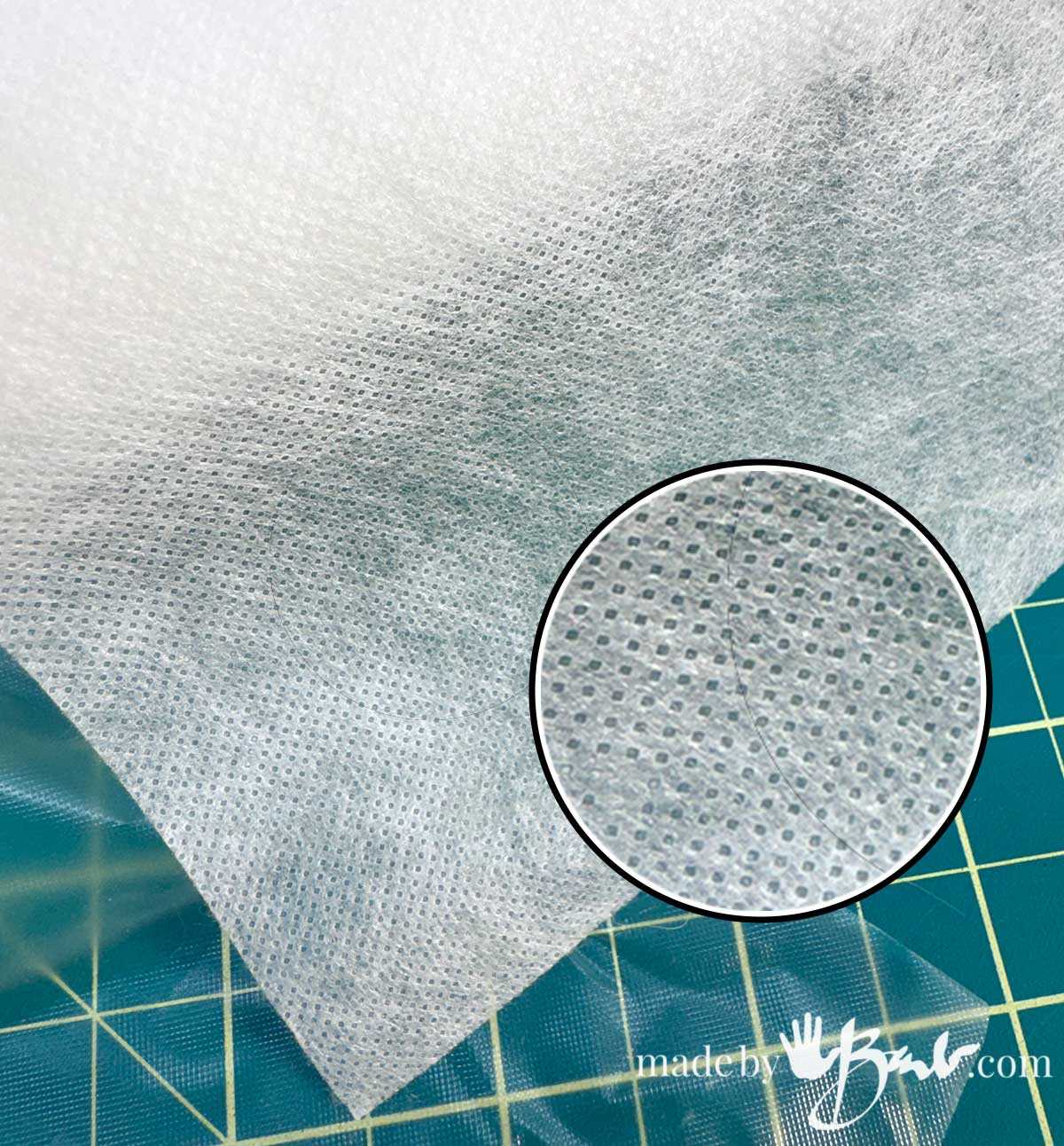
Looks like: Soft paper or fabric
Feel: Cloth-like, flexible
Best for:
- Backing for embroidery
- General sewing stabilization
- Projects that need a bit more strength
- Can be printed or drawn onto
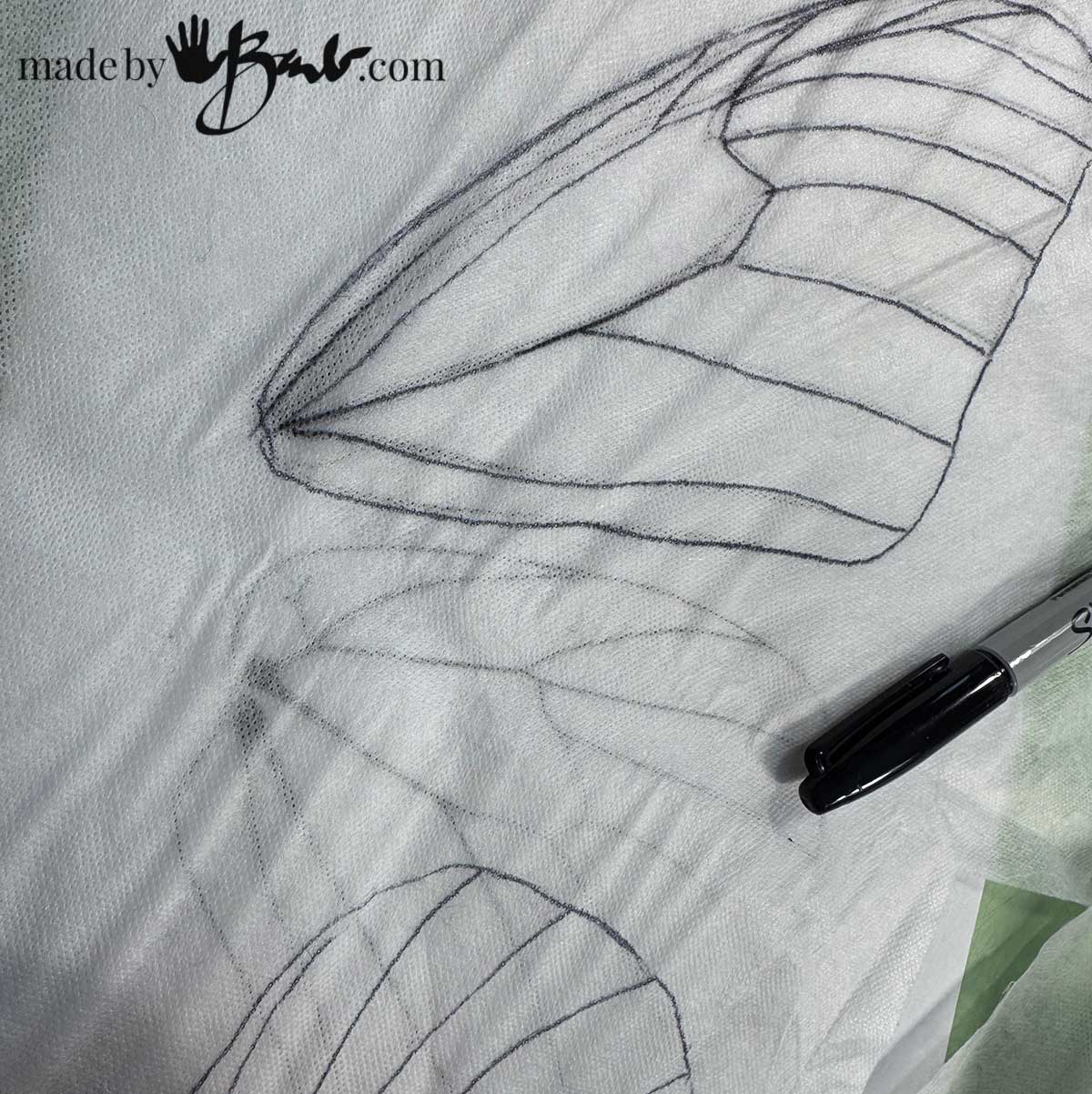
The transparent nature of this fabric style stabilizer allows easy tracing before stitching or other embellishment.
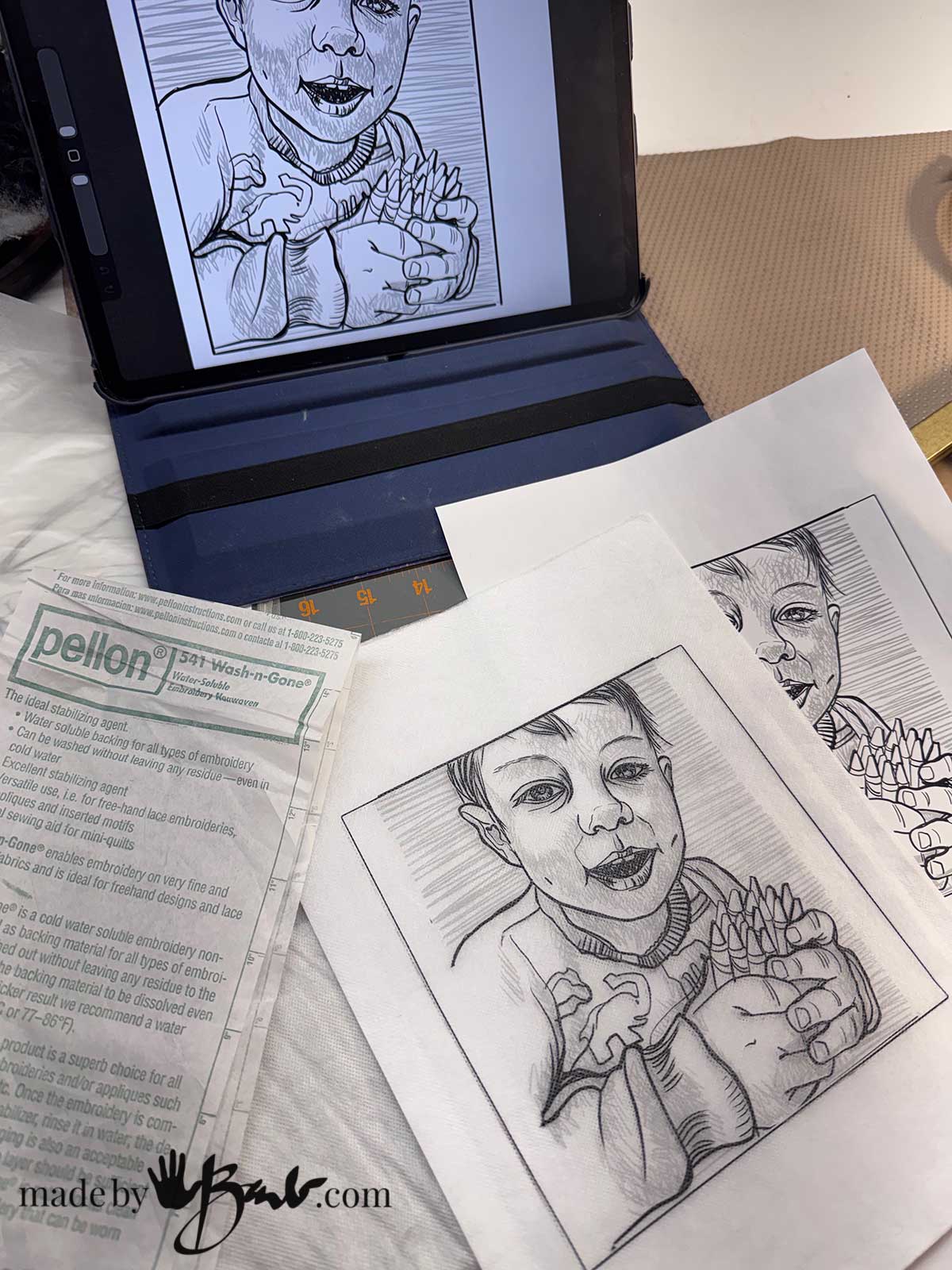
I experimented with running this stabilizer through a laser printer and it worked great! I slightly attached the trimmed stabilizer to plain letter size paper to make the least chance of jamming.
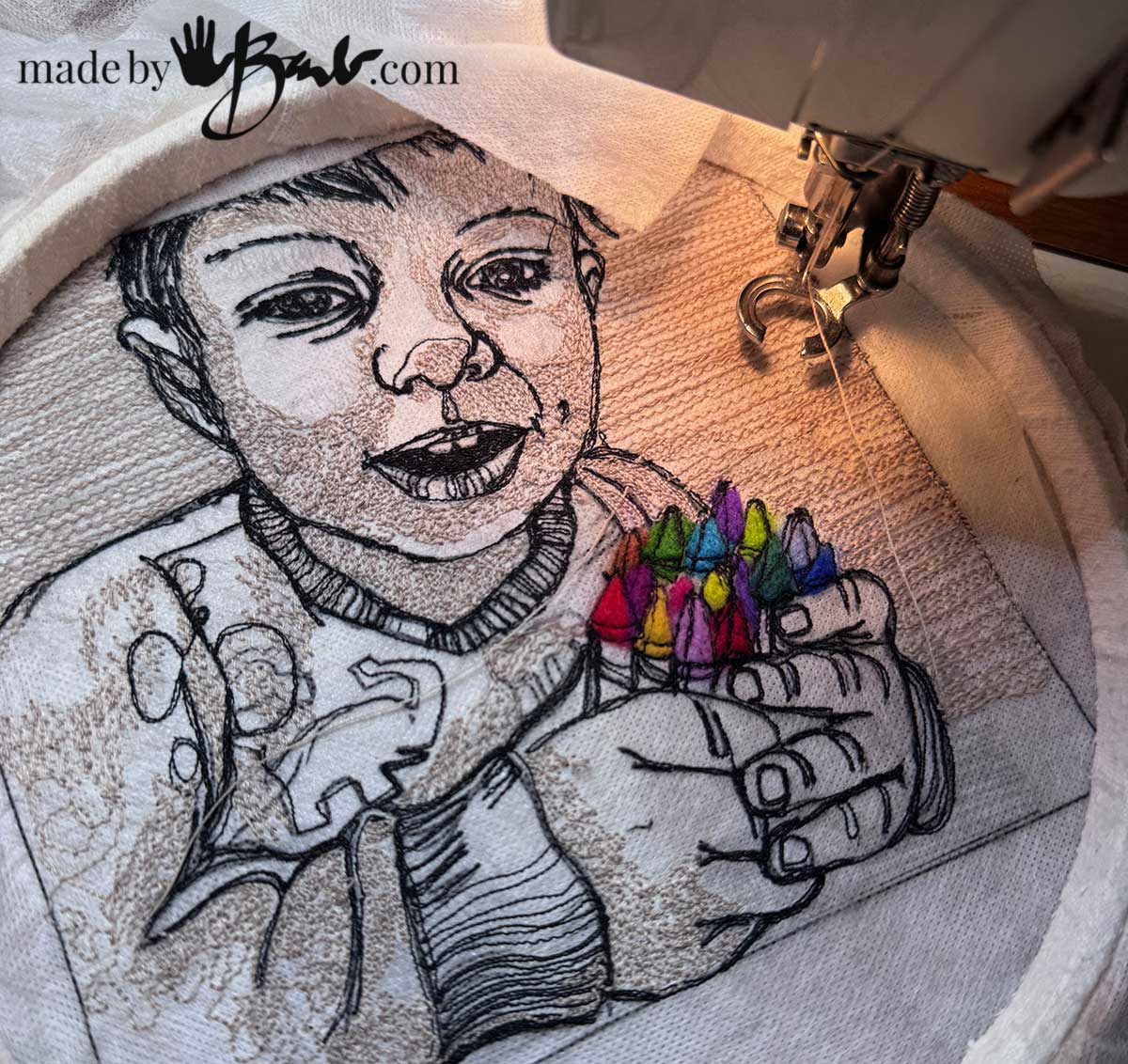
The stabilizer was then placed in an embroidery hoop and free-motion-stitched. I should have used a sheer base to guarantee that the stitches hold in place.
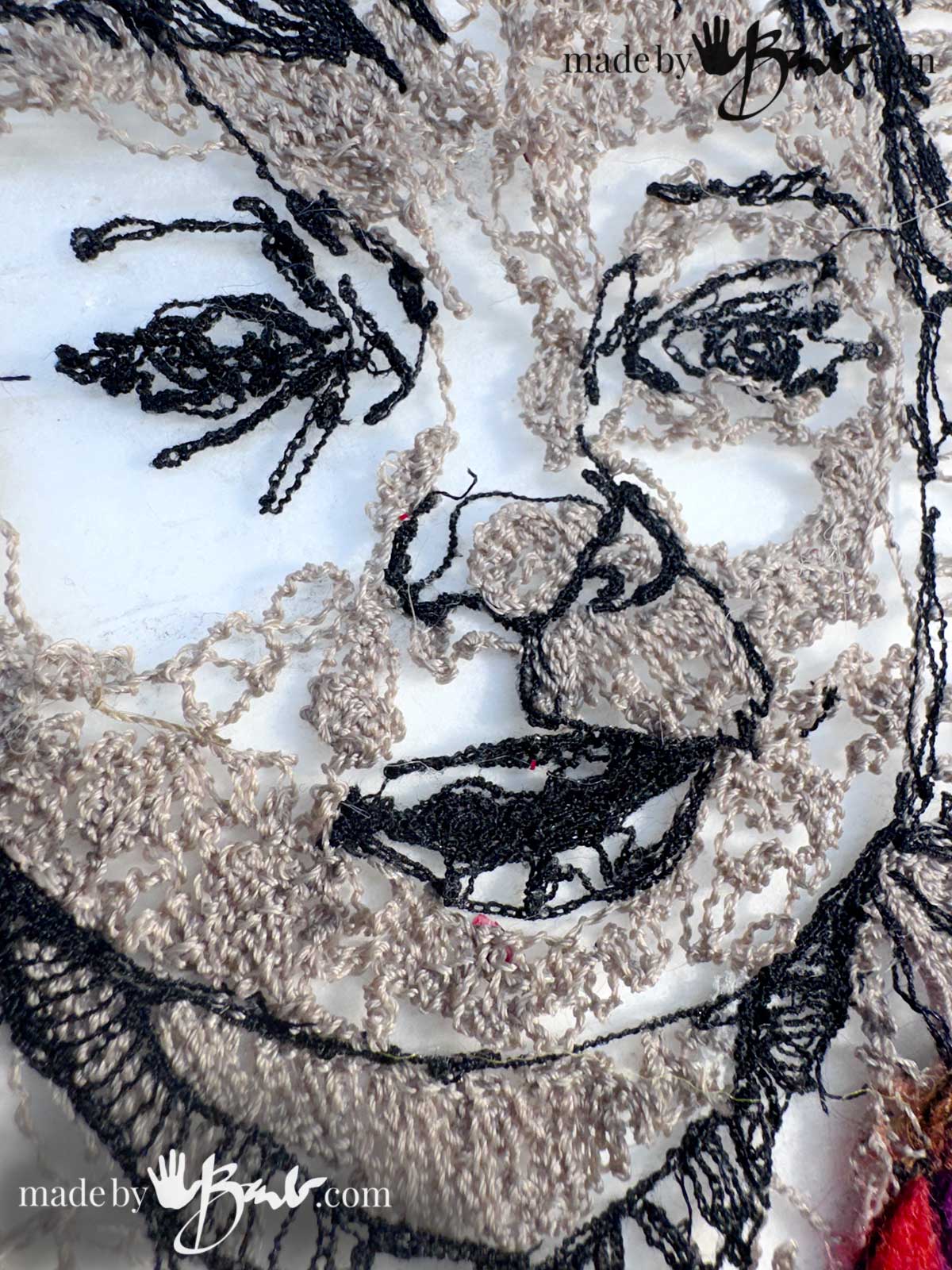
Once the stabilizer was dissolved there should have been more stitching to keep all the small sections in place.
Why use it:
It behaves more like traditional stabilizer but still dissolves away. Being careful to not wash away all the dissolved stabilizer brings some stiffening to the final product.
3. Heavyweight / Ultra-Firm
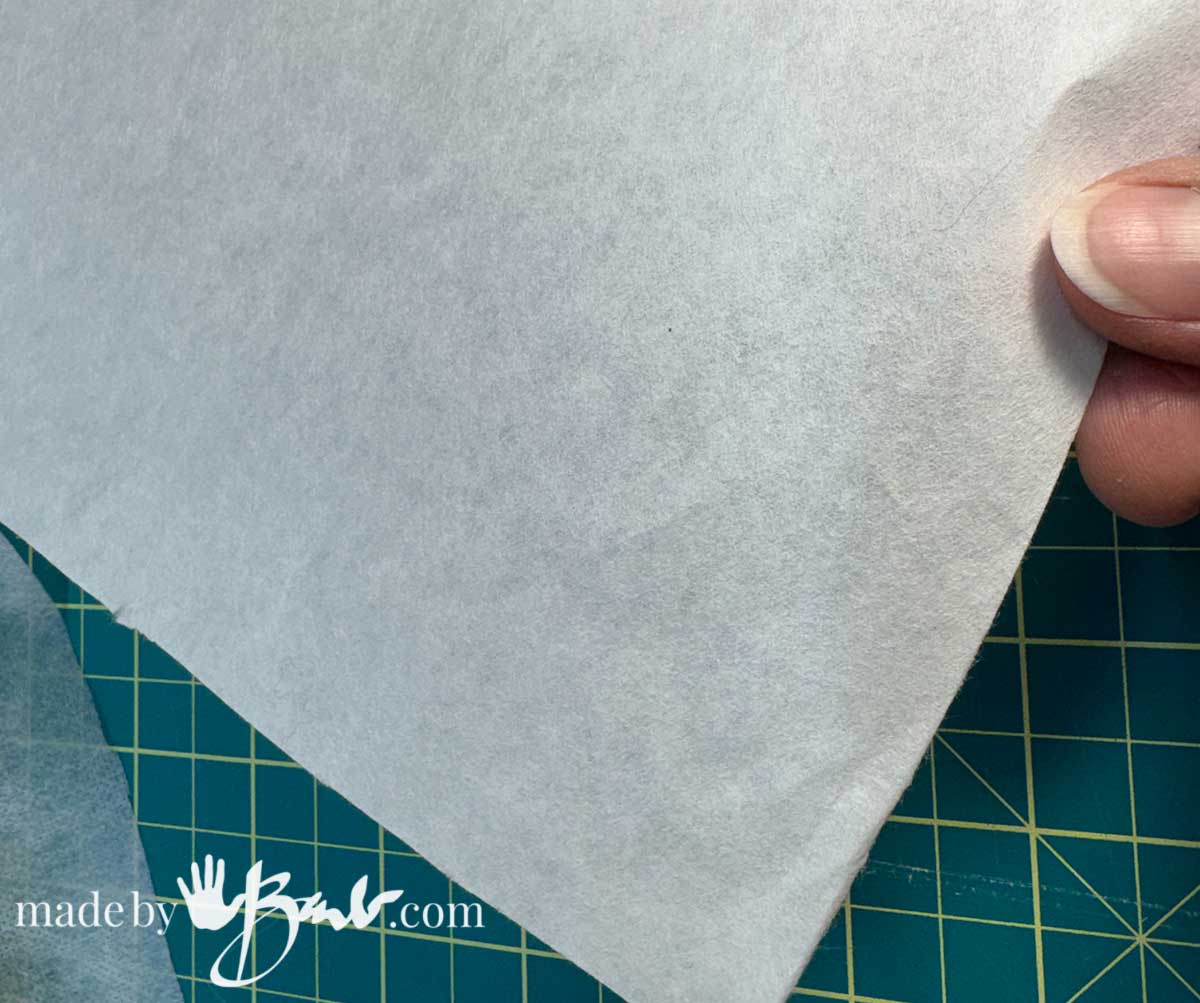
Looks like: Thick, opaque sheet
Feel: Stiff and sturdy
Best for:
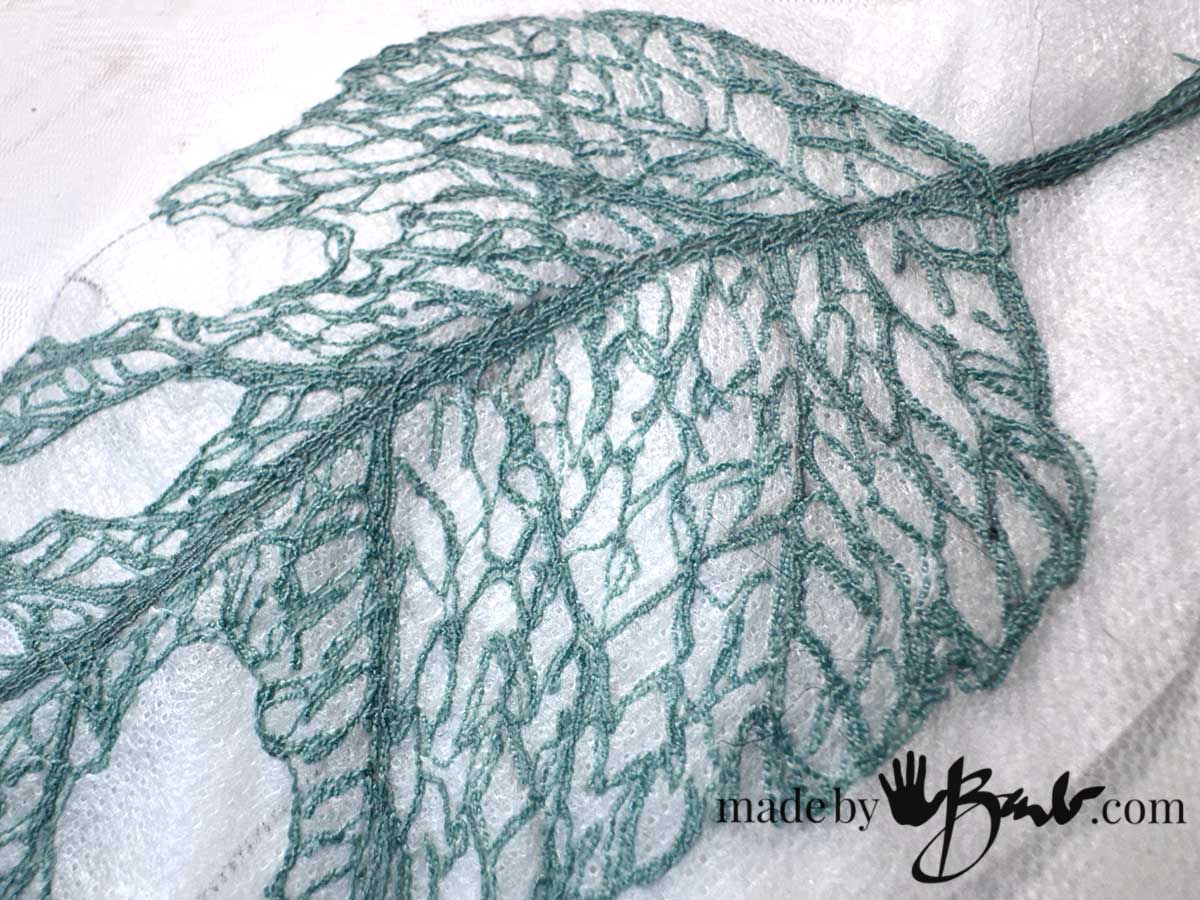
- Freestanding lace
- Thread-only designs (no fabric base)
- Structural embroidery
Why use it:
This heavier stabilizer holds stitches firmly enough to create standalone pieces.
4. Sticky Back Fabric Sheets
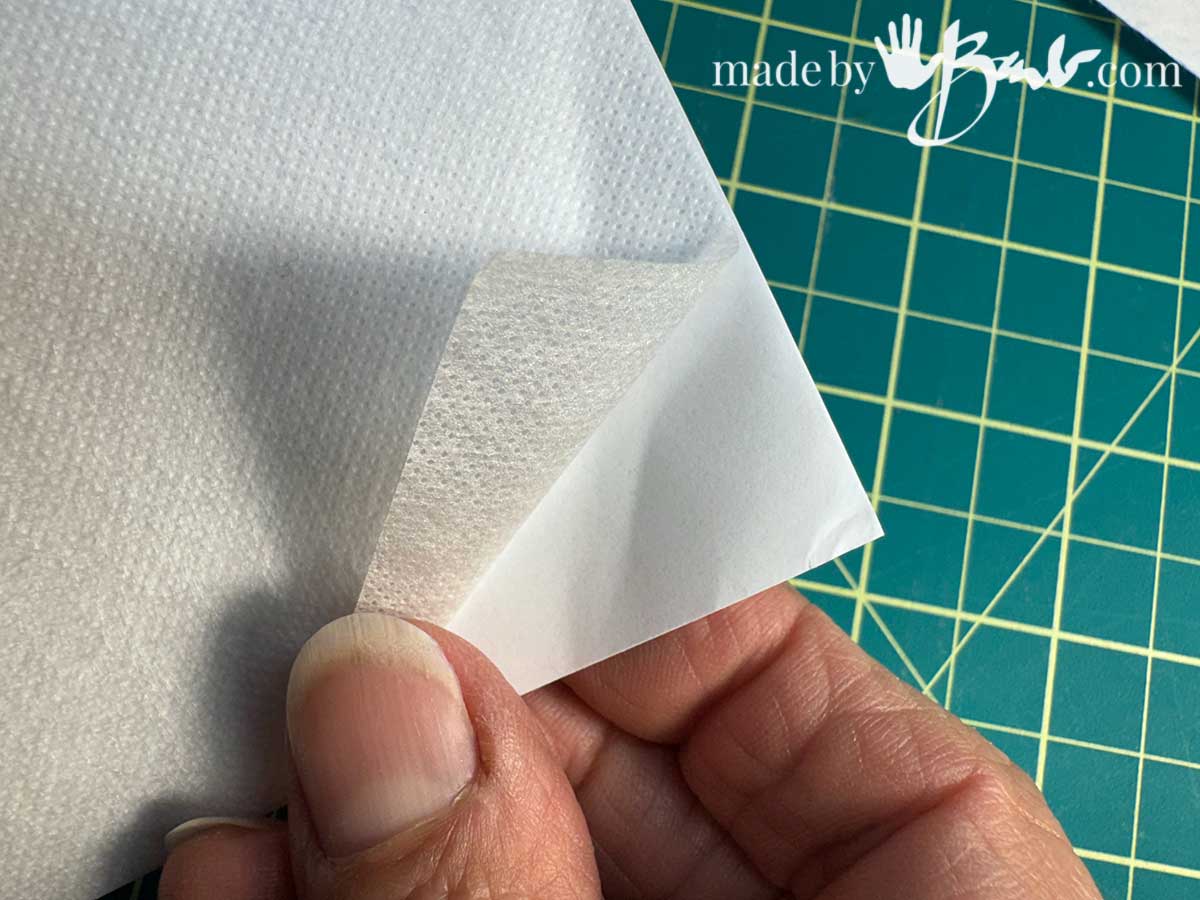
Looks like: Lightweight fabric
Feel: Soft and slightly textured
Best for:
- Garments where you want softness during stitching
- Situations where tearing stabilizer would distort fabric
- Use as a way to transfer a design without drawing on garment or fabric
Why use it:
Small pieces can be used to attache where needed. It offers gentle support and dissolves cleanly without stiffness.
How to Remove It
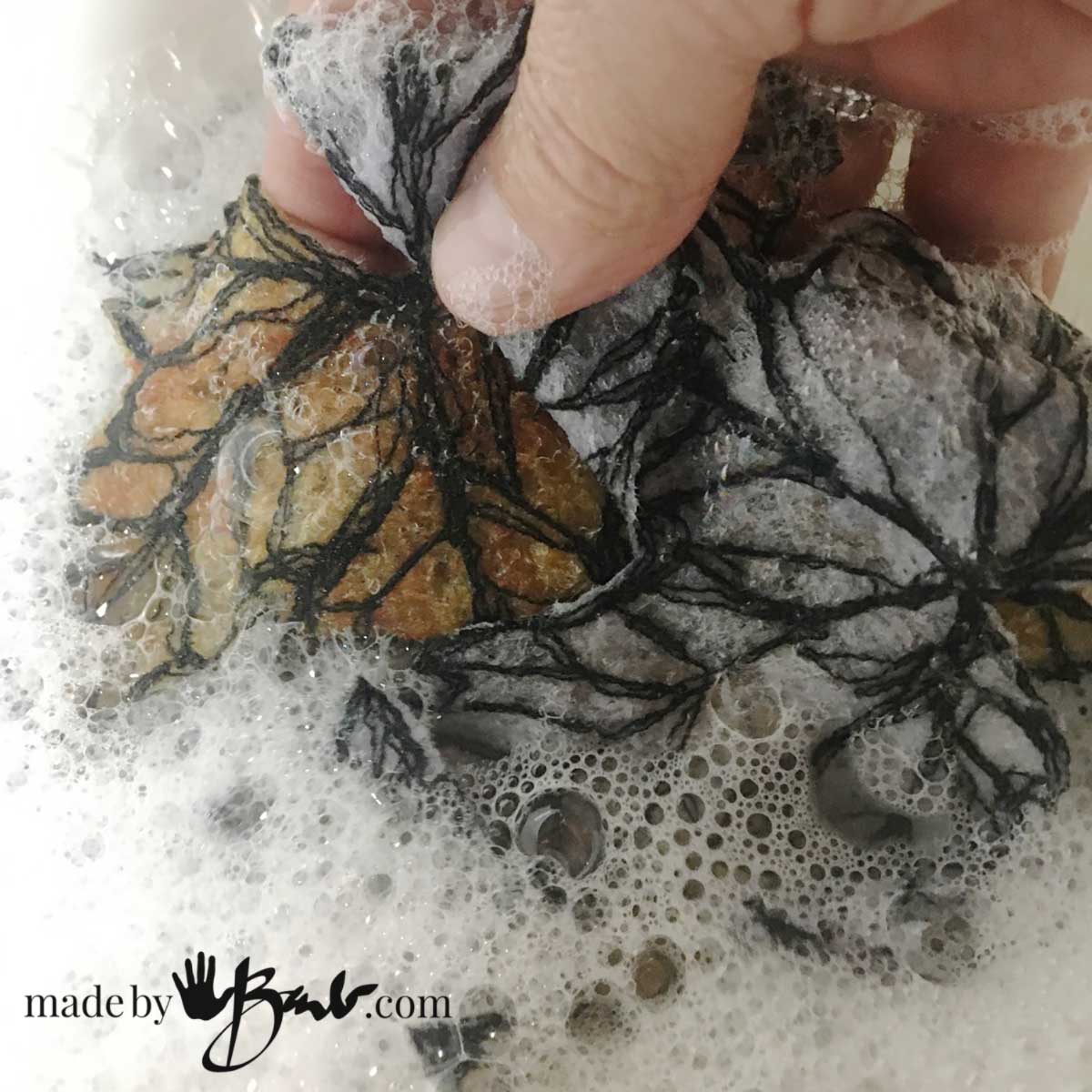
Removal is quite simple:
- Rinse in warm water
- Gently agitate if needed
- Let dry
Here’s a special trick; the amount of washing can be adjusted for varied outcomes.
- For firm pieces (like lace), rinse partially to keep a bit of stiffness
- For soft garments, rinse thoroughly so nothing remains
- Using less warm water allows more concentration of the dissolved matter to act as a stiffener.
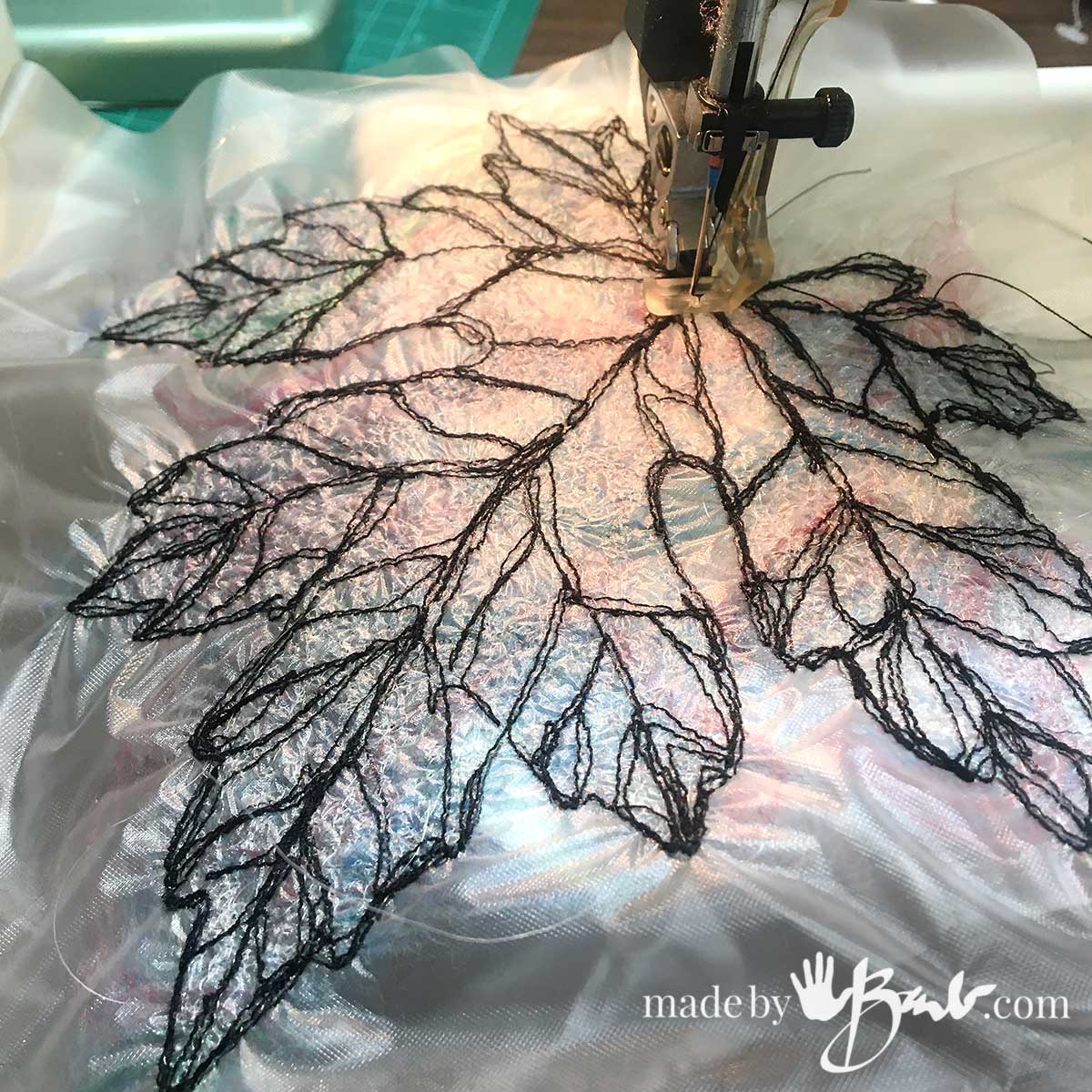
Almost any fibre that can be sewn has much creative potential.
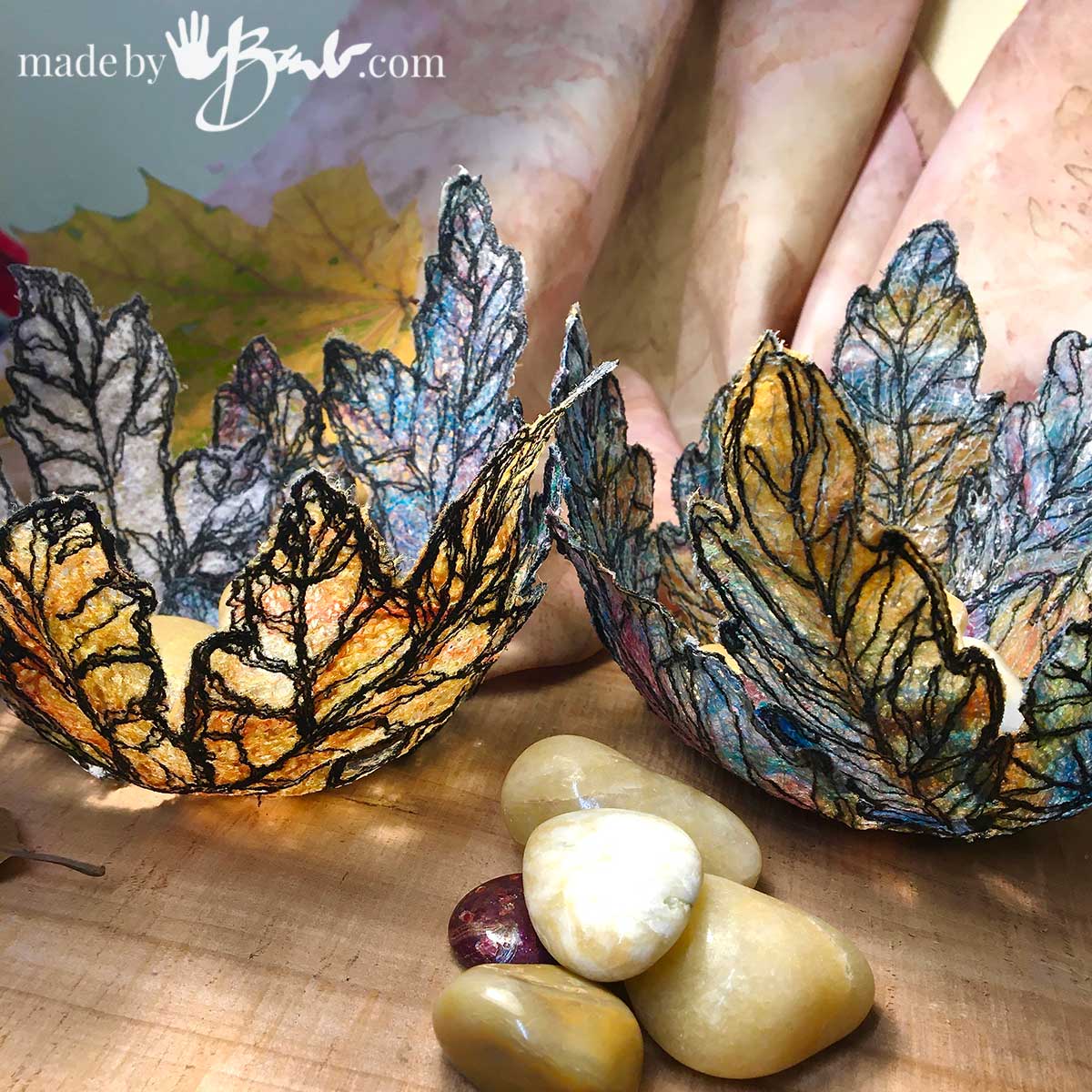
These Fibre Leaf bowls can hold their shape since some of the dissolved stabilizer has dried as a stiffener.
A Few Things to Watch For
- Humidity sensitivity: It can start breaking down in damp air
- Storage: Keep sealed and dry
- Not for everything: Avoid using where water will damage your base material
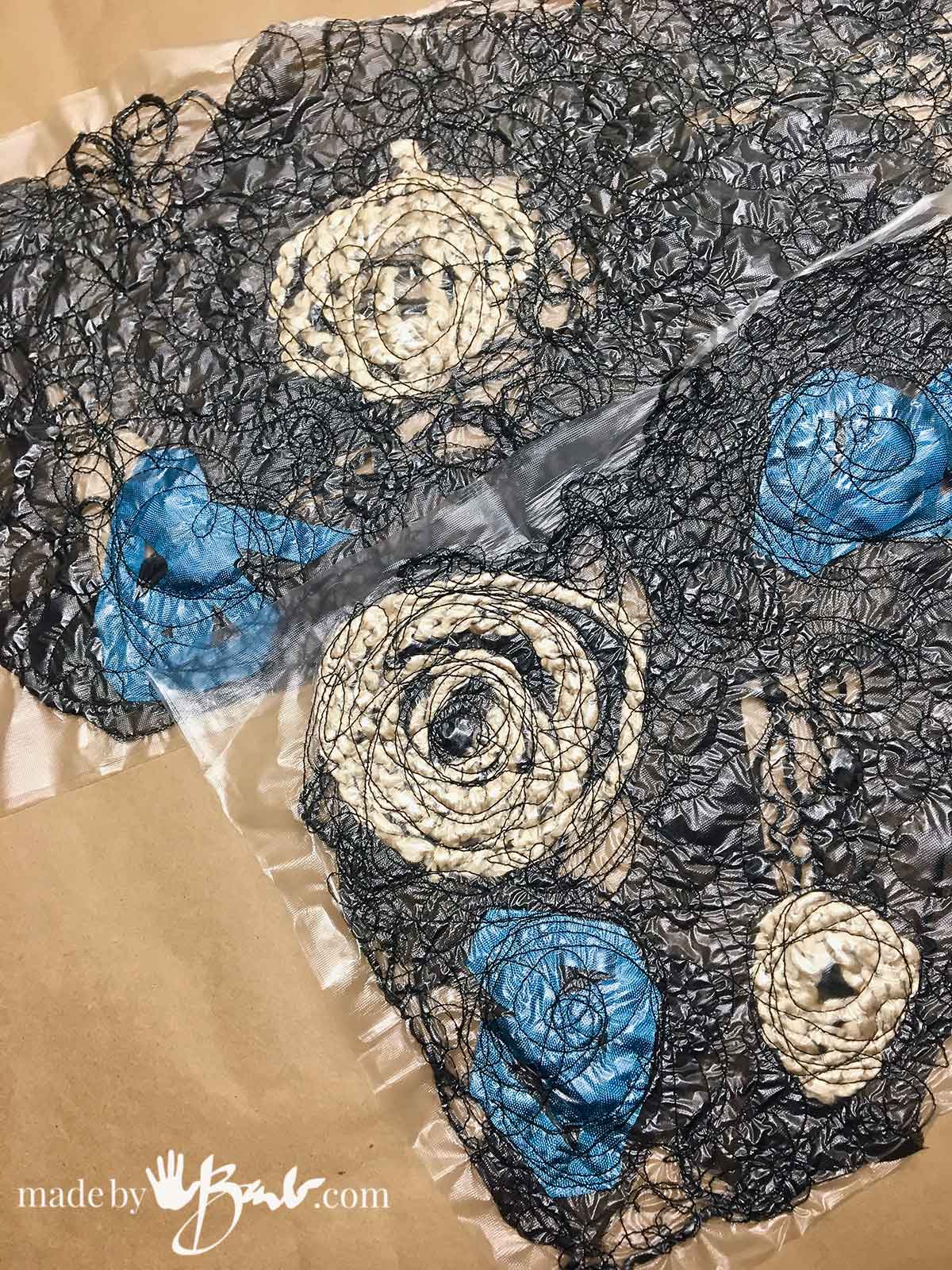
Use up all the scraps of anything that can be stitched through.
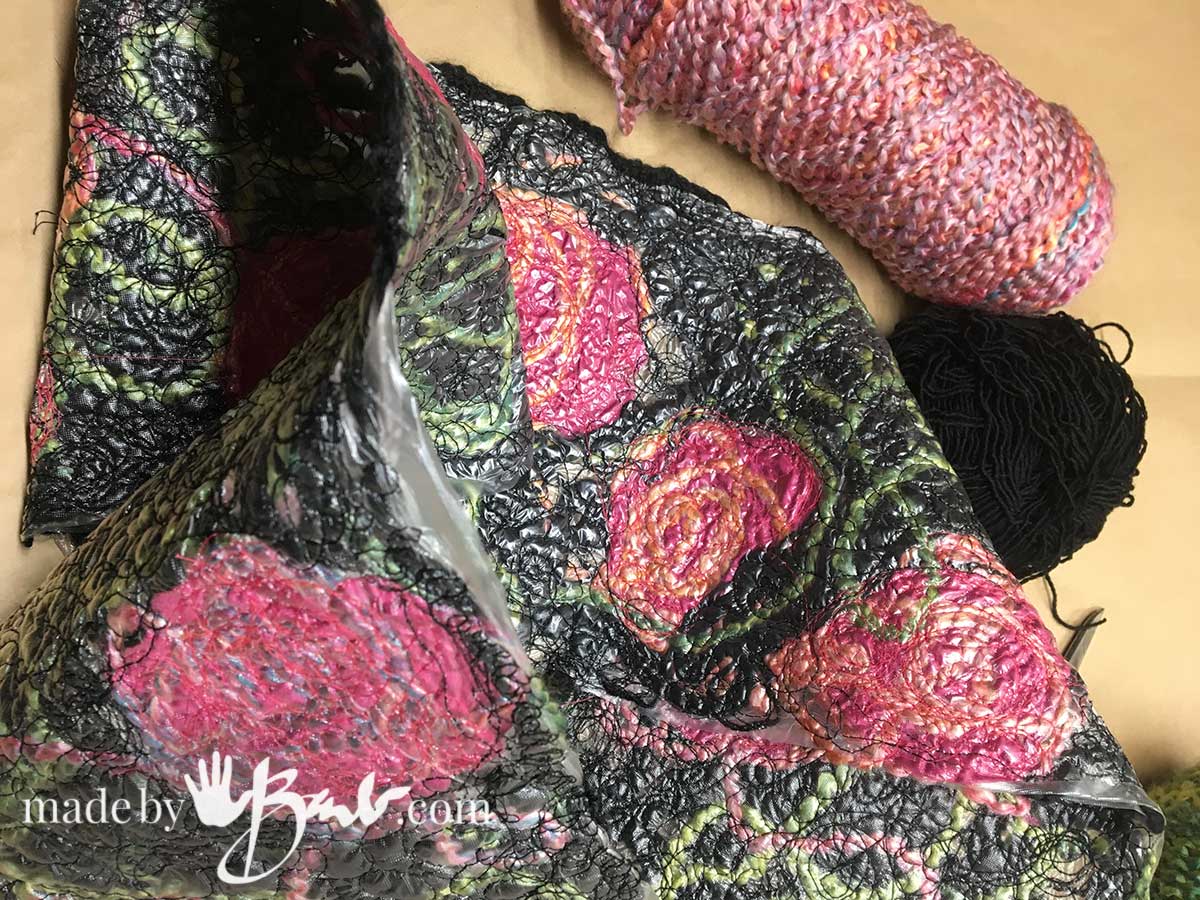
The design options are only limited to your imagination. The transparent nature is key here to see where to stitch making the final piece stable. Swirled yarn looks like roses in this No Sew Rose Scarf
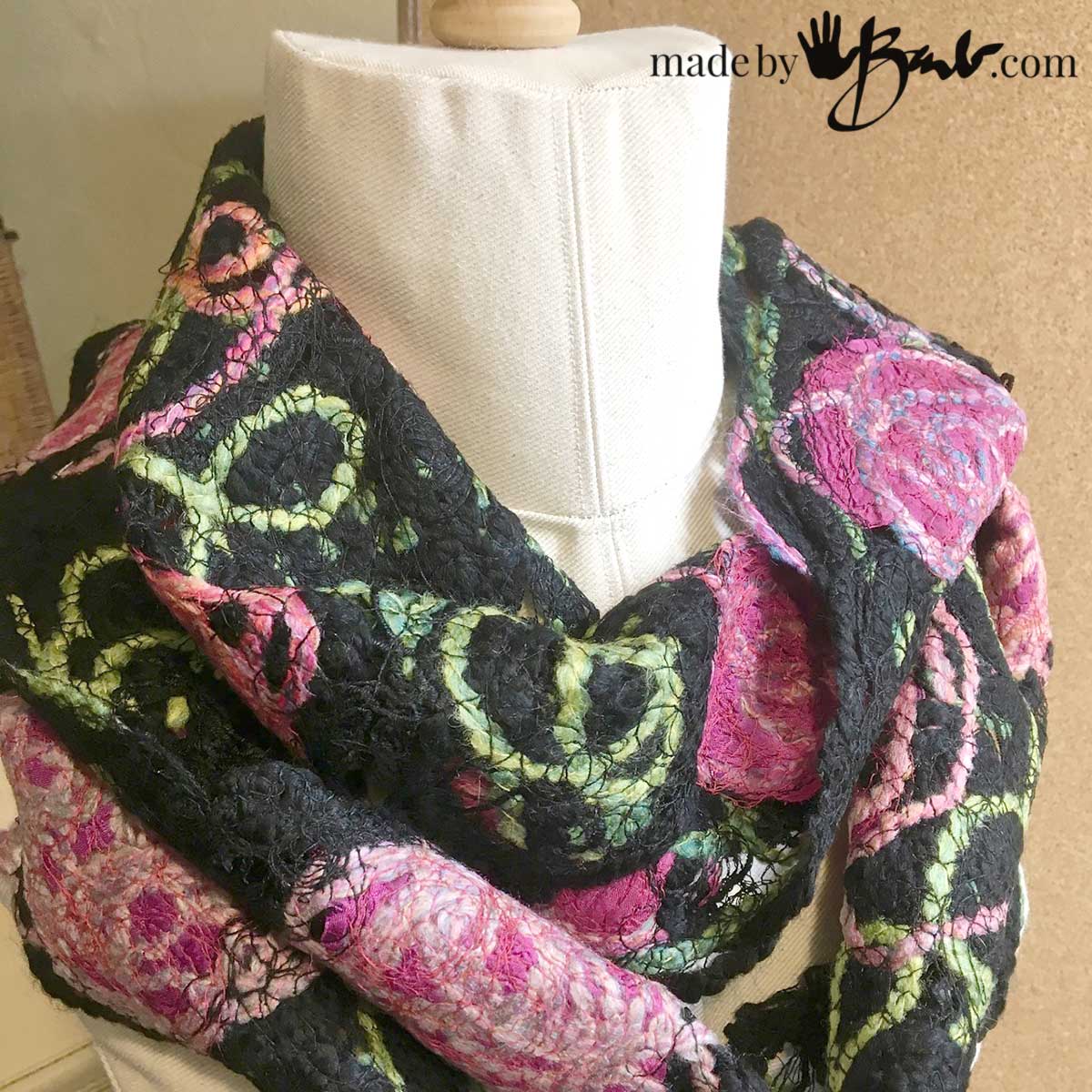
After washing it is soft and so unique!
Why It’s So Useful
Water-soluble stabilizer gives you the freedom to:
- Stitch on difficult surfaces
- Create delicate, detailed work
- Experiment without committing to permanent backing
It’s one of those materials that quietly solves a lot of problems—and once you start using it, you will think of more ways to use it in your creative toolkit.
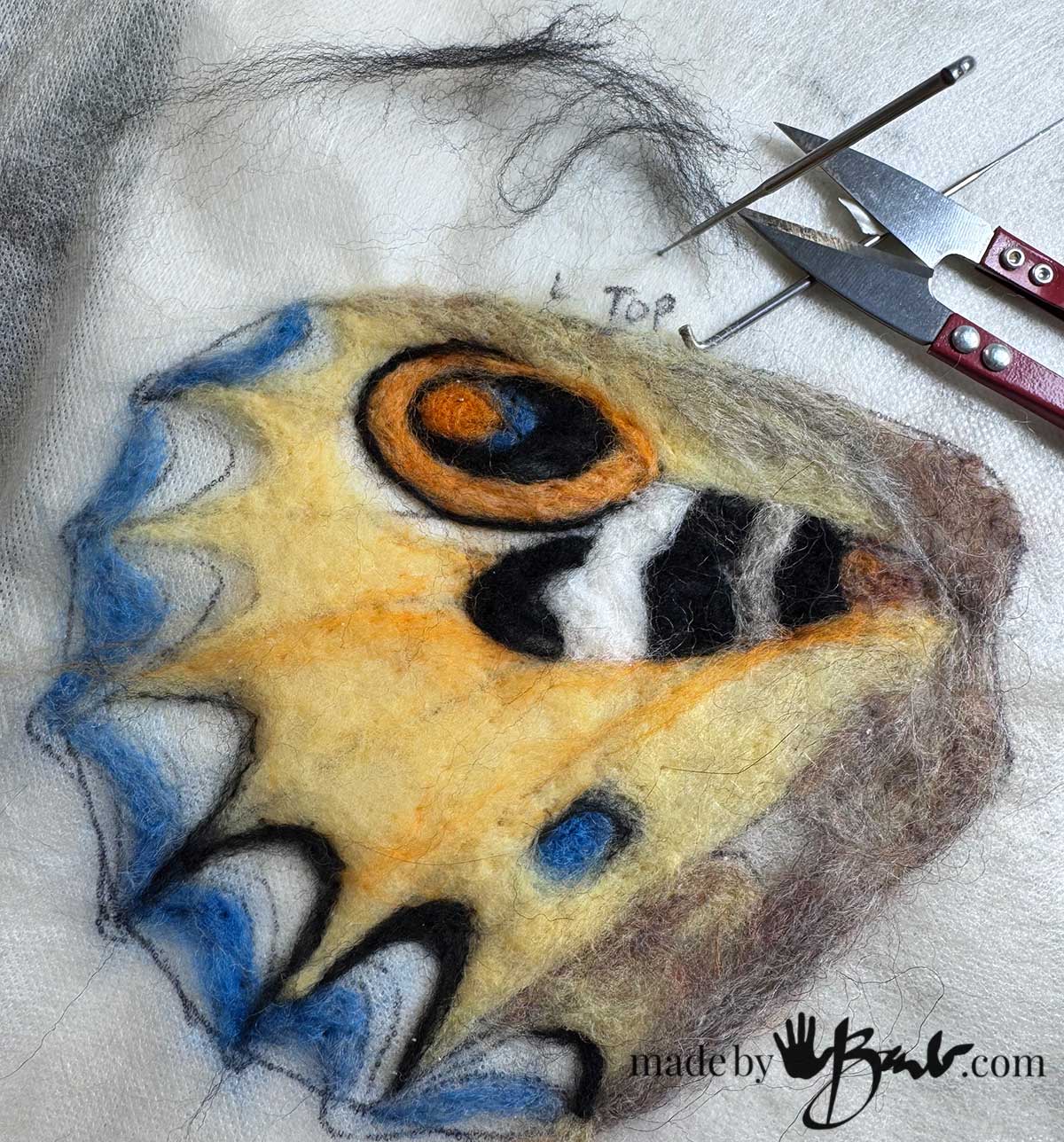
I pushed the limits to include needle felting into the stabilizer.
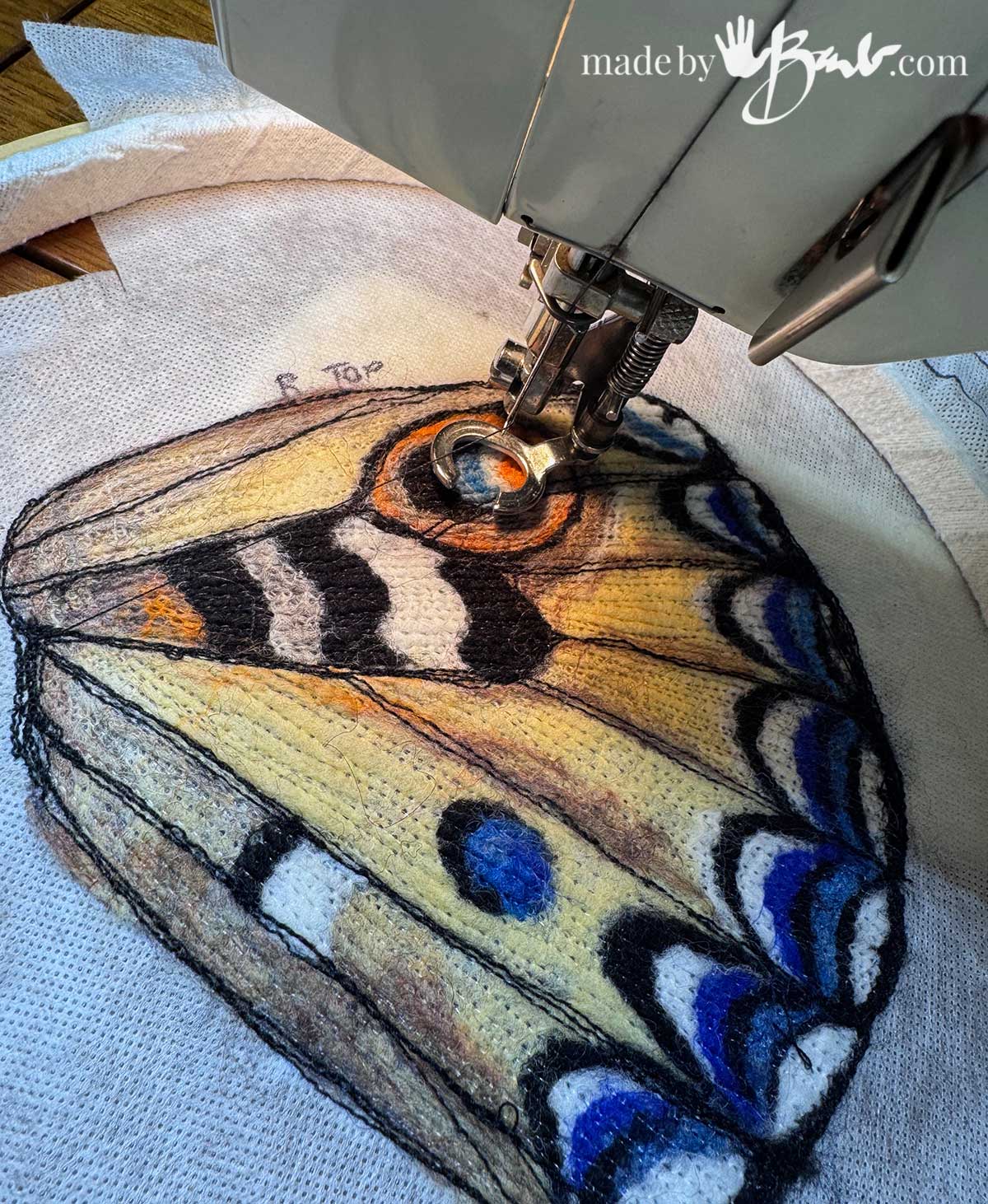
After filling areas with the wool roving the entire piece is densely stitched. You can use clear thread to make it less visible.
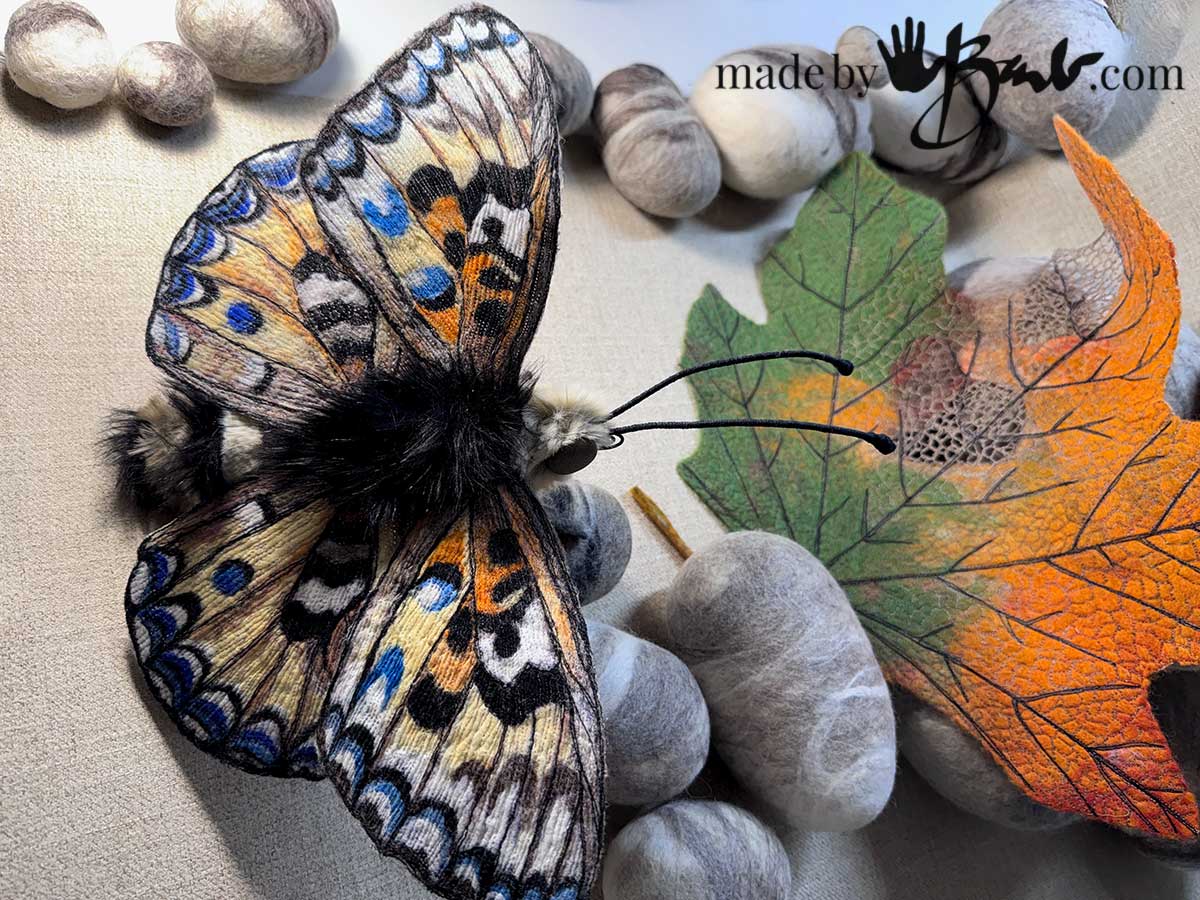
Some of the stabilizer is allowed to stay which added invisible stiffening. The butterfly turned out great!
Final Thought
If you’ve been struggling with uneven stitches, sinking threads, or tricky fabrics, switching to the right water-soluble stabilizer can make everything feel easier and more controlled.
And the best part?
When you’re done… it simply disappears.
Thank you so much! I recently bought a roll of water soluble stabilizer. Of course I did not realize that there were multiple types. Not sure which one I have, as I haven’t used it yet. I had planned to use it yesterday, but my allergies got the best of me. Everything happens for a reason. I needed to read this prior to using my roll of stabilizer. Thank you again Barb
Sounds like fun! I often just play and test the material rather than read too much info. Experience is always better. No matter what type you have, you’ll be able to figure out something creative! Have fun!
Thank you for such thorough explanations of these materials, very helpful! Three years ago, I took a 5-day workshop with Amanda McCavour, a Toronto-based fiber artist, whose work is made primarily on these types of water-soluble substrates – I was, and still am, enchanted with the stuff! So many applications for it, I’ve yet to try needle felting on it, but I will be trying that soon as I wish to make a few of your fuzzy moths – I love them! I am intrigued with your portrait style piece, very nice, I can see why a transparent backing would be necessary for it with all the open spaces.
Oh, I agree! Being an illustrator the options of making images and surfaces gets me excited. I have yet to completely explore the limits! Mixing techniques, media and subject matter is ever consuming! ‘So glad you are joining in my journey!
thank you so much Barb, this article is a reference keeper. So often I look for techniques/products that will make my stitching easier and more secure. This fits the bill.
Many thanks for your generosity of spirit and creativity
I’m so glad to help! I haven’t even gotten to all the ways I plan to challenge this product. I still remember the days that I would have to venture to the library to get information that I was yearning for. Yes. it was decades ago but I still marvel at how everything is right at our fingertips nowadays! ‘No wonder I am always in a frenzy!