
How to Design a City Succulent Rock Garden

You don’t need a big backyard to create a beautiful rock garden. A few carefully chosen rocks, some interesting succulents, and a little creativity turned even my small city garden into a miniature landscape.
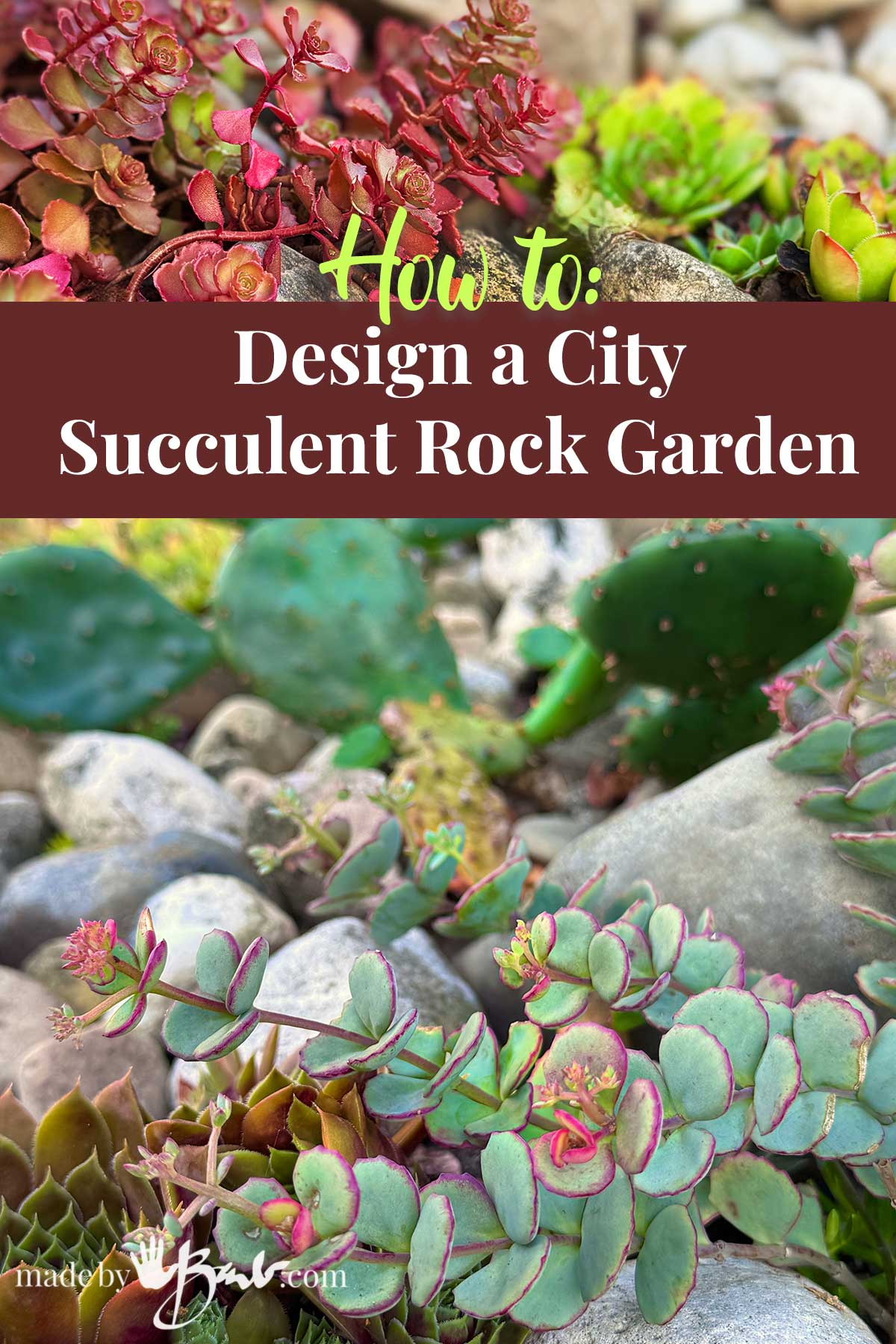
A city succulent rock garden is especially appealing because it combines the architectural look of stone with the soft shapes and colours of succulents. It can be modern and minimalist, rustic and natural, or somewhere in between.
The key is to think of your garden as a tiny landscape rather than simply planting a collection of succulents together.
What Is a City Succulent Rock Garden?
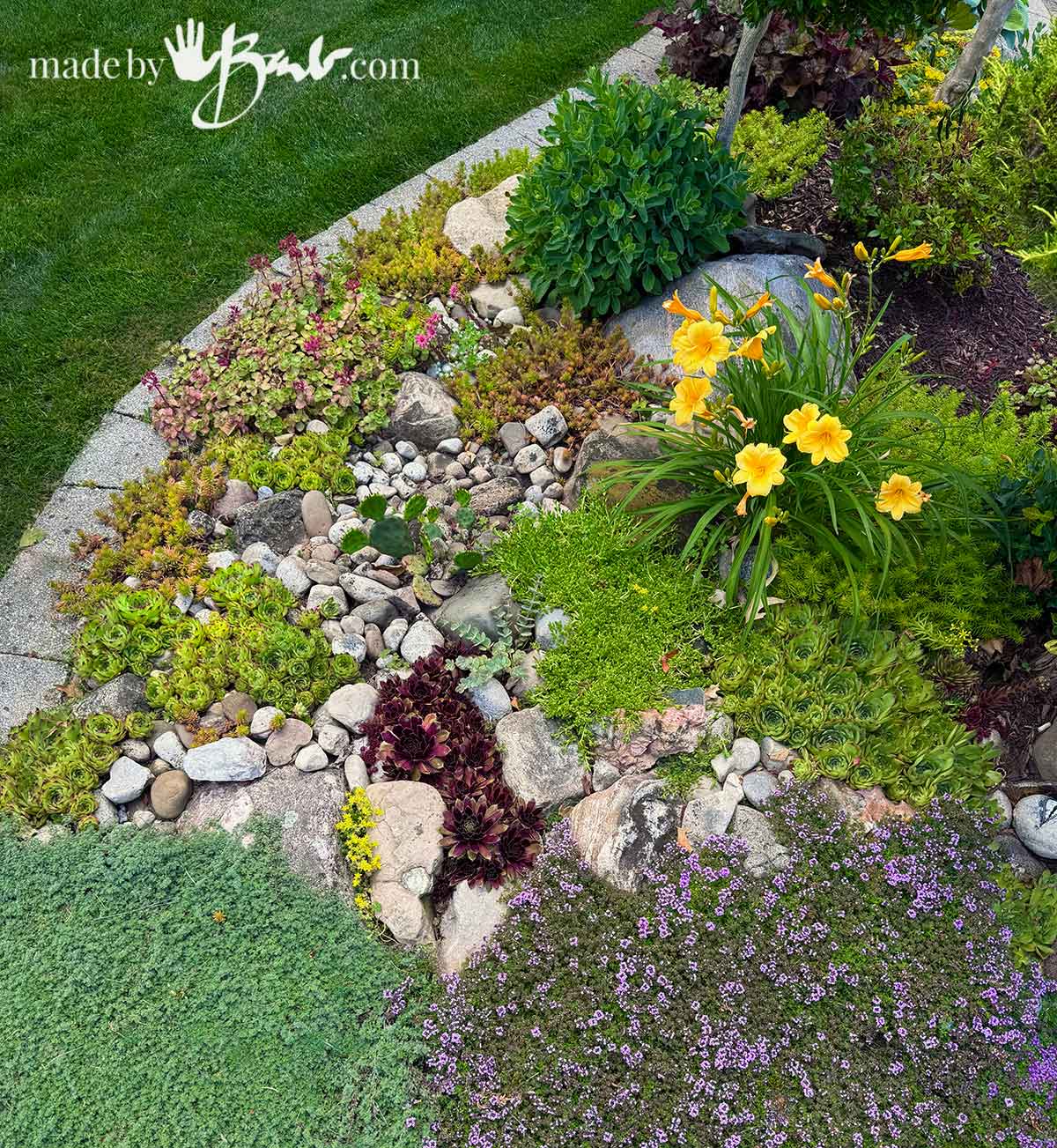
A city rock garden is essentially a miniature version of a traditional rock garden, designed for a smaller urban space. In my city property I have a small section at the sidewalk that gets the morning sun and also manages to survive all the snow that gets piled there in winter. ( I am in Zone 6)
You will need;
- Rocks and stones
- Gravel or small pebbles
- Succulents suited to your growing conditions
- Well-draining soil
- Optional decorative elements
The rocks provide structure and permanence while the succulents add colour and texture. And it’s a great way to use those special ones that you’ve collected!
And because my succulents are naturally drought tolerant, they can be a good choice for a low-maintenance garden when the plants are suited to the local climate.
Start With the Location
Before buying plants or rocks, decide where your garden will live. A small rock garden can work beautifully in:
- A sunny city backyard
- A patio
- A balcony
- A rooftop garden
- A narrow side yard
- Along a walkway or sidewalk
- A large planter
Pay attention to how much sunlight the location receives throughout the day. This is particularly important with succulents. Choose plants according to the conditions you actually have rather than choosing plants simply because they look good together.
Think Like a Landscape Designer
The easiest way to design a rock garden is to think in terms of layers.
You want the eye to move through the garden rather than seeing everything at the same height.
Start by deciding where the largest rocks will go. These become the visual anchors of the garden.
Then add medium-sized stones and finally the smaller rocks and gravel.
The plants are then tucked into this rocky landscape.
Try to avoid placing anything in a straight line. An irregular arrangement will usually look much more natural; think of winding curves.
Choose Interesting Rocks
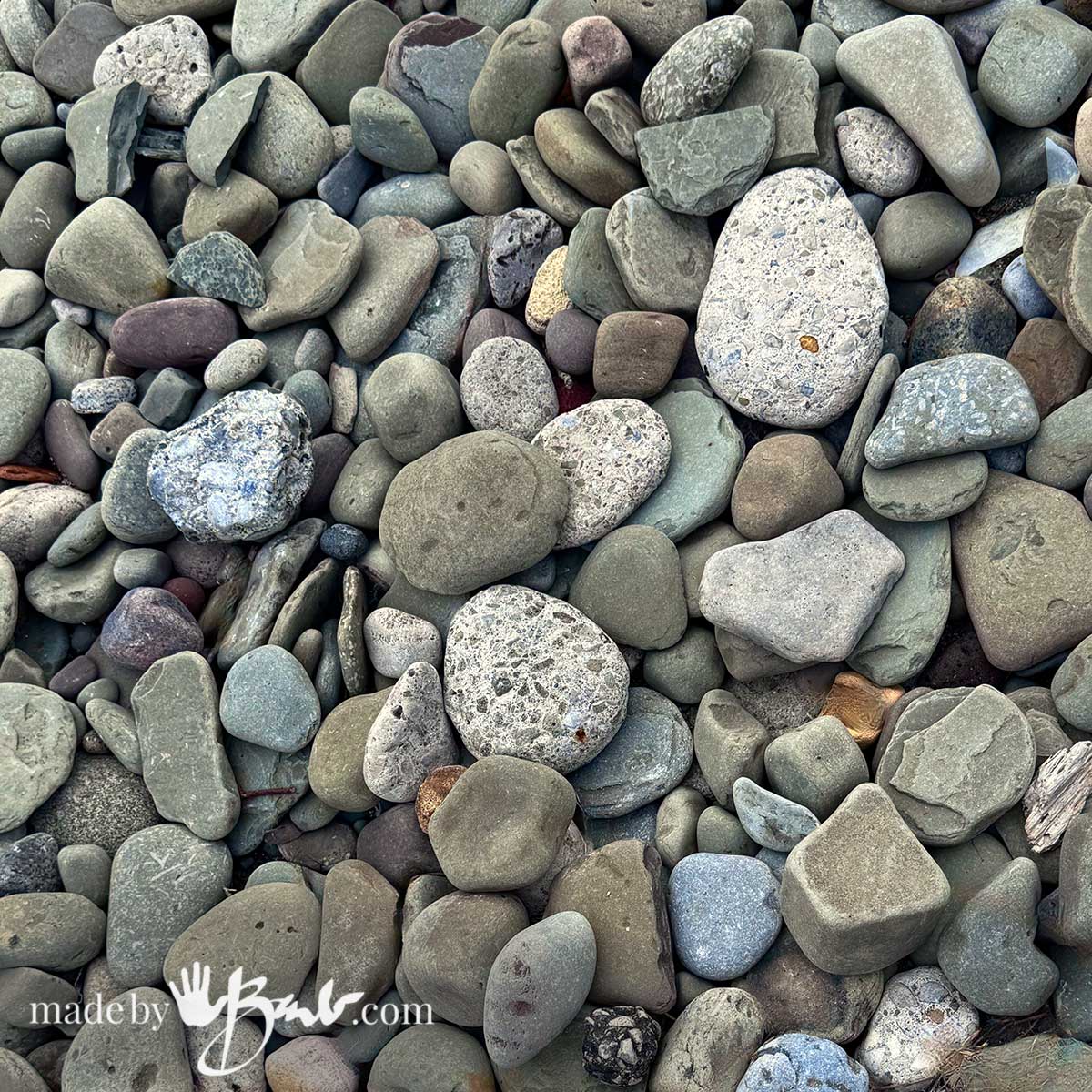
The rocks are just as important as the plants. Look for stones with different:
- Sizes
- Shapes
- Textures
- Colours
- Surface patterns
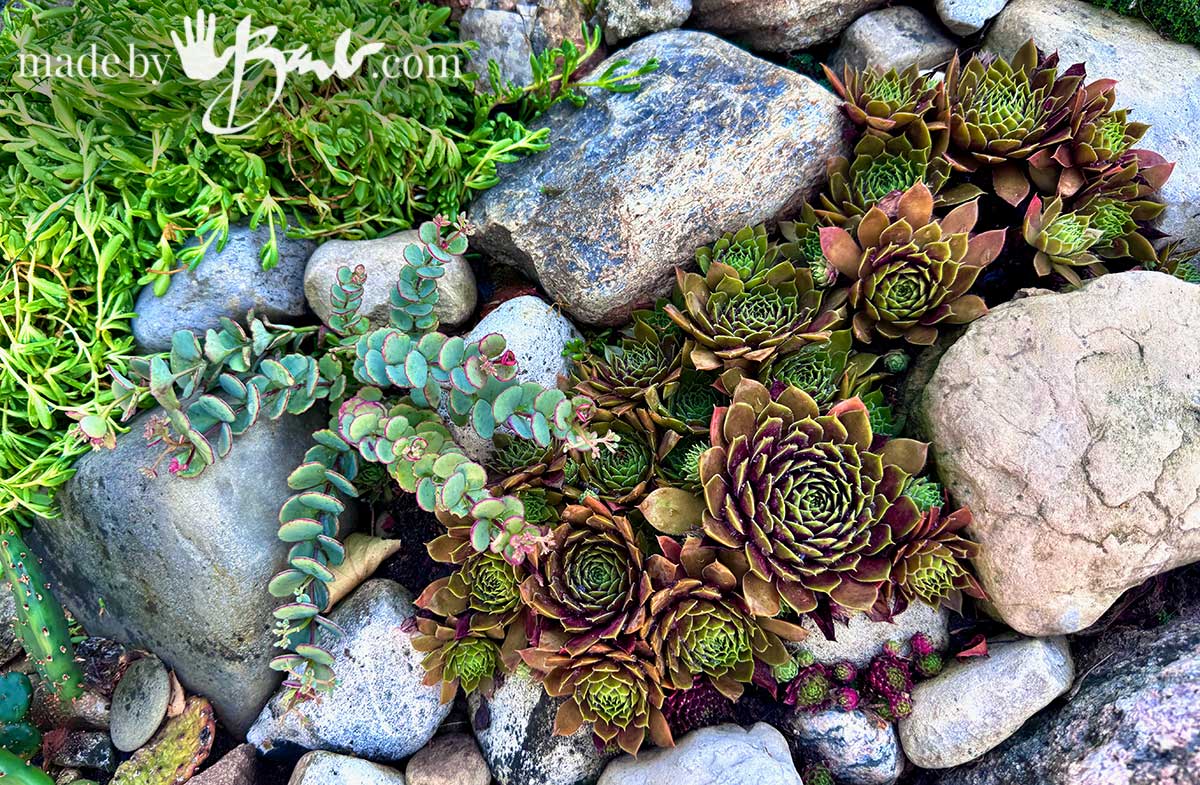
A few large rocks are generally more effective than lots of tiny stones.
Think about how rocks occur in nature. They don’t usually appear in perfectly spaced groups, so avoid creating a row of identical stones. Instead, partially bury some rocks so they appear to emerge naturally from the ground.
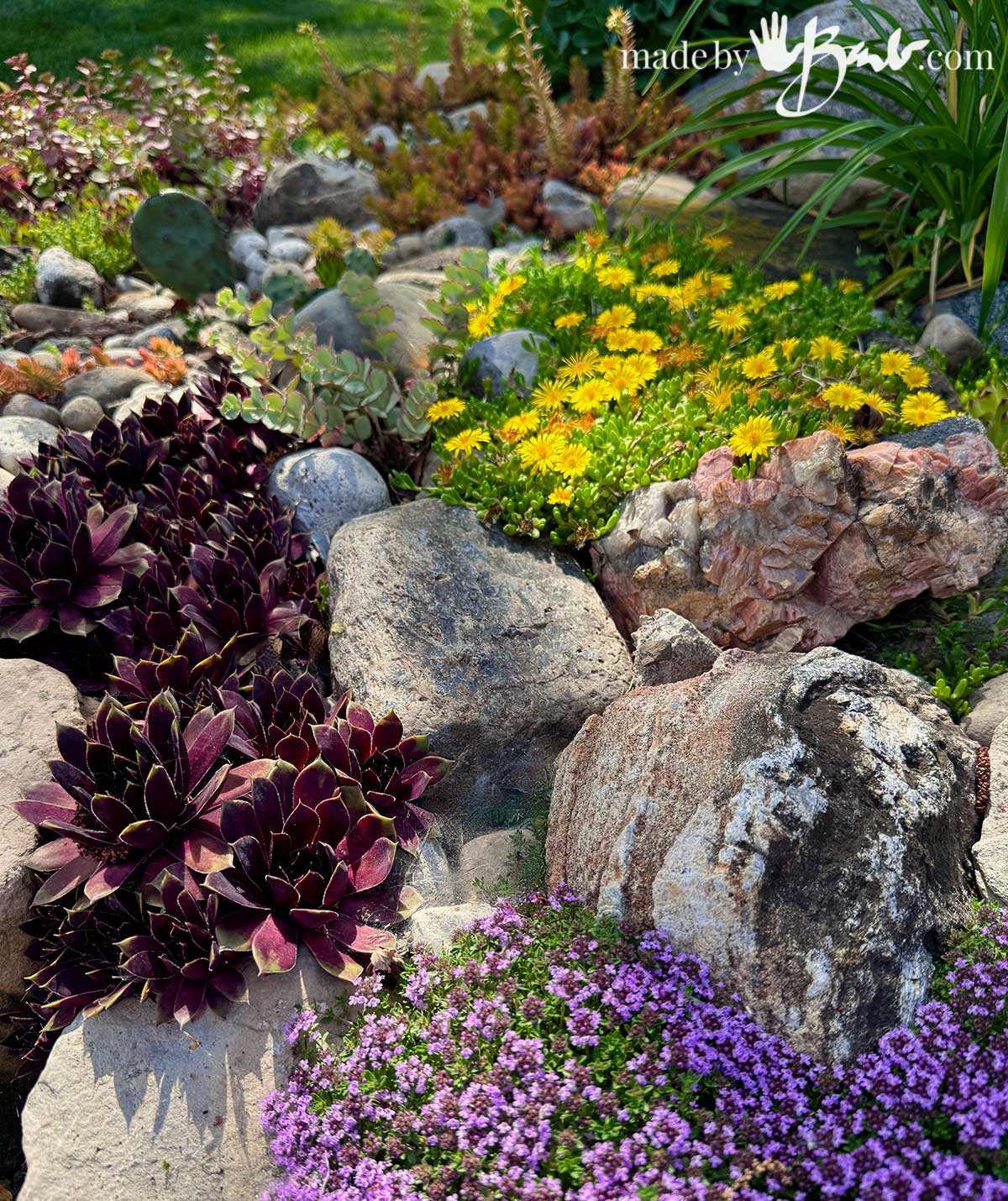
A Helpful Design Trick
Choose one or two larger rocks as your focal points. I was fortunate to have someone with a truck bring huge boulders to my property. If need be, you can also make some of your own huge lightweight rocks
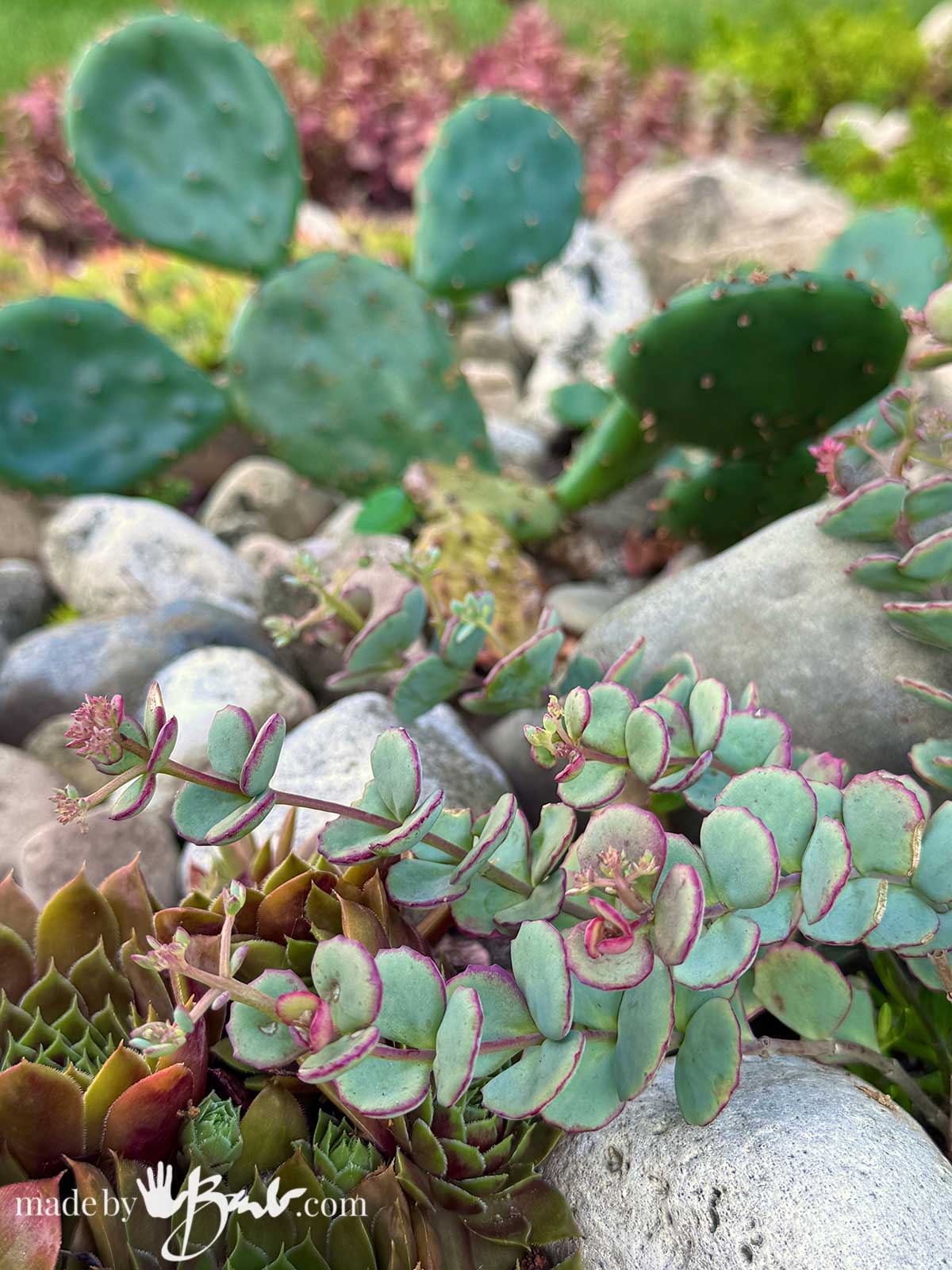
Position them first and then build the rest of the garden around them. This creates a much stronger composition than simply placing rocks wherever there happens to be space. Use your intuition, step back and look whether it pleases your eye. Landscape design is much like any other design.
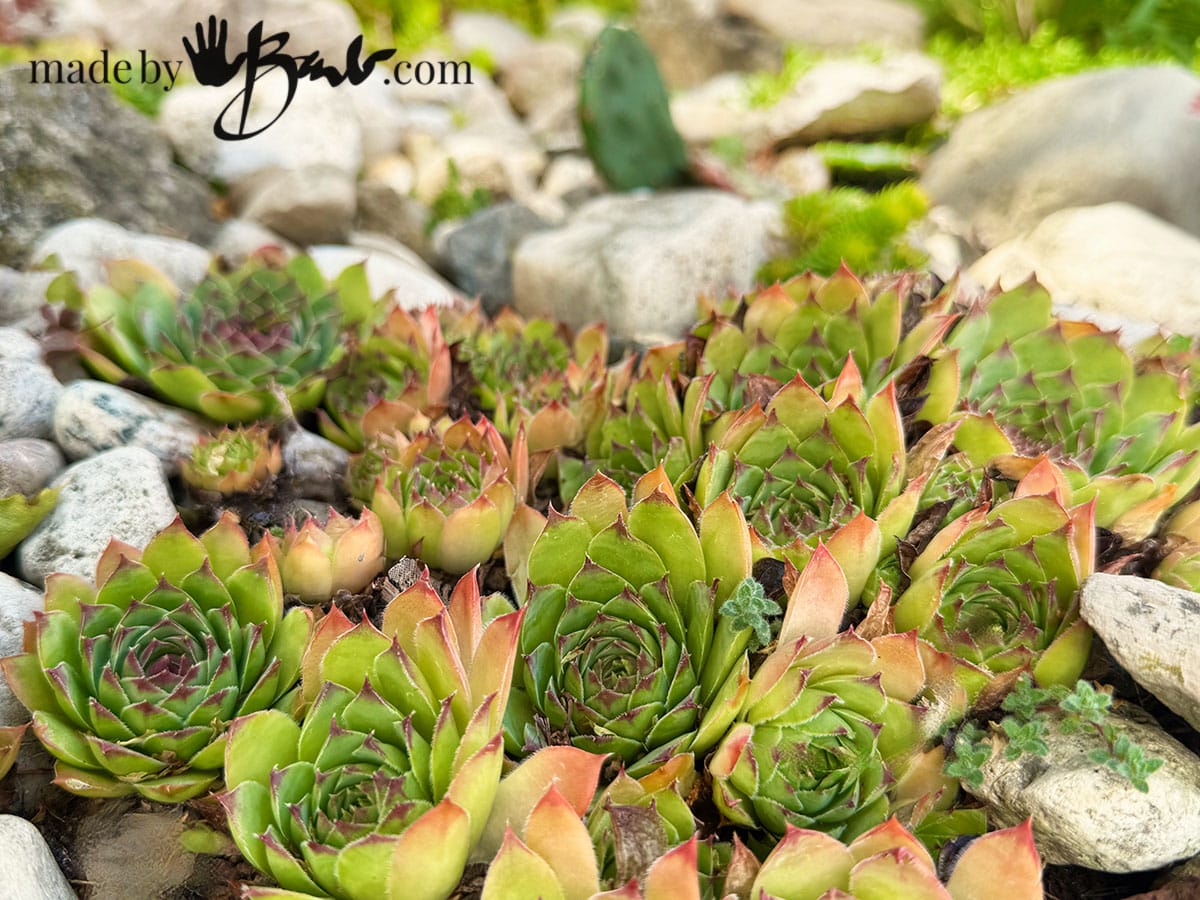
Choose Your Succulents
Now comes the fun part—choosing the plants! Use a mixture of shapes rather than buying several plants that all look alike. The best part about succulents is that they are very easy to divide and propagate. I just pull out some of the stragglers and plant bowls or orbs.
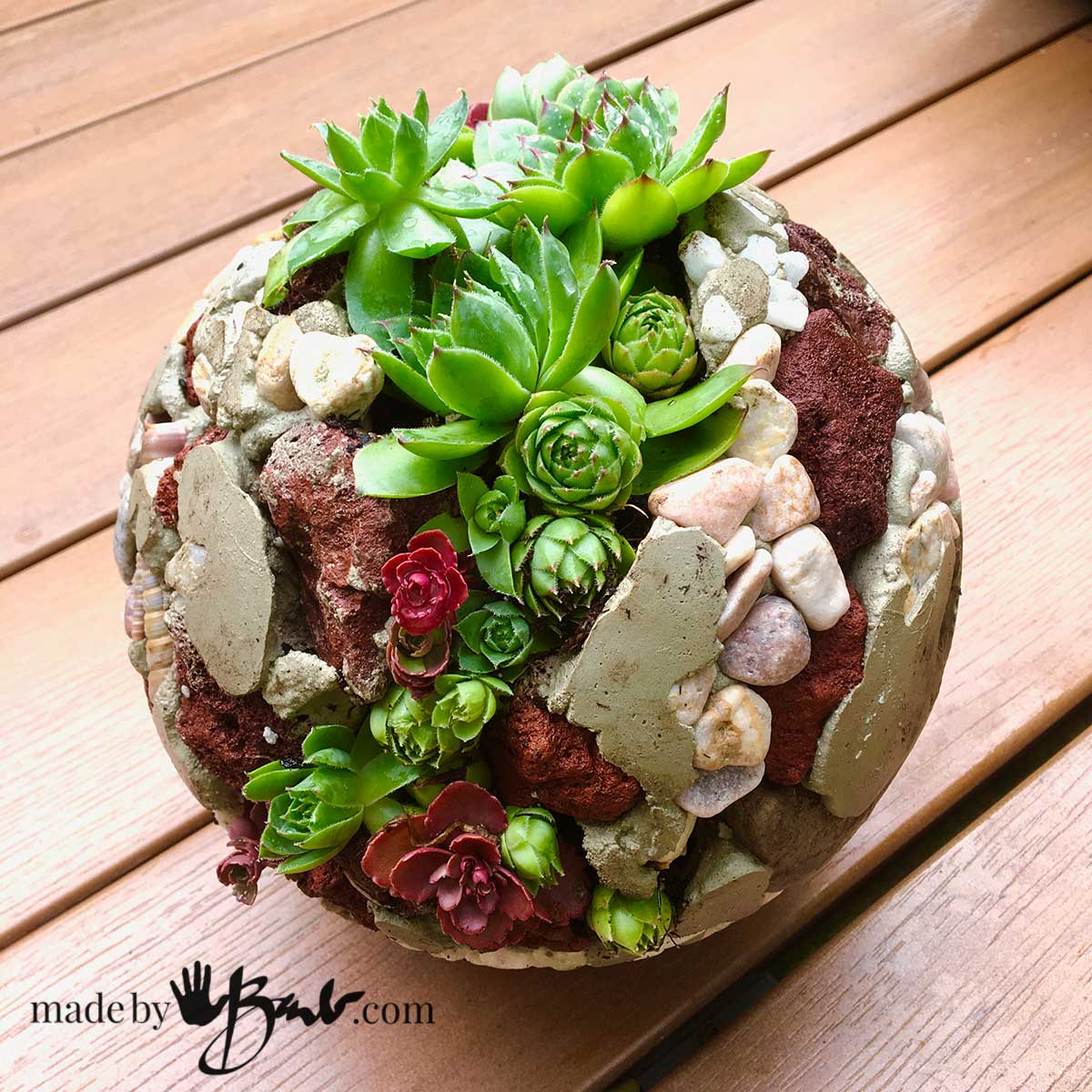
Consider including:
Rosette-shaped succulents
These create beautiful focal points and provide a strong geometric shape.
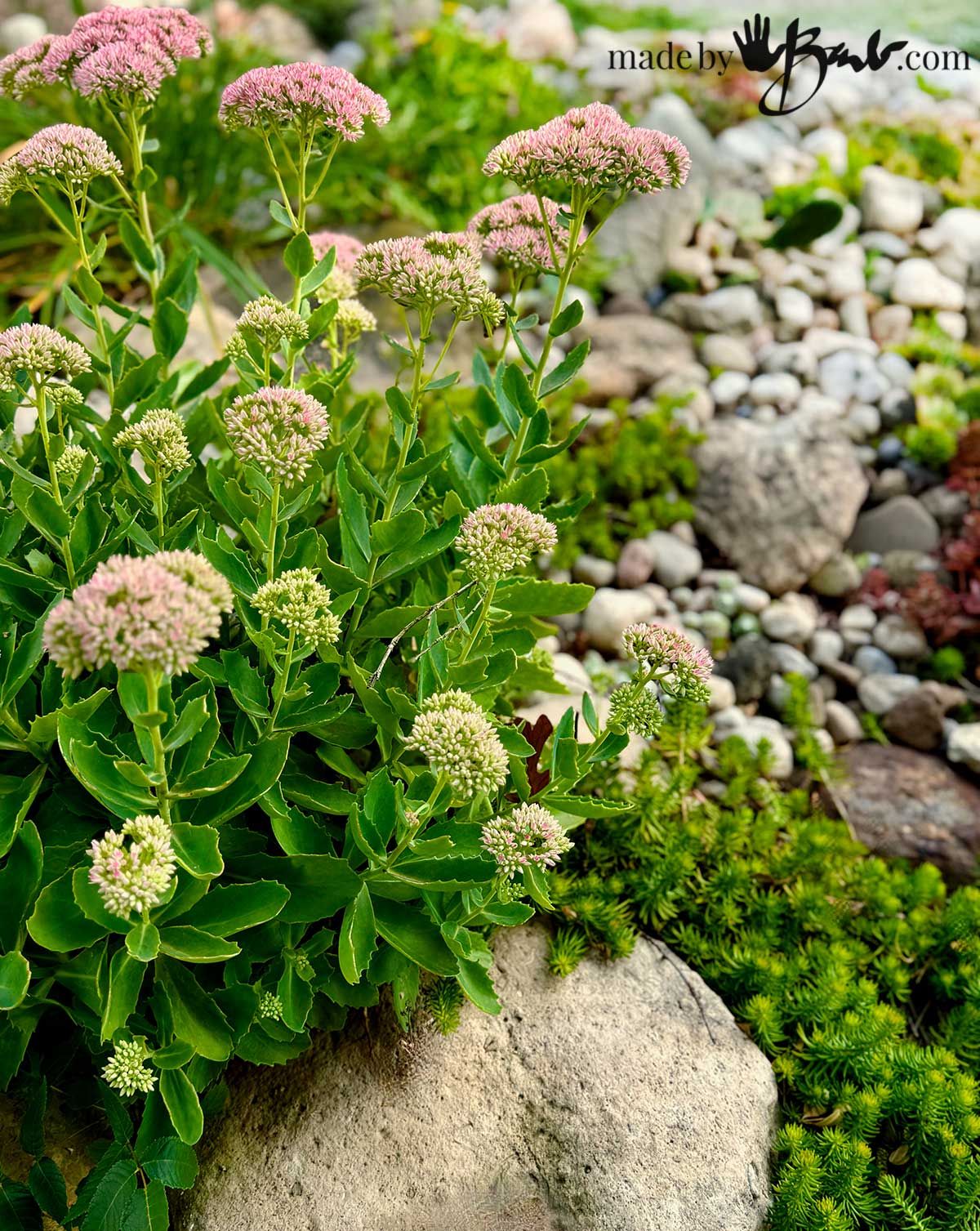
Upright succulents
These add height and help draw the eye upward.
Low-growing varieties
These are excellent for filling spaces between rocks.
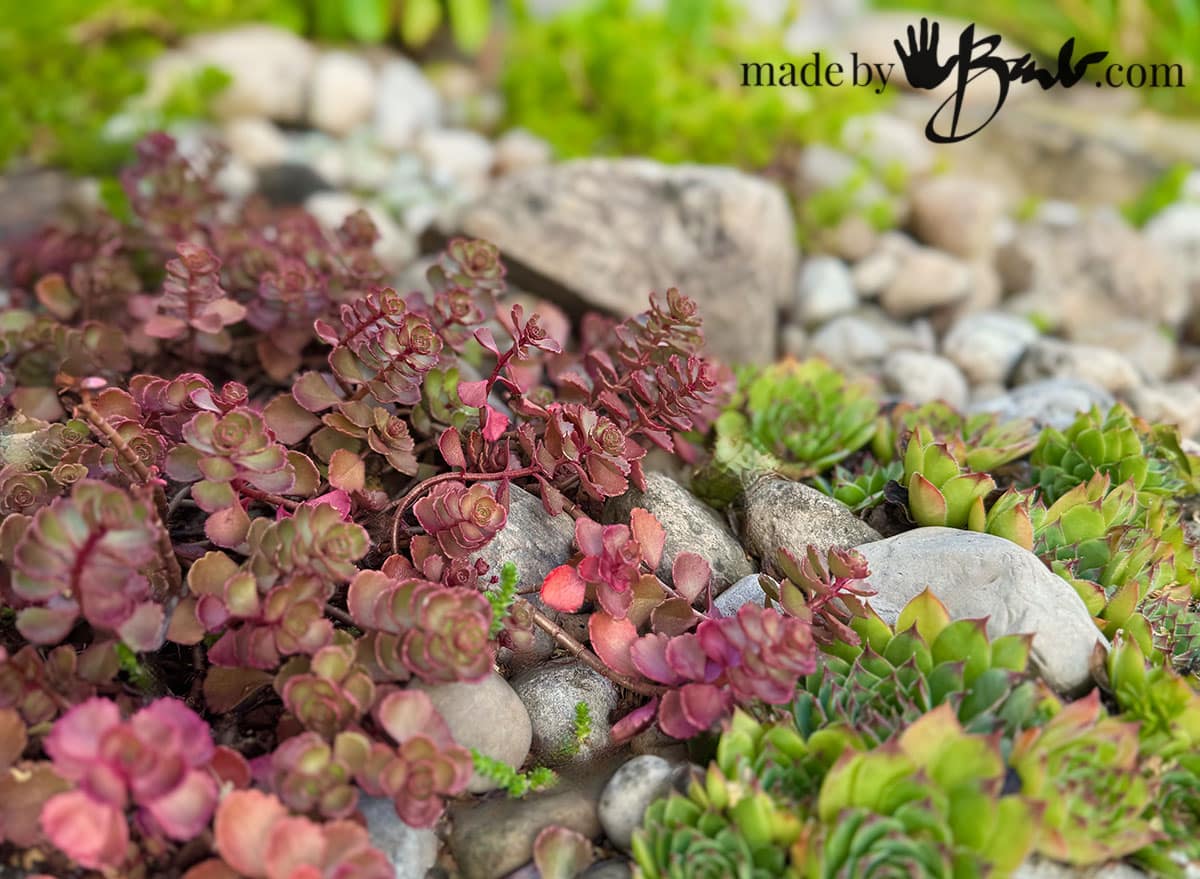
Trailing succulents
These can soften the edges of rocks and spill over walls or containers.
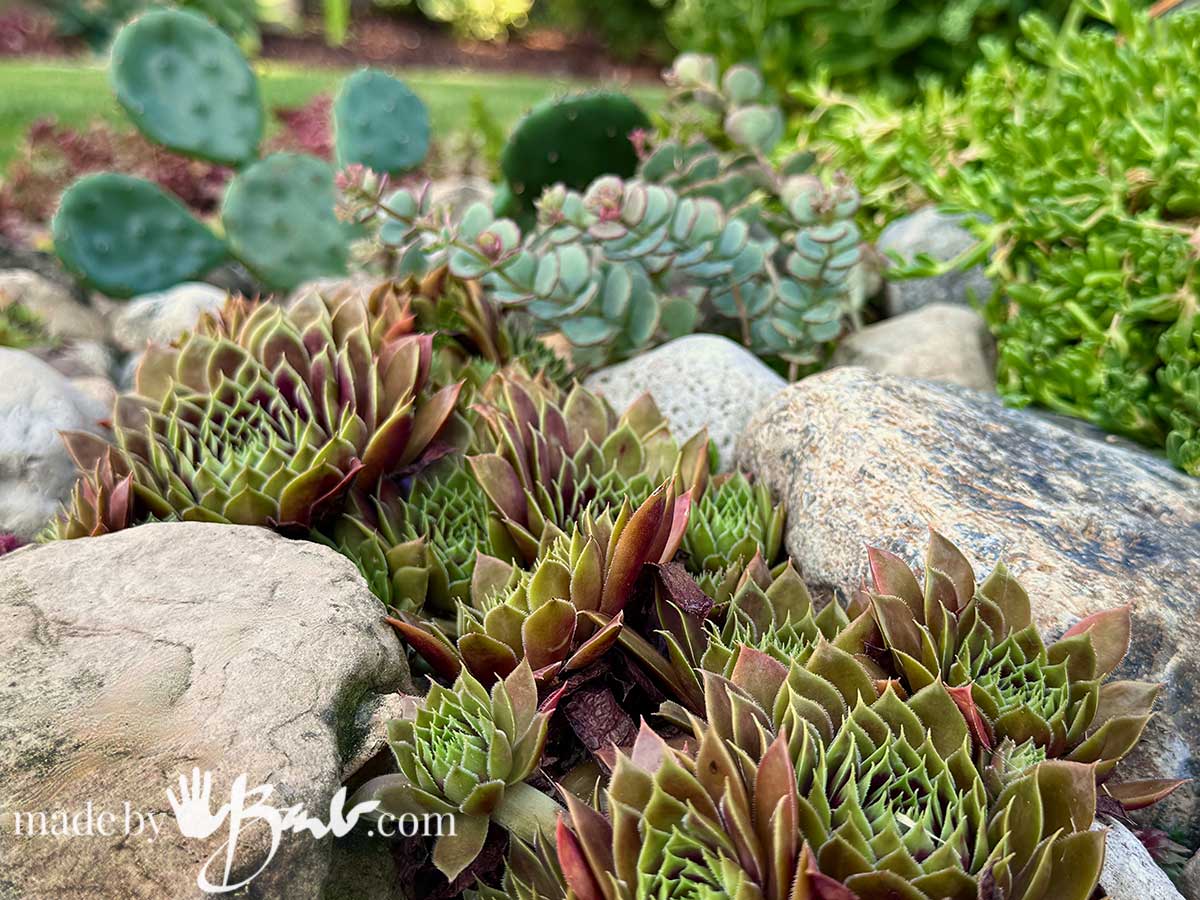
Small clustered plants
These work well as fillers and help create the impression of a larger landscape.
Choose plants with similar light and watering requirements so that the garden is easier to maintain.
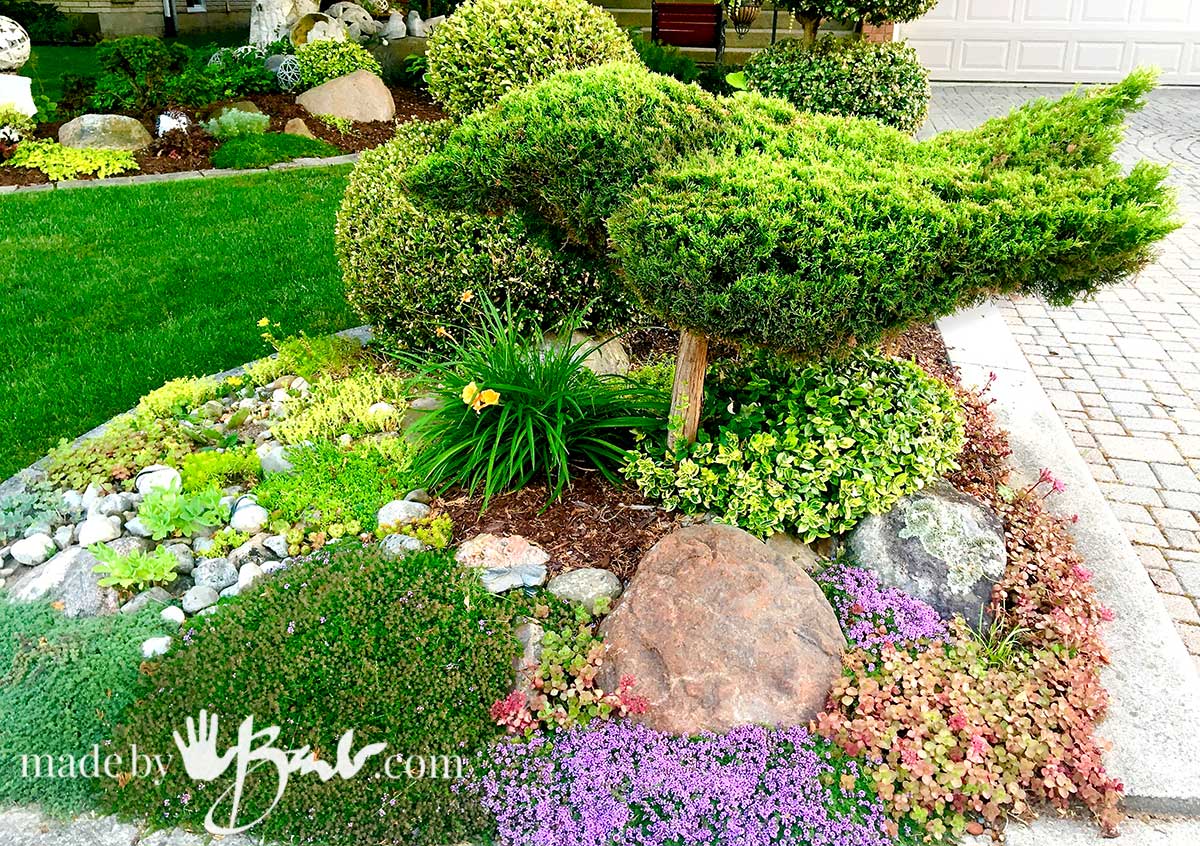
Dragon’s Blood Stonecrop, Autumn Joy Sedum, Sedum ‘Purple Emperor’, Hens And Chicks, Stonecrop… Just to name a few… Creeping varieties like Wooly Thyme help to keep areas weed free as well.
Use Repetition
One of the secrets to making a small garden look intentional is repetition.
Instead of having one of every type of plant, repeat a few favourites throughout the garden.
For example, you might use three different types of succulents and repeat each one several times.
This creates a visual connection between different parts of the garden.
You can also repeat the same colour in several locations.
Create Contrast & Tension
Succulents come in an amazing range of colours and textures. Use contrast to make individual plants stand out.
Pair:
- Smooth leaves with textured rocks
- Round rosettes with upright plants
- Pale foliage with darker stones
- Fine gravel with larger rocks
- Blue-green plants with warmer stone colours
The contrast between the plants and rocks is what gives a rock garden so much visual interest.
Leave Some Empty Space
This is one of the hardest lessons when designing a garden: you don’t need to fill every space.
Empty areas allow the rocks and plants to stand out.
In a city garden, negative space can also make a small area feel larger.
Let some gravel remain visible between groups of plants. The open areas become part of the design.
Create a Miniature Landscape
Rather than thinking of your garden as a collection of individual plants, imagine you’re creating a tiny landscape.
Perhaps the large rock is a mountain.
A cluster of smaller stones becomes a rocky outcrop.
Low-growing succulents become the vegetation spreading across the landscape.
Gravel becomes the pathway or dry riverbed.
This way of thinking makes it much easier to create an arrangement that feels cohesive.
A Modern City Rock Garden
For a more contemporary look, keep the design simple.
Use:
- Large architectural rocks
- Repeated succulent varieties
- A limited colour palette
- One type of gravel
- Plenty of open space
A restrained design can look particularly beautiful against modern architecture.
The hard lines of concrete, brick, glass, or metal provide a wonderful contrast to the organic shapes of the plants.
A More Natural Rock Garden
If you prefer a cottage or natural look, make the arrangement less structured.
Use rocks of different shapes and sizes and allow the plants to spread between them.
Add small stones and gravel in irregular areas.
Let some plants grow over the edges of rocks and soften the boundaries.
The goal is to make it look as though the plants have naturally found their way through the stones.
Designing a Succulent Rock Garden in a Container
You don’t need a garden bed at all.
A large shallow container can become a miniature rock garden.
Choose a container with good drainage and fill it with a suitable well-draining growing medium.
Place the largest rocks first, then add the plants and smaller stones.
A shallow container works particularly well because it emphasizes the horizontal landscape rather than creating a traditional planter full of plants.
This is an excellent option for apartment balconies and small patios.
Maintenance
Even a low-maintenance garden needs a little attention. Water according to the needs of your particular plants and growing conditions, and make sure excess water can drain away.
Remove dead leaves and spent growth regularly. Keep an eye out for weeds that can appear between the rocks. Minimal attention periodically will make sure it does not get out of hand. Tip; keep the individual species from growing into each other too much. If plants become overcrowded, they may need to be divided, moved, or replaced.
And remember that low maintenance doesn’t mean no maintenance. The right plants, soil, drainage, and location will make keeping your little city garden healthy much easier.
Make It Your Own
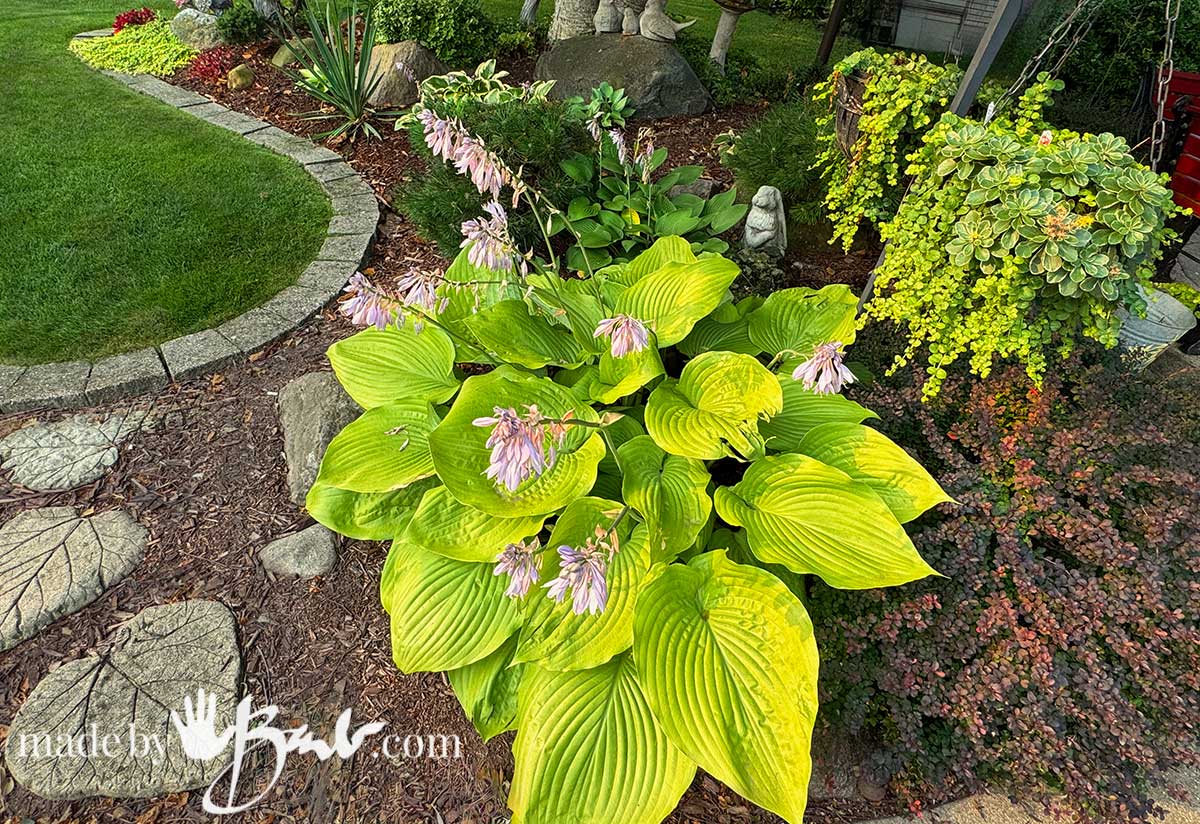
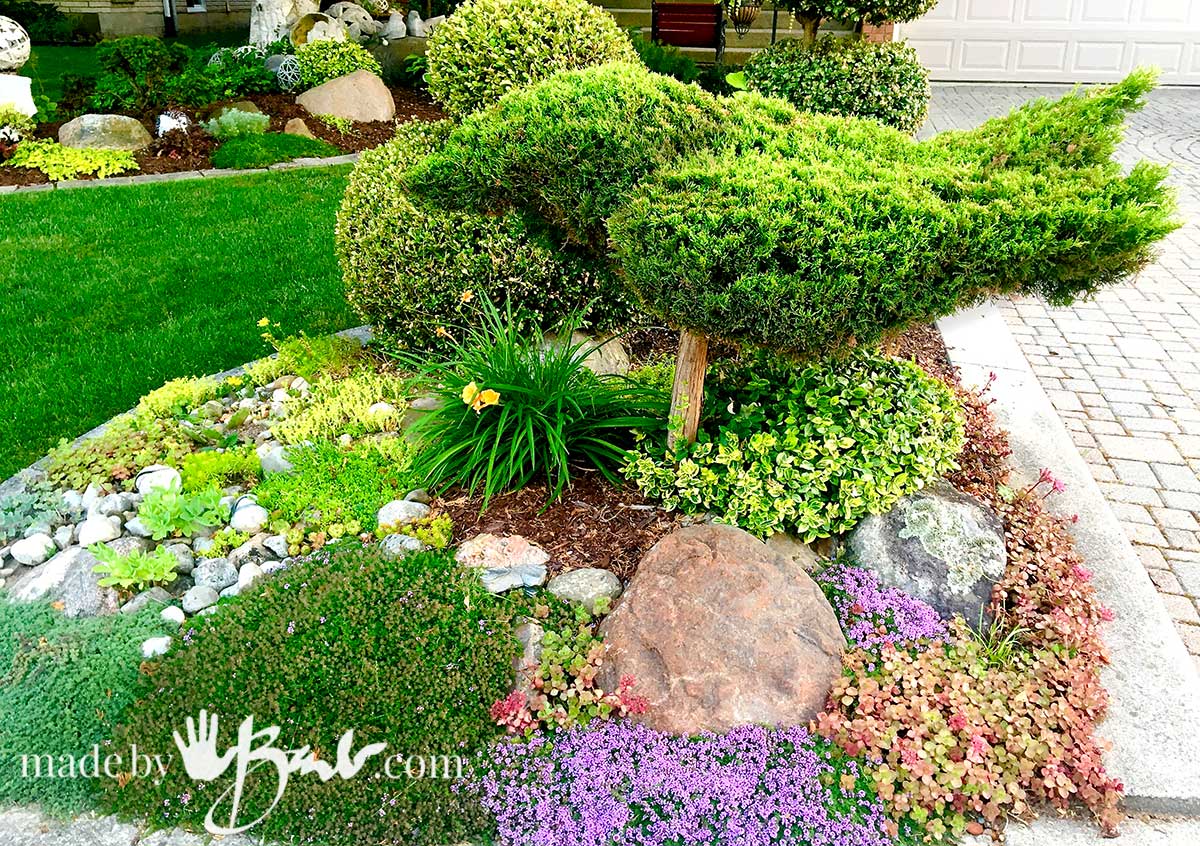
The beauty of a succulent rock garden is that there really isn’t one right way to design it. I have a bush that just seemed to look like a bird so I keep it trimmed to the ‘flying bird shape’ – a great focal point at the curb!
The most successful designs aren’t necessarily the biggest or most expensive. They are the ones where the rocks, plants, gravel, and surrounding space work together as one little landscape.
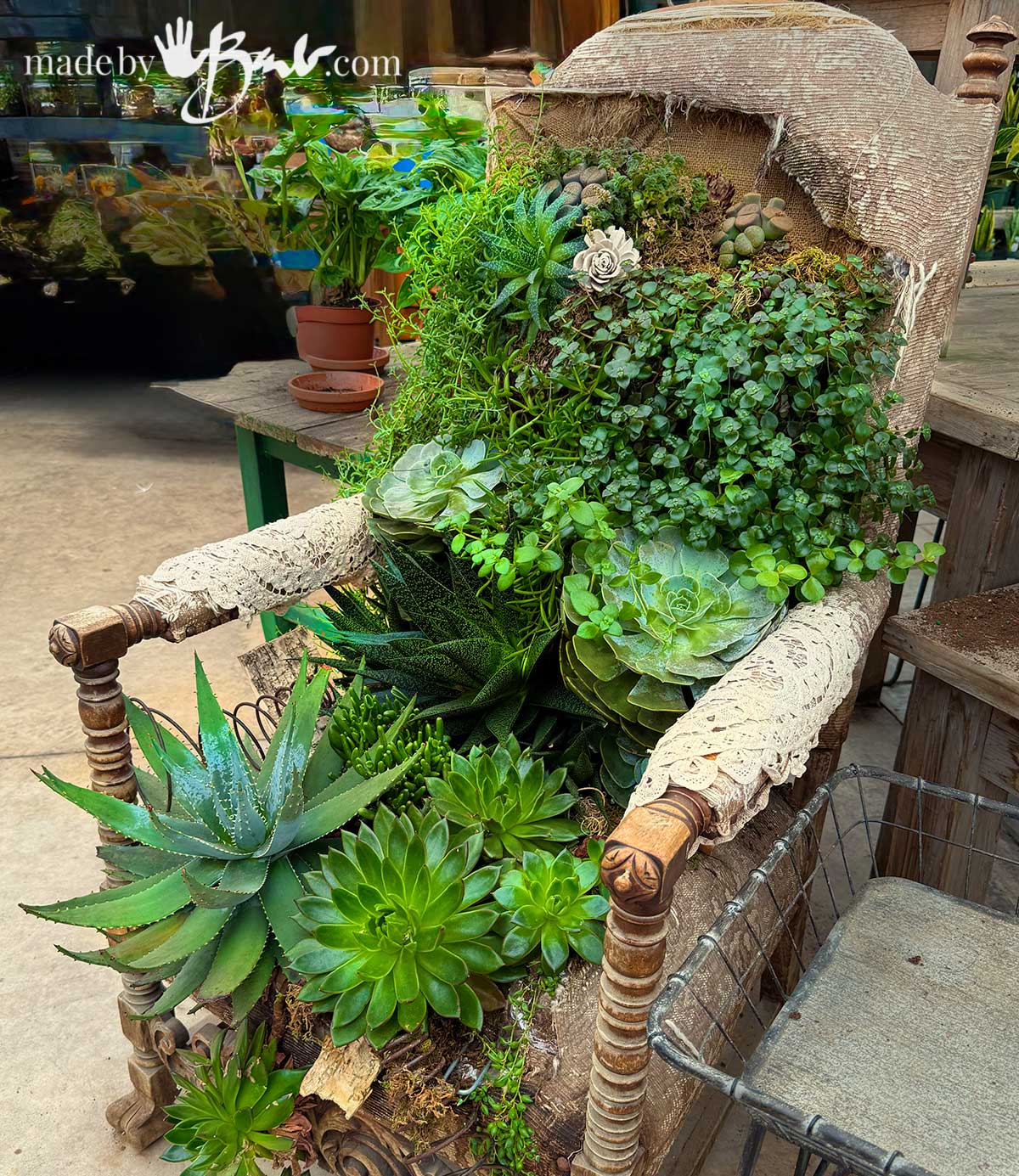
Even in the middle of the city, you can create your own miniature rocky oasis… or be creative!
Great tips Barb. I have a large rock garden that could sure use some more attention and the tips you have given will help with this. My biggest problem is weeds coming up through the rocks so I was wondering though what do you put down under the rocks? Do you use a landscape fabric or are you putting them right on the dirt? And what about weeds? How do you deal with them?
Thanks
When I originally created that garden I had used some landscape fabric with good intention. I eventually did not like the fact I had to cut through it to plant and it did not really alleviate weeds so I took it out. If you have any leaves decay it will produce soil for weeds to grow in so keep it pretty clean or away from areas that have much leaf collection. The key is to have most coverage with stones and when you see a small weed just pull before they get big… (like yoga – bend and stretch) Once it is established it will be much less maintenance. When I started a new garden with mulch coverage I used another method to kill weeds/grass. Happy gardening!
Hi Barb!
Wow! So many great ideas to make a rock garden! Many things I did not think about! I would love to create my own rock garden! Don and I are thinking of moving, It depends on the economy this coming year and house prices etc… I love the gardens you showed us. There are so…..many plants to chose from! You have a wonderful imagination!
Thank You Linda M.
Hey Linda! I do get a kick out of checking out my succulent garden, hard to believe that it’s under snow all winter! ‘A move can be exciting, so many new options! ‘Best wishes either way…