
Fitted Face Mask Pattern for Glasses

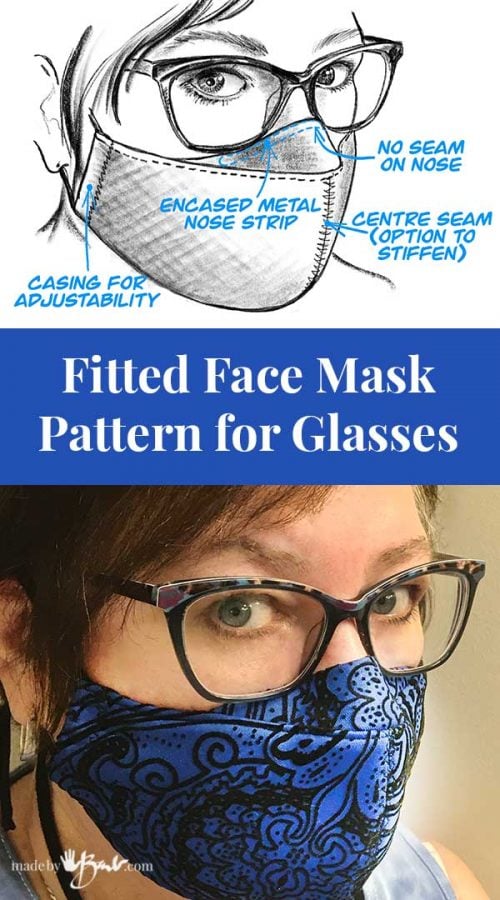
Design should always be about necessity! ‘And that is my purpose here; to fill a need for so many frustrated people who wear glasses and want a good mask pattern. My Fitted Face Mask Pattern for Glasses comes to the rescue…
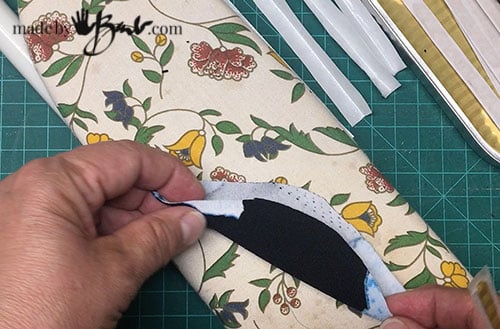
The Unique Nose Piece:
Oh dear! I am appalled at the way people wear their masks, so each shopping trip is like research. I’m seeing commercial ones but have still not seen that many that look like they are really comfortable or fit well. Maybe that is why there are so many ‘un-masked’ rebels! Fogging glasses and touching mouth are very common complaints.
I know the ‘Olsen style’ mask is very popular and my first design has had great reviews and mass amounts of downloads. The problem would arise when there was just too many layers at the centre seam and that would push glasses up or out, which would affect visibility. To remedy that I removed the centre seam AND the top edge seam to make a single piece for the nose in this fitted mask pattern for glasses. Also, even better; it has a super flat aluminum nose piece ironed inside to make it super flat and adjustable!
To make this Mask:
Download & Print the Pattern. Cut one nose piece, 2 lining and 2 outer pieces. (you can add layers/filter pocket as you like) Fold and press the nose piece in half.
You can also watch it in video form: (please subscribe, so that I will continue making videos)
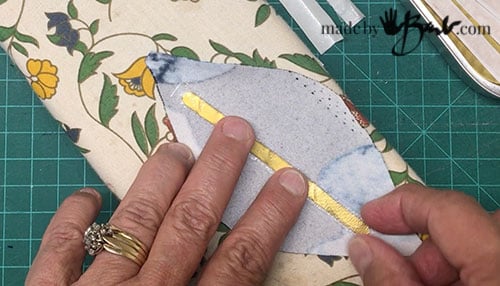
Make you own Metal Nose Pieces:
Check out my video & instructions to see how to make these nose pieces. Trust me, it’s easy.
They are made with fusible web so they can now be ironed into place and stay there. Place it next to the centre fold.
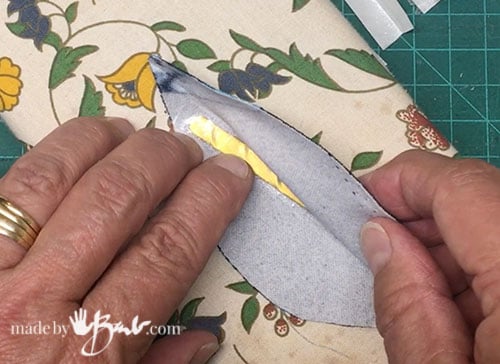
Fold over the fabric and make sure the metal piece stays centred. It should be at least 3/8″ away from edge.
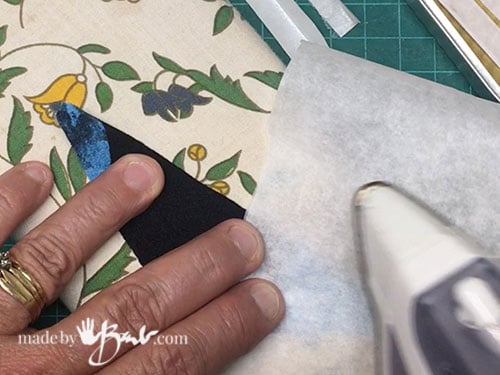
Use some parchment paper to protect the iron from any possible contact with the fusible webbing. (don’t ask me how I know that!)
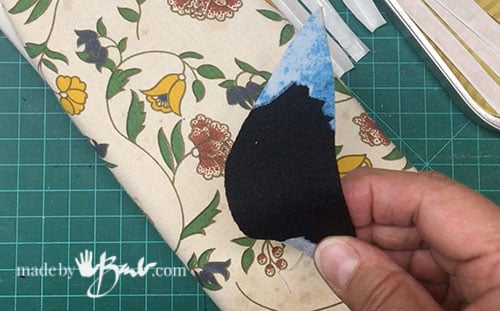
Ta-da! You now have a ready to use nose piece. It is bendable and very slim. Yes it is only 2 layers but if you desire you could do more and use more fusible webbing as well.
I have found that breathability is making the decisions for mask fabric choices… but that’s a whole other discussion. Do make your own decisions.
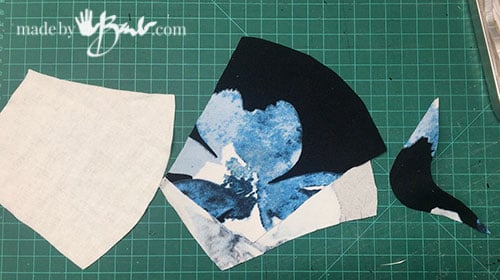
Cut 2 of lining and 2 of the outside fabric. I have decided on a polyester knit here.
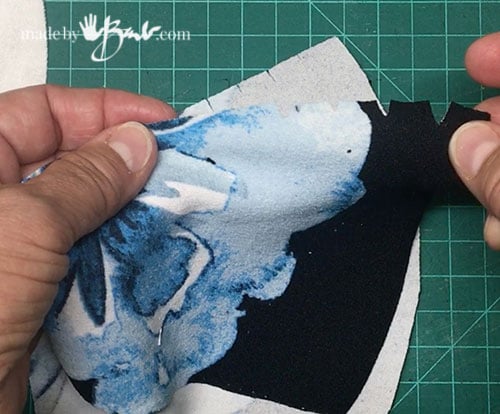
Since the nose piece is not flat, clip at the markings on the top edge.
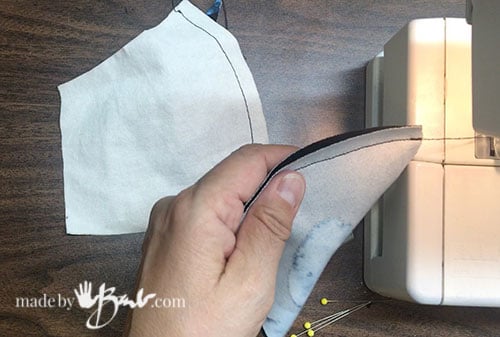
Sew the front centre 3/8″ seams of both the lining and outer fabric

Fold open the centre seam and flatten with top stitching (zigzag or mending zigzag work well)
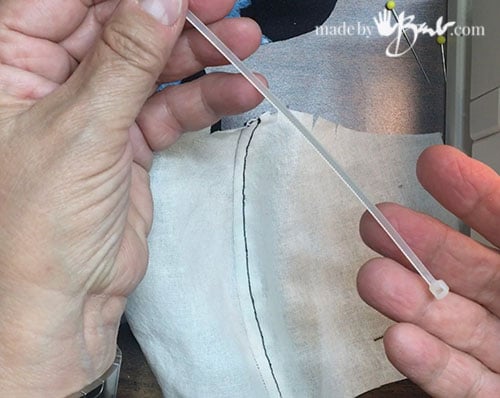
Top stitch a line slightly over from the centre seam and there is the opportunity to put a stiffener in this channel. Zip-ties or pipe cleaners work well and prevent the mask from collapsing at each breath.

Centre the nose piece on the top seam (right sides together) and sew seam, spreading at clips to flatten nicely.
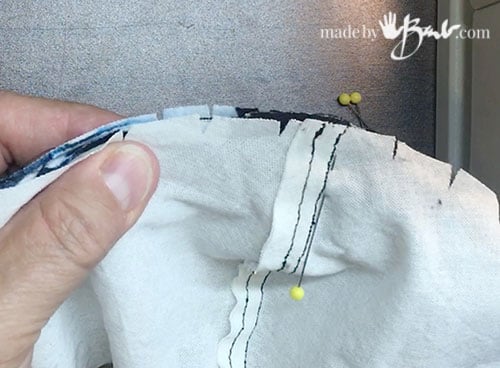
Repeat by adding the lining piece and sewing seam.
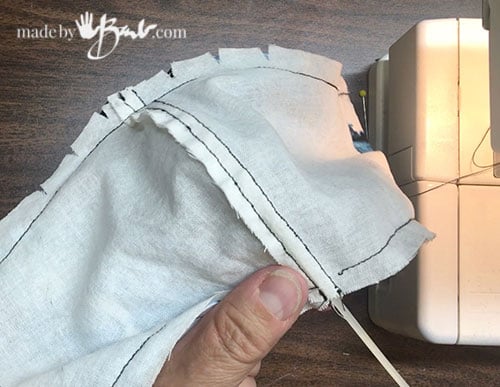
Insert Optional Stiffener:
Push the zip-tie (or pipe cleaner) into the channel and cut at appropriate length and stitch closed. This will help keep the mask off your face. I do not particularly like having something touch my lips, just saying.
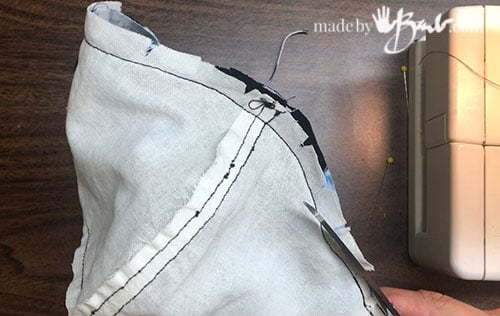
Trim excess seam allowance to make as flat as possible.
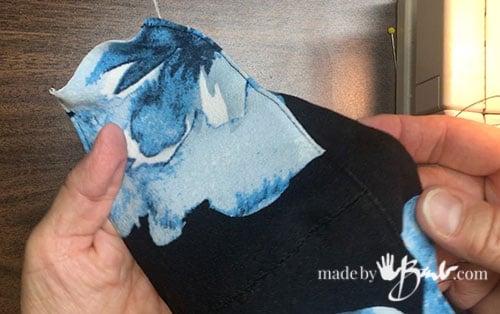
Right Sides Out- Fitted Mask for Glasses:
Turn right sides out (ends are still open) and top stitch close to edge to keep flat and in place.
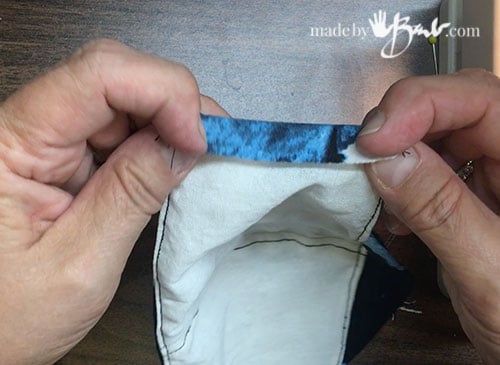
Fold over ends to make casings for the straps.
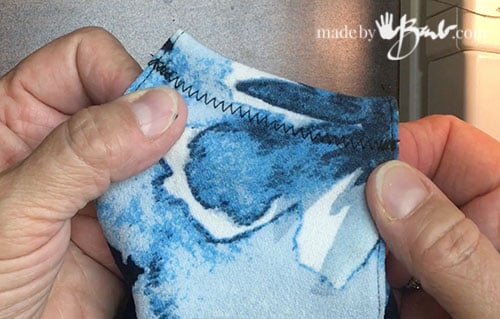
Zigzag or straight stitch depending on how much the fabric frays. I prefer to use some cut strips of spandex-mix t-shirt (like camisoles) to make soft easy-stretch straps/ties. They can be looped around as one long tie or just behind the ears. This is better than permanent elastic.
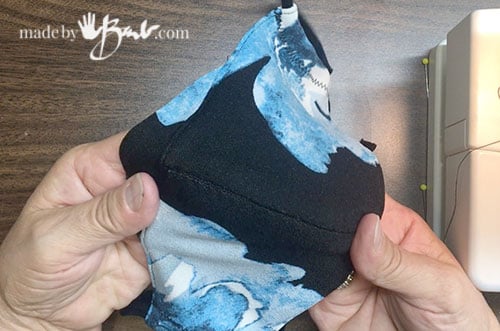
Extra Stability:
Another thing that makes for a better fit of this Fitted Mask for Glasses is that all the layers stay together. I know, you do not want to stitch and makes holes through the fabric, but it can really help keep it more comfortable, off the face so that makes breathing easier since it allows more surface area to bring in air. (You decide) I like to stitch through the layers to keep the lining stable. You can stitch through the front centre and/or across the width.
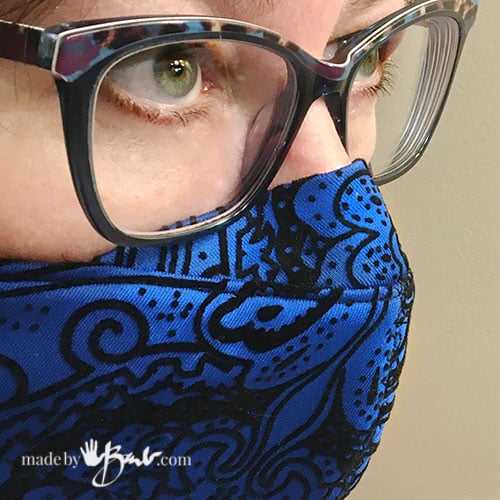

The nose piece set in this way allows for better angle and is much less bulk than having a top seam. Keeping as much stability at the front seam also makes it less likely to keep suctioning to the face.
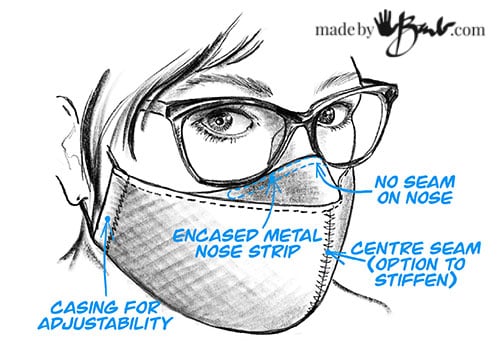
I know I have the other styles like The Ultimate Face Mask & The DIY N95 Style face mask but they also have edge seams at the nose or do not ‘scoop’ lower over the cheek. Small differences in this Fitted Mask for Glasses can mean a lot… (think about the fit of your pants – we all have a favourite)
Whatever you do, please keep yourselves and loved ones safe. We do ths for ourselves AND others!
Can’t download pattern Please send as attachment. Thanks
…Enjoy!
Done 😷
Do you sell face masks?
No sorry, I am crazy busy as I teach as well.
Thank you so much. You have done an amazing job of this. I finished making mine. I love it.
hi Barb,
Thanks for allowing us to use your pattern. I tried it tonight with huge results. Your instructions were great and photos sure helped! Making the nose piece was a great excuse to go buy a couple of cans of smoked oysters!
Printed the download easily by loading to my phone then emailing the pdf to myself, opened computer and printed from there.
Masks are mandatory now at work, the ones they issued us were horrible. This pattern beats those hands down.
Thanks so much!
Thanks so much for your feedback! I am so glad to help!
Your designs are brilliant especially when it comes to spectacles.
I’m guessing lots of people like myself have not followed a sewing pattern in years. So it’s not easy for us to know how to do each stage..
Your still pictures and videos are good but they would be a lot easier to follow if you used an un patterned fabric ( it’s hard to see the outline of the nosepiece as it’s broken up into blocks of colour. ) Similarly the background needs to be a contrasting single colour. So we can see really clearly where the borders of each piece are. It may seem unnecessary to you but on screen it will make it really clear and easy to follow. The fabric on your irioning surface is particularly distracting. Yes we want to see finished masks in jazzy fabrics . But the instructions need to be clear and simple images. Please.
I’m sorry, I was using what I had and trying to get it done ASAP. So many people have made the Olsen type mask that just adding a nose piece between seems simple. Thanks for the feedback.
Maybe adding a light weight interfacing will help. Or switching to a more stable fabric. Make sure the needle is sharp as well.
Love your idea of inserting a zip-tie channel. Is this channel sewn in the lining only? I use the Olson pattern and sew in a “Personal Protective Equipment Medical Barrie Fabric” (amazon.com) as a filter. This fabric is used as mask and Isolation Gown Fabric.. Although this fabric has a degree of stiffeness which keeps the fabric off the face your idea of inserting a zip-tie channel gives even more assurance of keeping fabric off the face. Please respond.
Yes, it is inserted in the channel made by top stitching the seam allowance. If it frays too much or is too narrow, you could just us a strip on the bias to not fray. If your fabric is non-woven then it would be fine. ‘Hope that helps!
You are the most patient woman I know of. I read through comments on the mask for glasses and can’t believe how many times you answer the same questions. This is just to tell you how much I enjoy your blog and your mask instructions are perfect. I have made three now and I consider your pattern my favorite out of 6 that I’ve done this year.
HAHA!!! Yes, I have discovered a lot of tings since starting this blog, it’s a different world nowadays. I also still teach in post-secondary school so I am used to it. So kind of you too give your feedback! It takes a lot of work, so that makes it worthwhile. Stay safe…
Do you prewash so the fabric doesn’t shrink or bleed?
Yes, I do especially if I have dyed it.
Is there a video using a lighter colored fabric. I’m really struggling with understanding it with the black thread on black material. I am just learning to use a sewing machine and majorly need visual cues. Looks like an awesome pattern but I am struggling.
It’s in the works! Subscribe to not miss it…