
How well have my outdoor Mosaics lasted?

When you’re creating a mosaic to last through the years & seasons, not just anything will do. Outdoor mosaics are beautiful but also have to endure rain, snow, scorching sun, and freezing temps. I’ve made some tests and here’s the update:
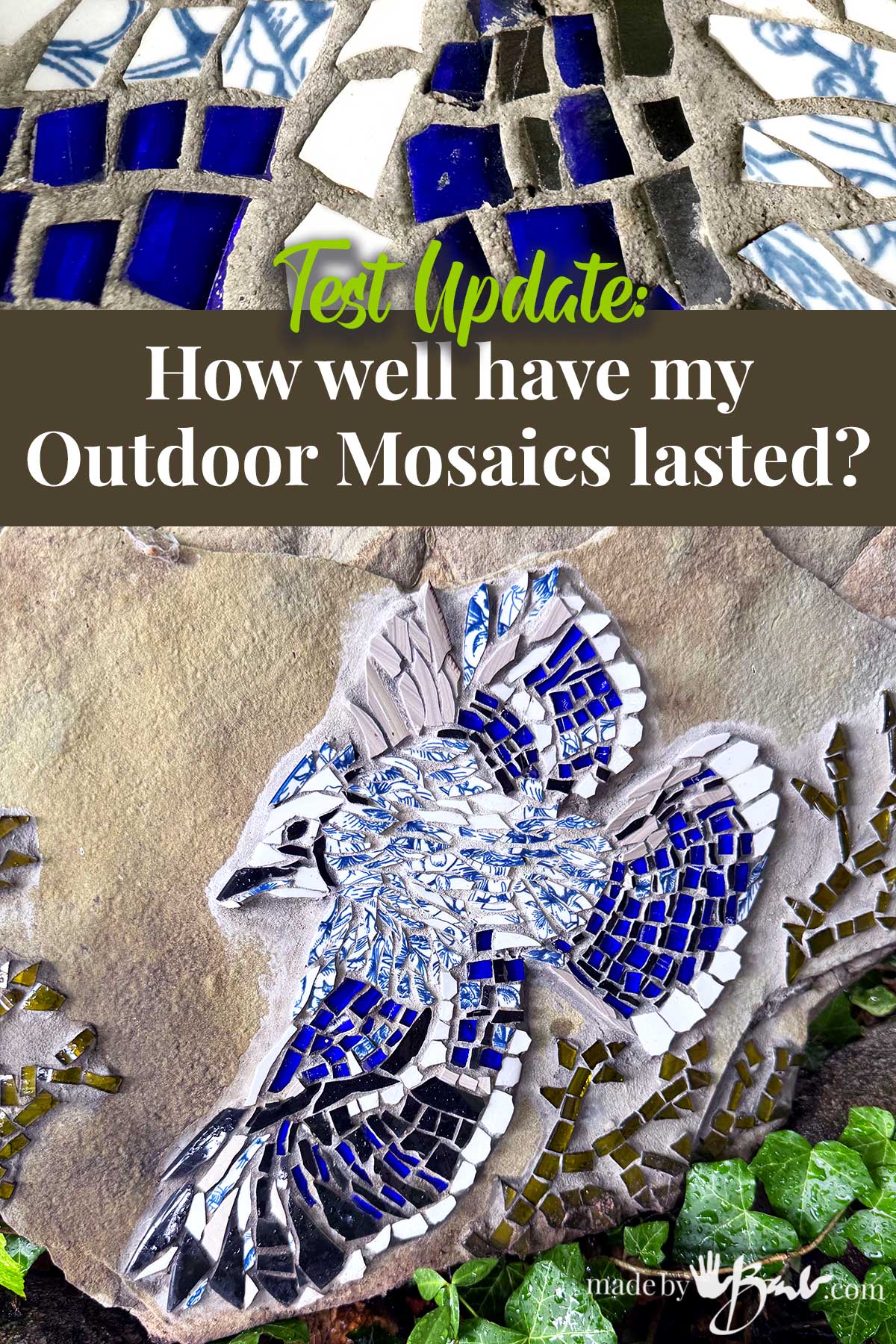
I’ve taken a close look at my garden mosaic projects from years ago and am quite happily surprised at the results! Come join me!
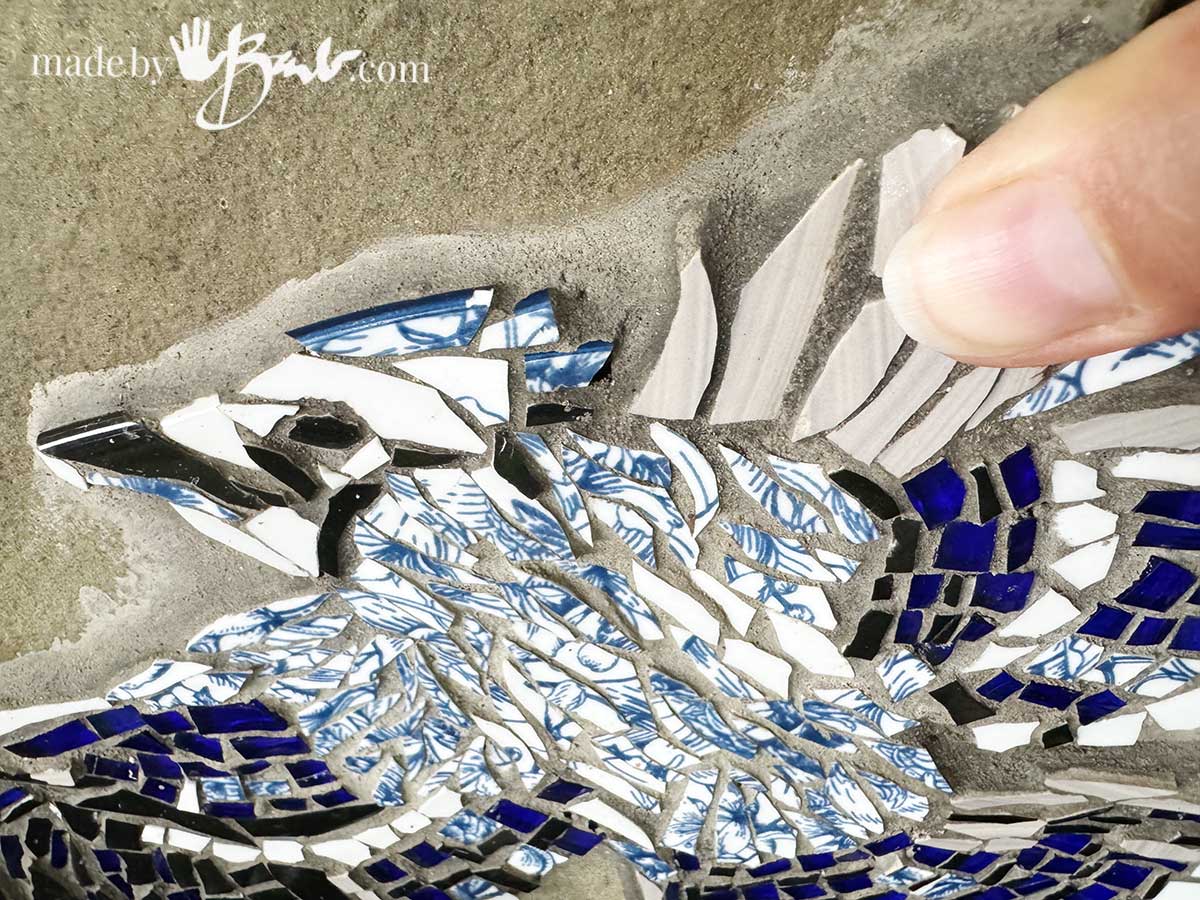
Whether I’m making decorative wall plaques, orbs or garden stepping stones, Versabond has become an essential part of my creative toolkit. If you’re serious about making mosaics that will last, here’s why this product should be your base—literally.
Strong, dependable, and weather-hardy—just like good art should be.
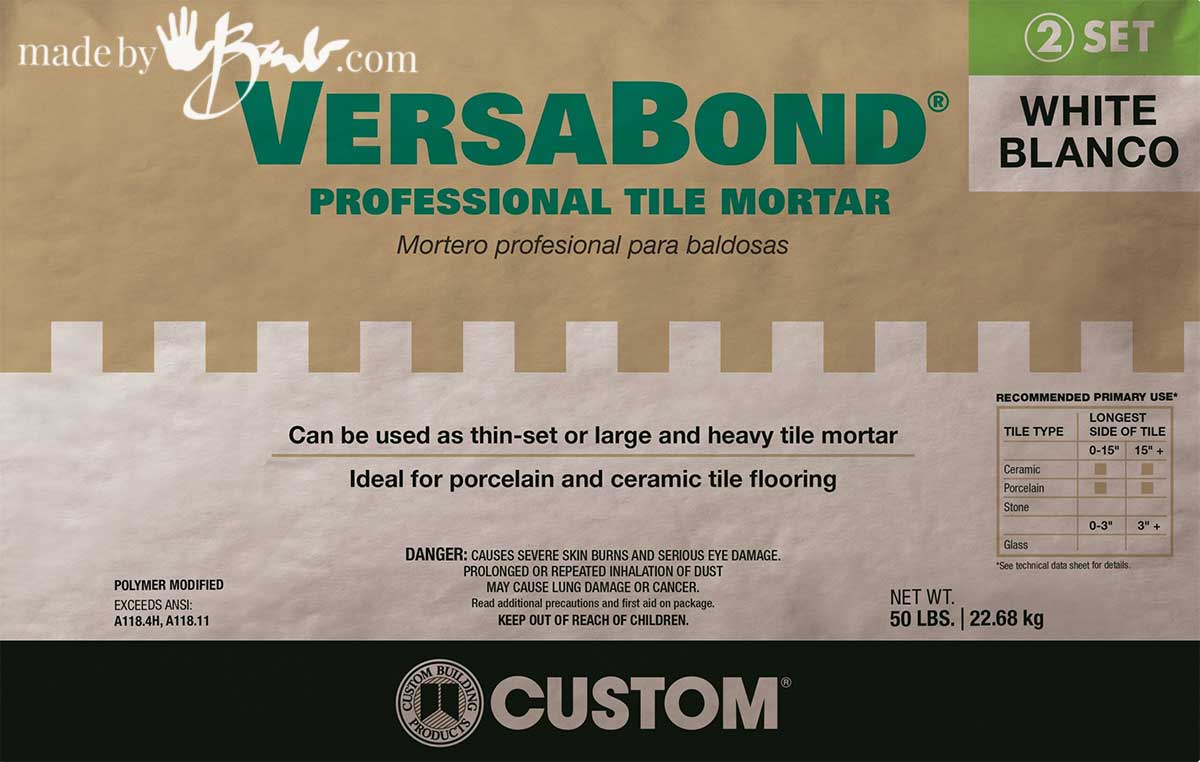
What Is Versabond?
Versabond is a polymer-modified cement-based thinset mortar, often used in professional tiling work. It comes as a dry powder that you mix with water to a spreadable paste. Once cured, it creates a rock-hard bond that’s water-resistant and incredibly durable in exterior area applications. (See specifications here) You can find it at most hardware stores in 50 lb bags, usually in gray or white. For most outdoor mosaics, gray is just fine—especially if you’re working with darker tile or stone. It can also be tinted within limits. Make sure it used on suitable substrates.
Why It’s Perfect for Outdoor Mosaics
- Strong Bond
Versabond grips glass, ceramic, porcelain, stone—even metal—with surprising tenacity. It doesn’t shrink or crack like some glues or mastics, and it locks your tesserae in place permanently. - Weather-Resistant
Rain or shine, snow or ice, as being in Canada I have a wide variety of weather. It’s designed for both interior and exterior applications, so it holds up through freeze-thaw cycles—ideal for Canadian and northern climates. - No Need for Sealing (Before Grout)
Unlike wood glue or craft adhesives, Versabond creates a surface ready for grout. I have also used it as the grout with no issues. It also resists mold and mildew, which is a big plus for outdoor pieces. - Sets Rigidly
This is especially important for any mosaic exposed to movement or vibration (like a garden stool or stepping stone). Once it cures, it becomes part of the structure.
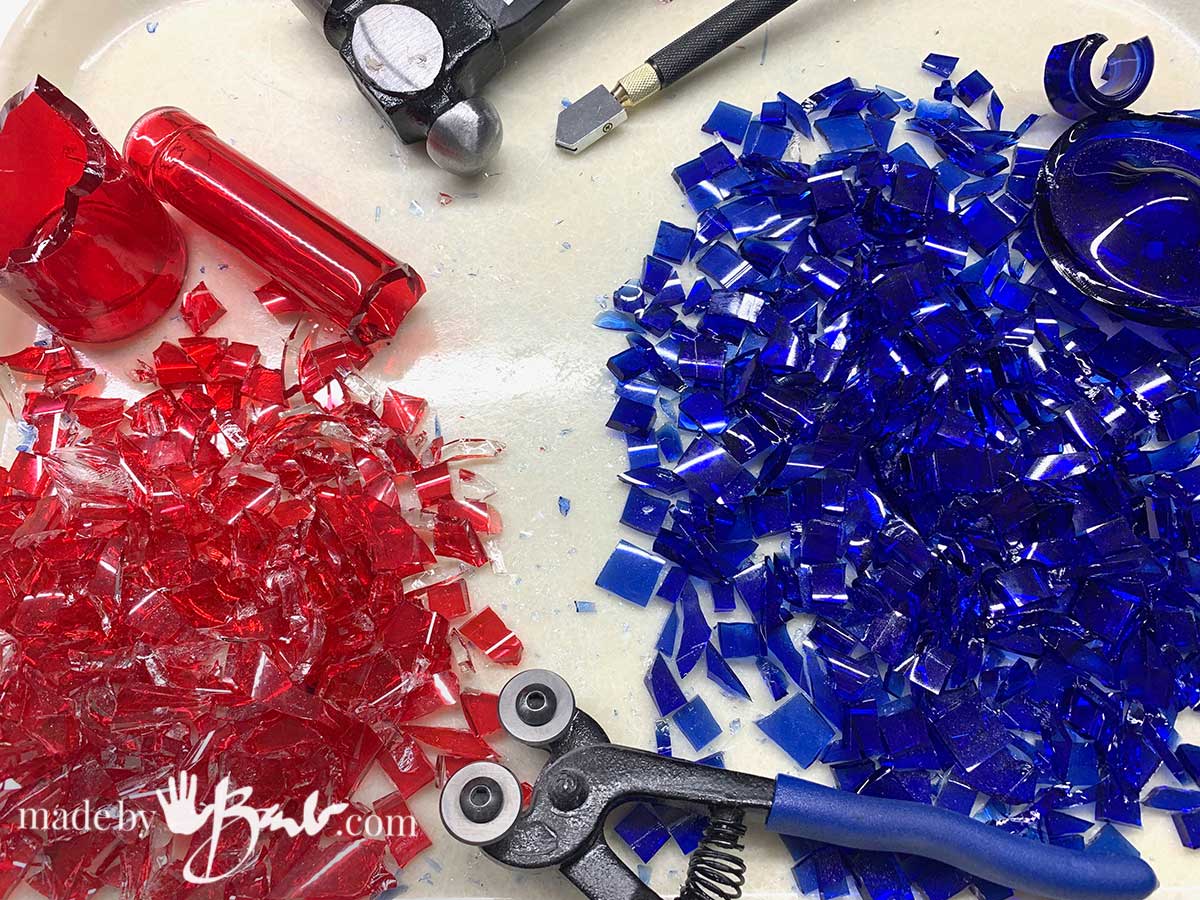
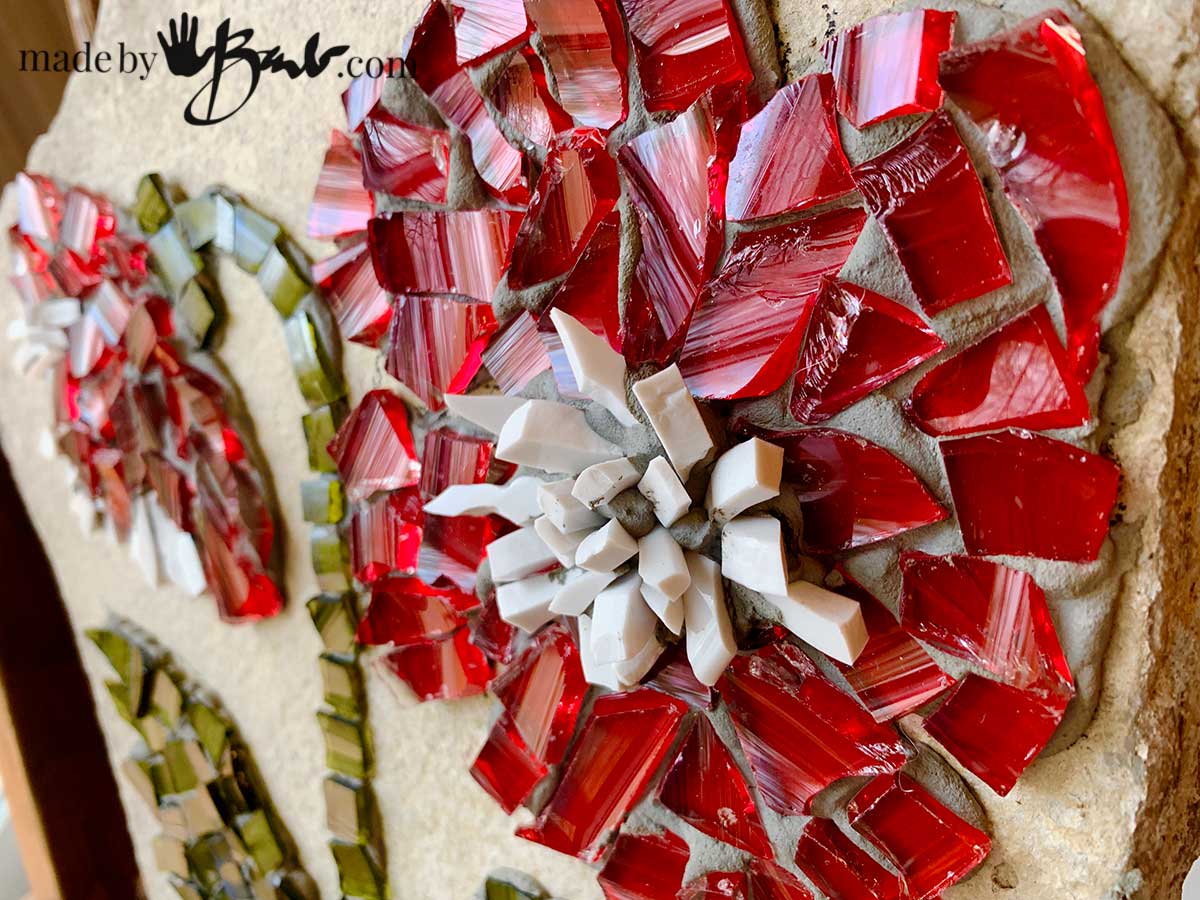
I love the way that you can make your own Tesserae (pieces for mosaics) from found glass, bottles, dishes etc. It also allows so much creativity!

Who would believe that this was actually just ‘garbage’ from broken dishes, olive oil and alcohol bottles! This really shows the great bonds as the glass was only imbedded in the thin-set mortar.
Tips from some of My Own Projects:
I’ve used Versabond for several mosaic experiments:
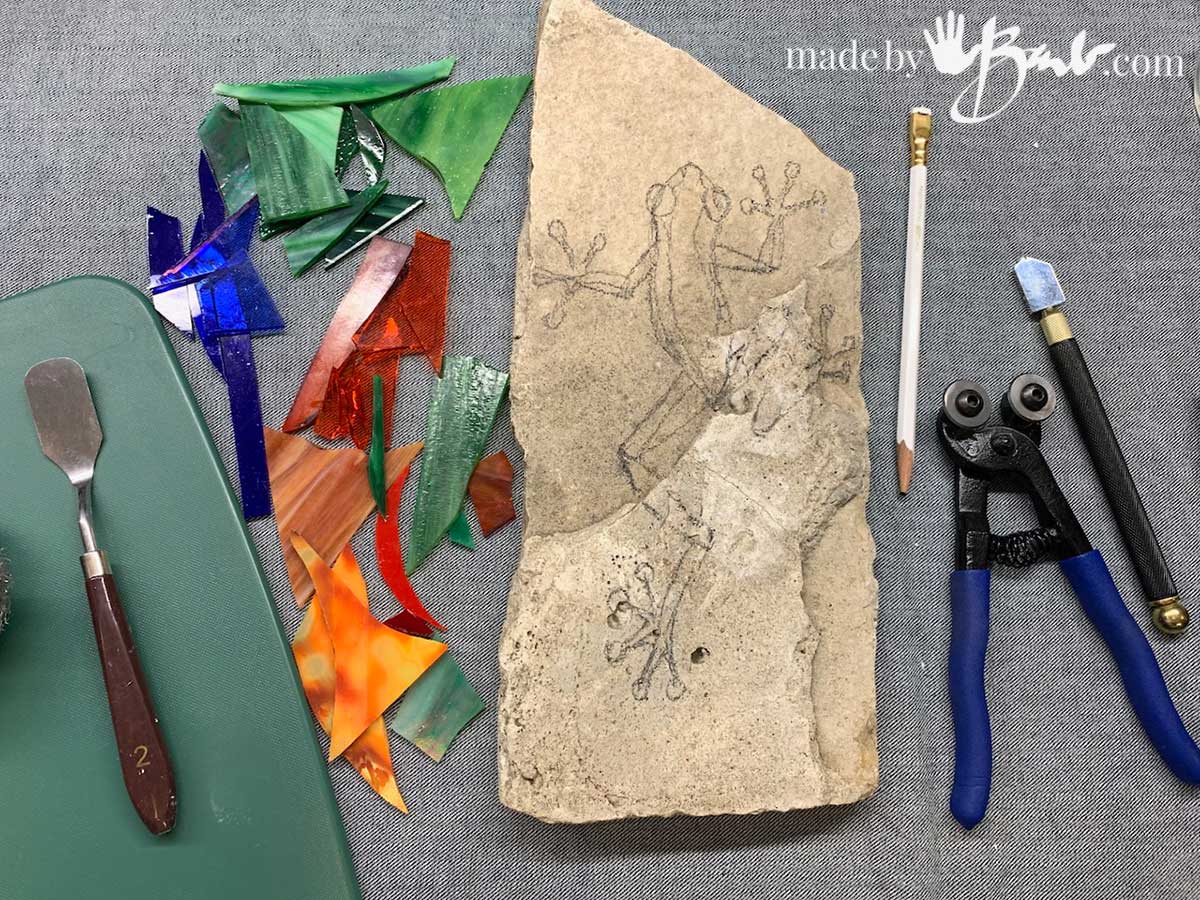
Here I’ve layered ceramic and glass tile pieces directly onto Natural stone (flagstone) with Versabond. After years outdoors, the bond remains solid and crack-free.
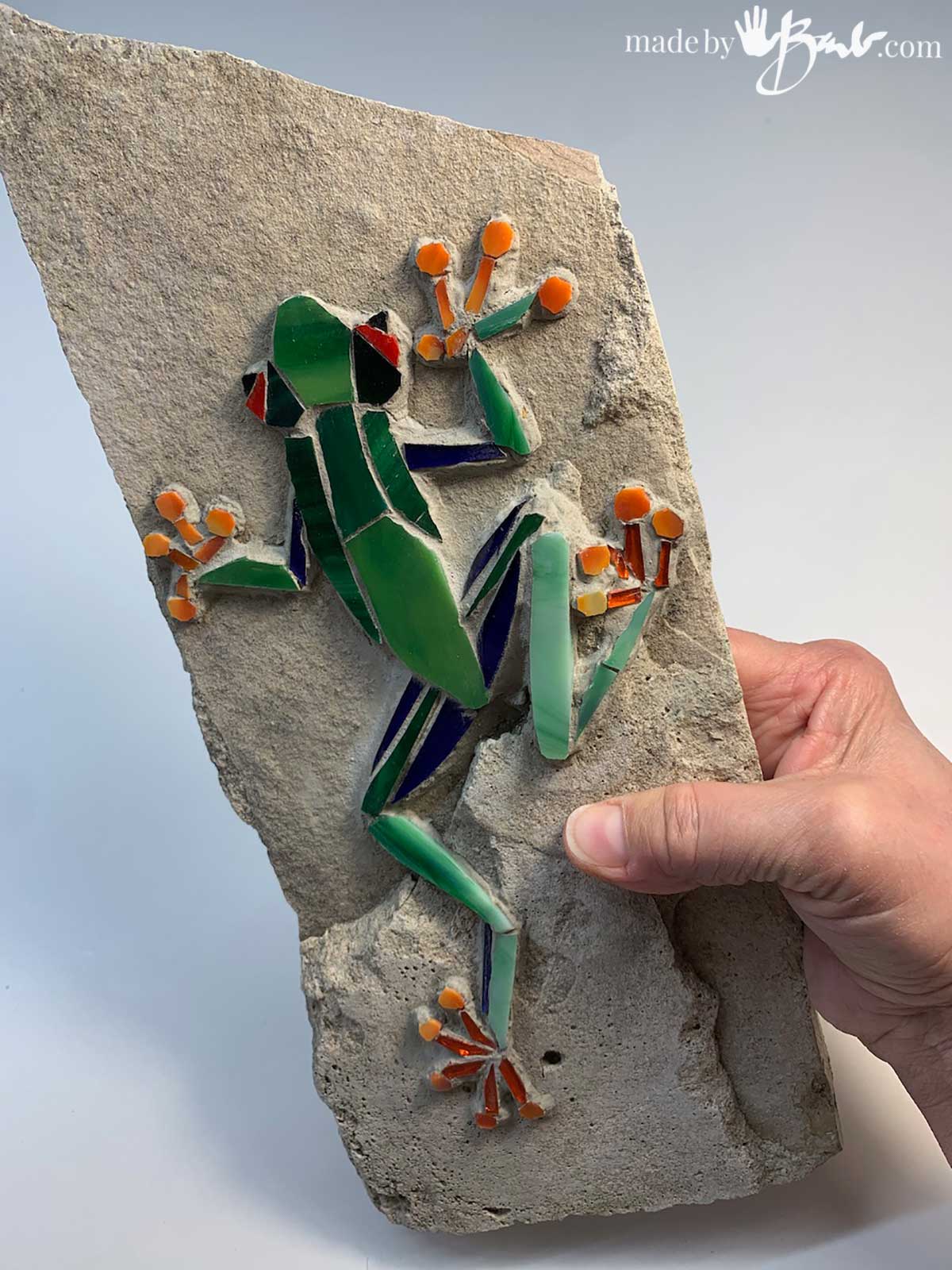
The use of stone also adds a flare to the design; quite a natural rustic charm with very little effort or cost. Stone lasts great in the elements which suggests it’s a stable substrate.
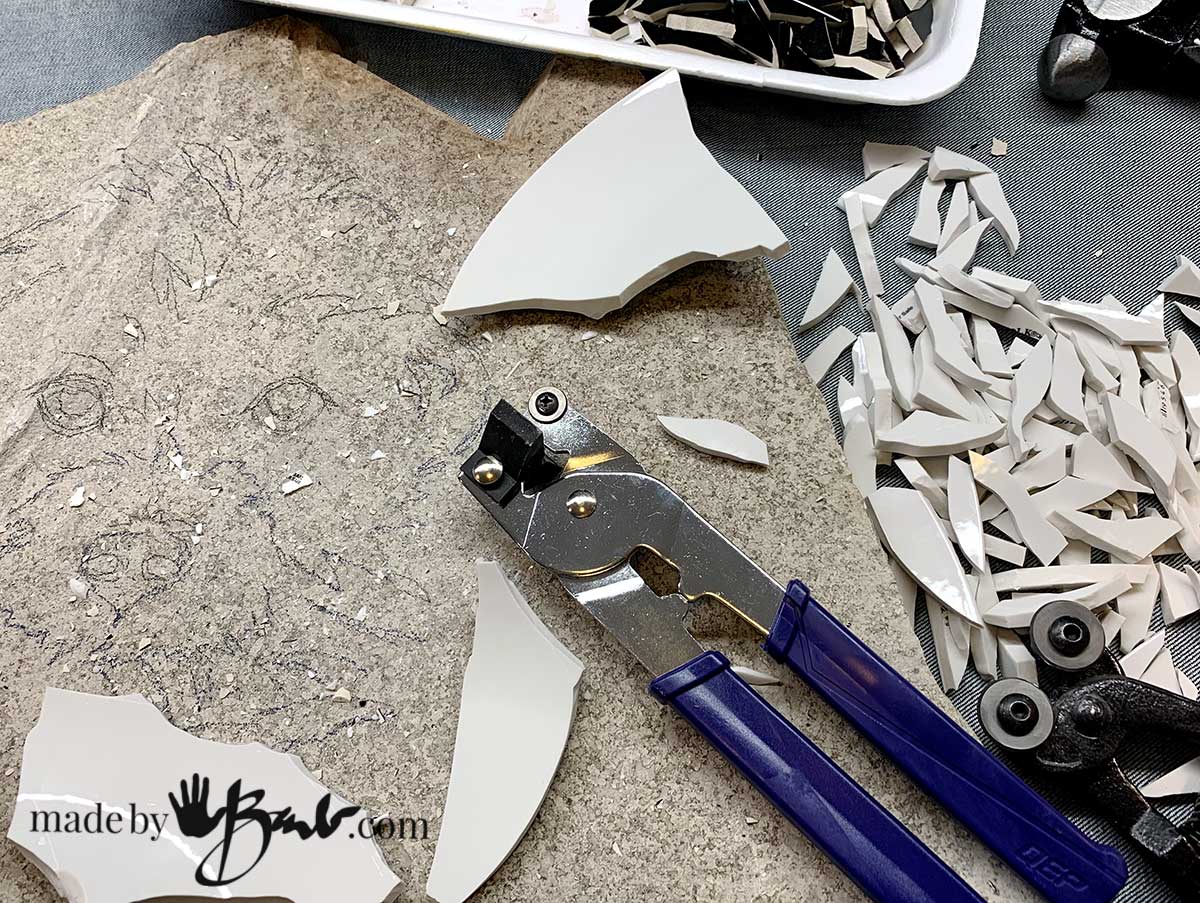
Using broken dishes for this fun Pet Portrait also keeps costs down and I am happy that they have weathered well in even the extreme temperatures we get here in Canada.
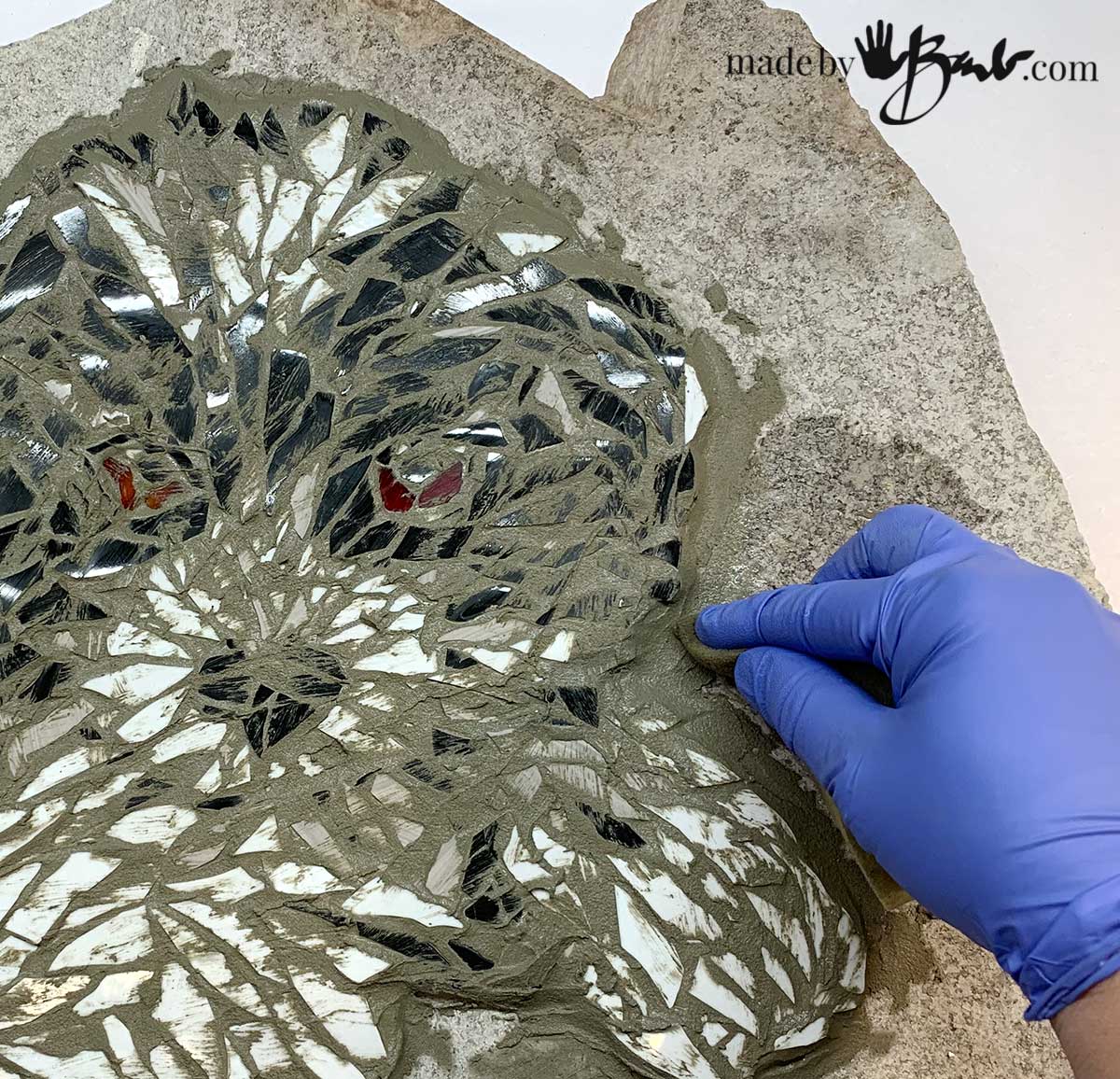
If the strength of the Versabond holds the pieces to the substrate well why not use it as the grout between the pieces as well? My tests worked well. One thing to mention however is that since I made plaques, they stood vertically in the garden. If you have horizontal pieces the location may risk more freezing if left in a wet or submerged area. Make sure no crevices exist that could gather water & moisture.

I have even used Versabond as the grout between the pieces (homemade tesserae). Why use another product? This sweet Pet Portrait is perfect for outdoor garden display.
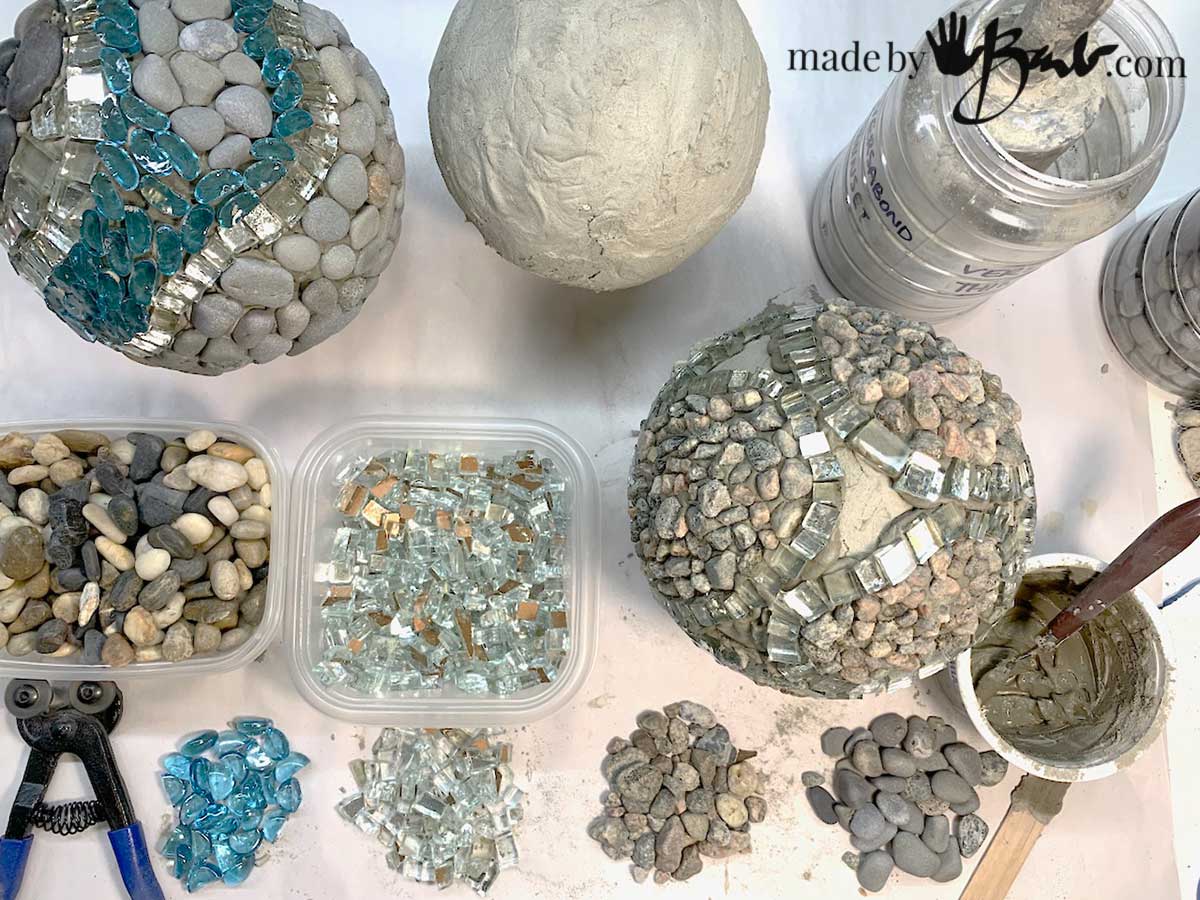
3D mosaic design:
I made these DIY Glass & Stone Mosaic Spheres since the garden orb is such a great aesthetic design element in landscaping!
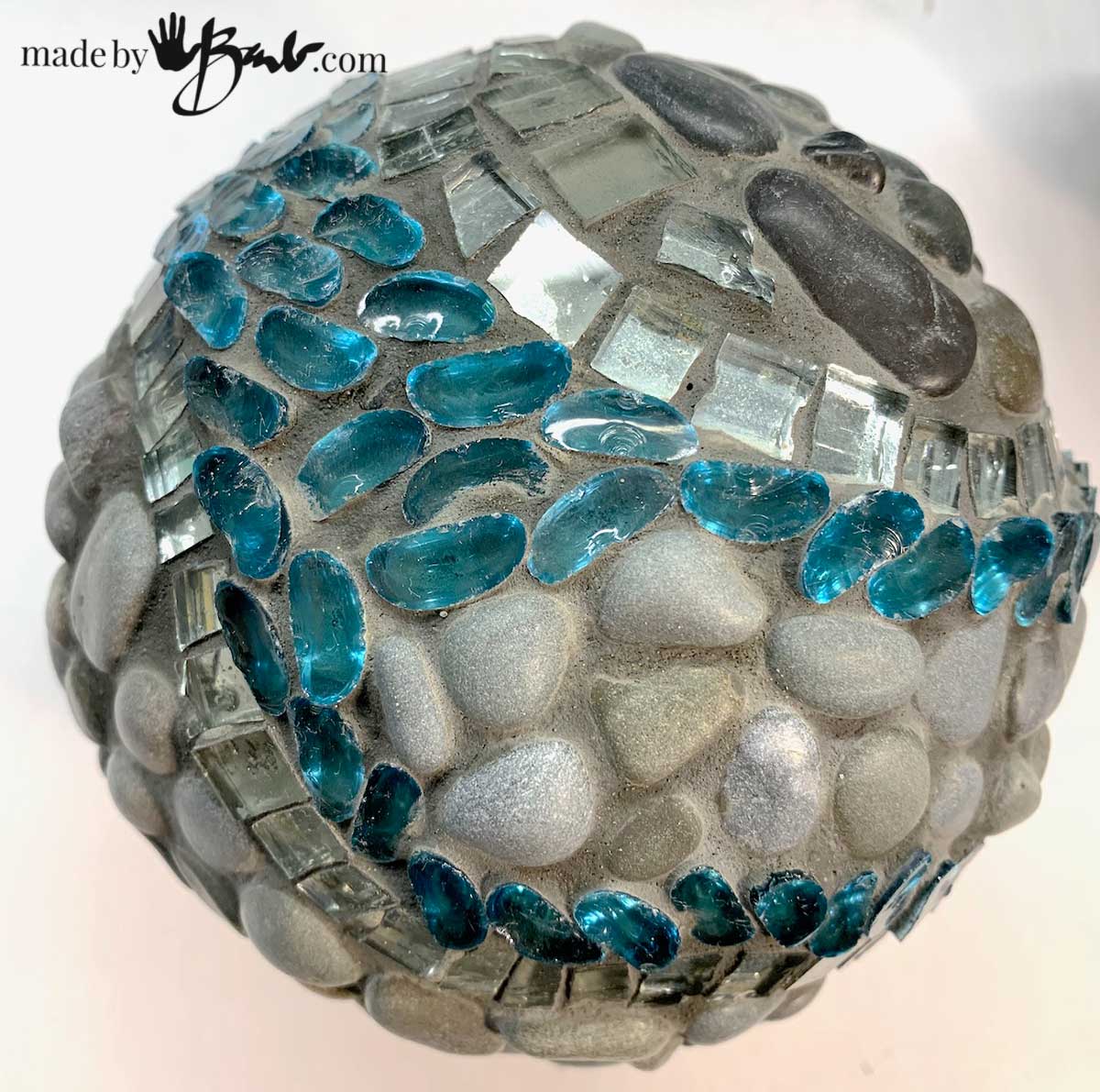
‘Perfect way of combining my love for orbs and mosaic, I’ve used Versabond to adhere bits of glass and stone/rock directly into orbs. It allows for very creative sculpture at very little cost.
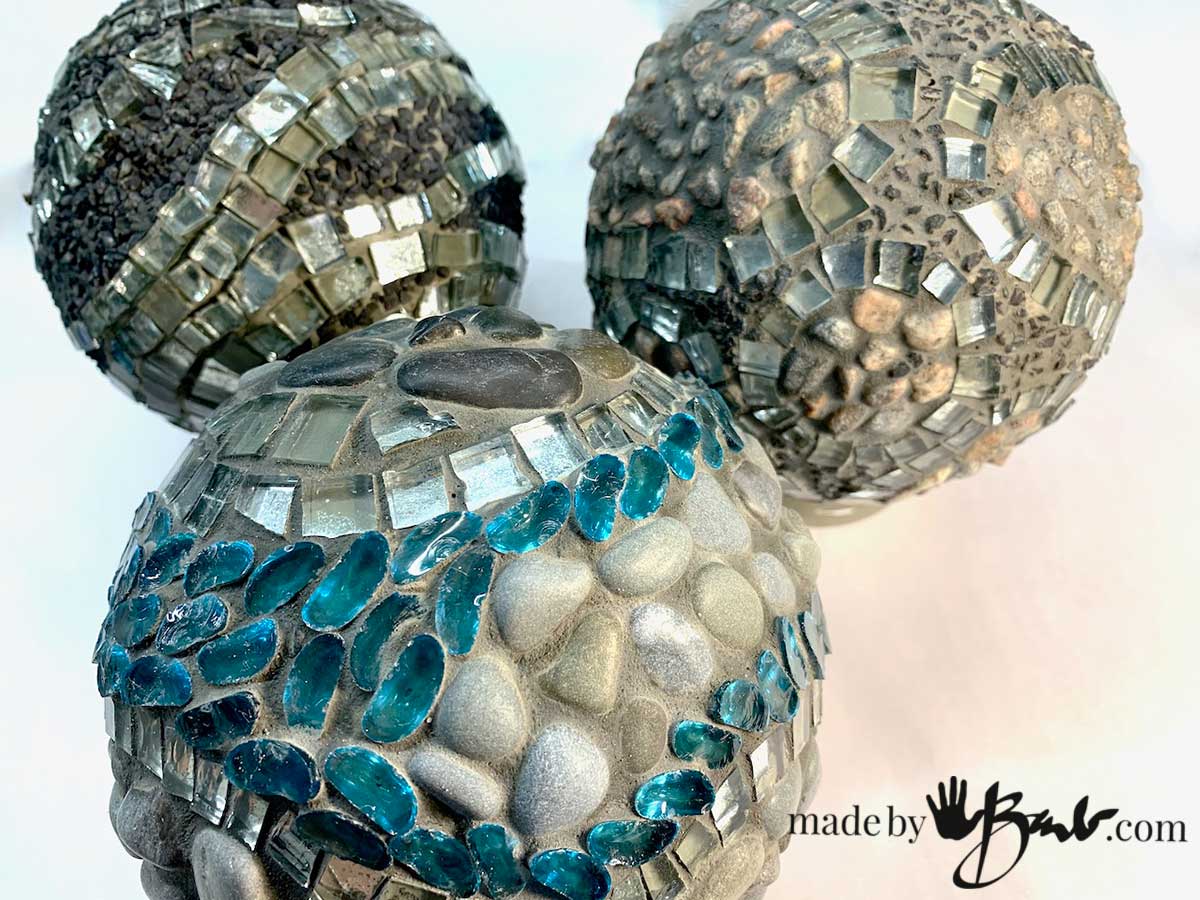
If rocks last through all the weather changes then it makes sense that the strength of the Versabond will definitely hold them well. The risks are always about expansion and contraction; these are quite stable as all my concrete orb designs have lasted for years in my Canadian garden!
How to Use Versabond
(see also instructions on package)
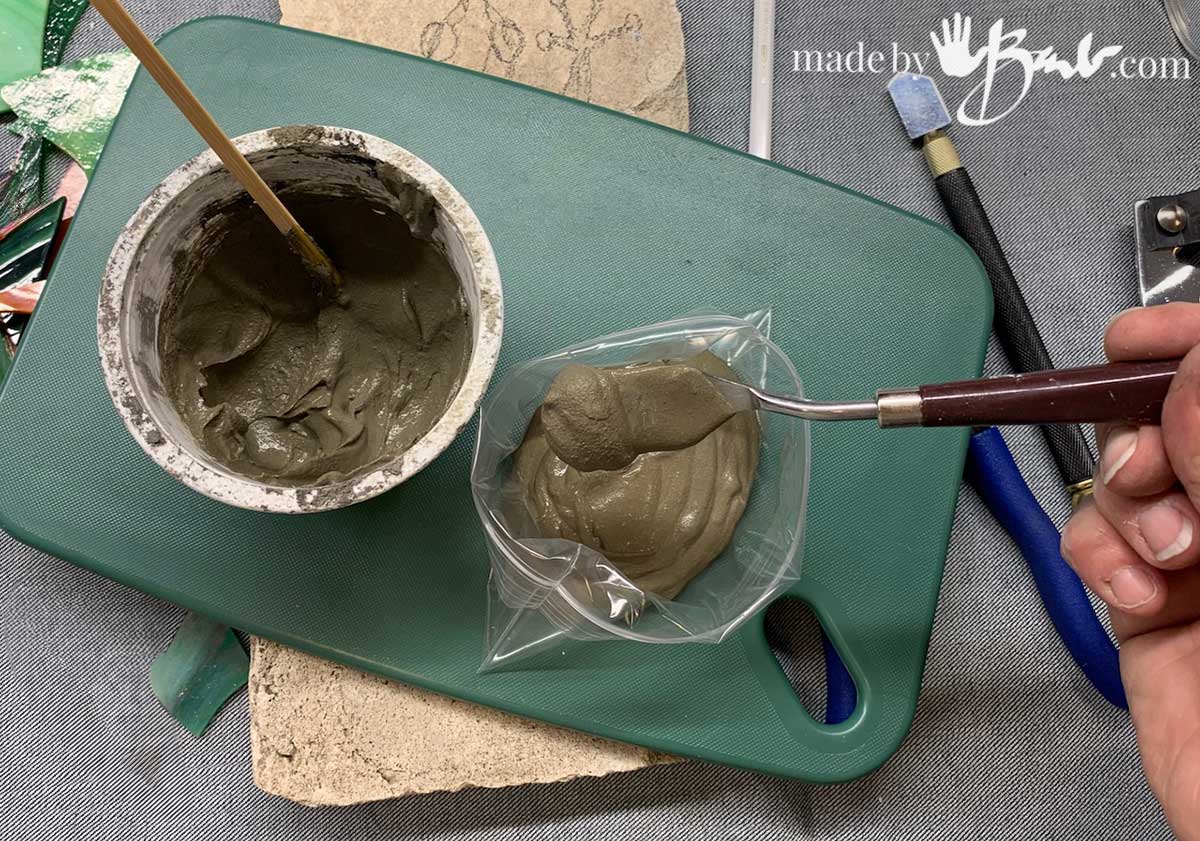
- Mixing: Combine with water in a container using old spoons or stir sticks. Aim for a peanut butter-like consistency.
- Applying: Use a palette knife or spatula to spread onto your base. Work in small areas.
- Setting Tiles: Press pieces gently into the mortar. It should hold them in place without sagging.
- Curing: Allow 24–48 hours to cure fully before grouting.
- Clean-Up: Wipe away excess before it sets—once cured, it’s tough!
A Few Pro Tips
- Don’t use it on flexible bases like wood (plywood) – stick to concrete, stone, or cement board, as they are less likely to absorb moisture or swell causing cracking.
- Use things like natural stone or cured concrete
- Always wear gloves and a mask when mixing; it’s alkaline and dusty.
- If using clear or translucent glass, go with white Versabond so the background doesn’t dull the colours.
The Bottom Line
Versabond Thinset Mortar is the unsung hero behind many of my most enduring outdoor mosaic projects. It allows me to focus on the creative side, knowing the technical side is rock-solid—literally.
If you’re looking for a reliable adhesive for your next garden mosaic, porch tile inlay, or patio plaque, give Versabond a try. It just might become your favorite too.
Have you used Versabond in your own mosaic work? Tag your projects or drop a comment—I’d love to see how you’re making your outdoor art stand the test of time!
Hi
Where did you get the orbs? I would like ovals/egg shapes to make a dragon and/or a dinosaur nest for my gardens. Any suggestions?? Thank you!!
I usually use balls for orb shapes depending on size. You could use the forms I used for these eggs Maybe follow how I used the form for working inside it and then adding mosaic afterward… ‘Cracked open would be so cool!!!
Thank you Barb!
I use Versabond int/ext grade for step stones and gazing balls left outside in Colorado. I have had very good success with longevity. When mixing powder, even though it is polymer added already, I put a splash or 3 of the polymer (or acrylic?) liquid for good measure.
My earliest gazing balls on styro are gradually failing about 8 years later. Before I learned about the exterior grades of products.
A tip, for smaller gazing balls one can use candle stands flipped upside down to nestle the ball into the “legs” of the holder, keep off ground a little. Last little longer.
Thanks for your tip on white versus gray, when using glass tessera. I discovered that too.
Thanks for all your creative projects and ideas.
hugs, Gelly
Thanks for the input! Sure a bit more acrylic may help, or even sealing the grout areas just to be sure there is no ways for water to sneak in! Anything that is horizontal always has more risk (snow, water, ice) Great idea about the candle stands! My brain always sees other uses for things!
A few of us from our pottery club were commissioned to make some decorative stepping stones for one of our native Texas gardens in our retirement community. We had never done anything with tile before, and were fortunate to have 2 wonderfully talented mosaic artists in our hood to give advise on this endeavor. We used Versabond, and another couple of products that were highly advised we use, one was really a big messy pain to use, since we used these concrete bricks from our local home and garden center that weigh about 20 lbs each to begin with, then add the mortar and tiles, they weigh nearly 50lbs each in the end. We did 5 sides and left the bottom blank only the “red” sealer was exposed. The way you’re describing the is process, seems way easier!!! I made nearly all my decorative pieces myself, aside from some cube shapes on a few that were fillers that I bought. It was a lot of fun, but a ton of work in the end. I think trying these projects out would be in my future instead! I have a garden hose water spout that I’ve made a tile to go onto my house to surround that spout that I’m going to use this product on. I tried before using another product, I couldn’t get it to hold onto my house it kept sliding off!!!
Thank you for this recap of your beautiful object d’art, I love everything you make and share with your readers, you are such a talented person and I appreciate how you share with others your knowledge, and persistence to make wonderful things!
Barb, I’m so excited to try the versabond! I have leftover pieces of granite and marble. Would it work well on them as a base?
Well, those are natural stones so it should be fine. I know people are advised to seal marble when as a counter, it may depend on your design idea. ‘Maybe there is a rougher side? Let me know how it works!
Barb, When you speak of orbs and mosaics, what do you use as an orb base? Thank-you.
I have make these with styrofoam balls inside. I have planned to make some more hollow types with the same method I used for these glowing candle orbs If you want it solid then the ball can not be reused in side. That cement/concrete mix is very strong and lasts outdoors. Here’s a post with a lot of my orbs (click the link) Happy making!
Hello, your mosaics are lovely and your website is full of useful information. Thanks for sharing it! Do you have any idea what the equivalent of Versabond would be in the UK? Also, how many years have the mosaics been outdoors? more than ten? Thank you very much!
Thanks. When trying to find a similar product read all the specs carefully! Maybe even asking a local hardware store or a contractor who does exteriors tiles. I always like to test a small piece as well. They have not been out over 10 years though.
Thank you for replying!
What do you use for mosaics to adhere to wood for the outdoors? I live in the Dallas/Ft. Worth, Texas area. Thank you. K. Ball
It is difficult for me to suggest anything for you. As I also work with concrete I try to stay away from anything that is absorbent since that has the potential to swell or even rot with humidity. I’m in Canada so I have a wide range of moisture and temperatures. I can only share that the stone has lasted super well. But now that I think about it; my Faux Rocks have stood up great! That concept could be applied to a sheet as well.
I love your ideas and wanted step by step on making garden mosaic stepping stones. I see the mortar to use. Tried to watch video but all I got was ad after ad after ad. Never did get to see step by step instructions.
It’s a necessary way to allow me to create & provide free tutorials, similar to TV commercials. Please be patient, it plays after the ads.