
Compare Concrete Mixes for Crafting

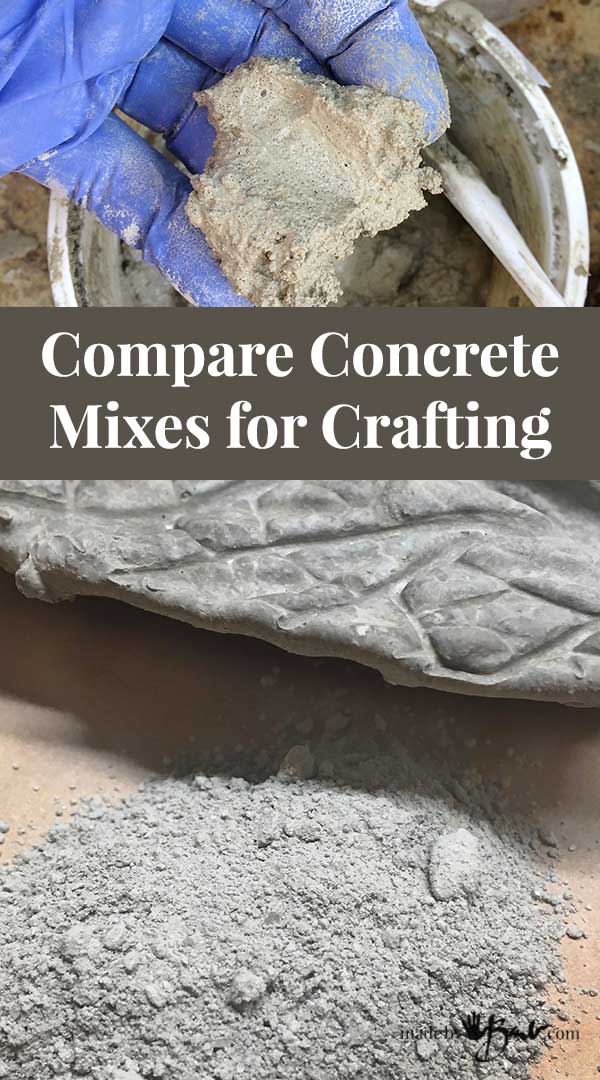
I know what it’s like standing at the concrete aisle and getting that odd look from the guys at the building supply store… Since I get a lot of questions about which concrete to use I’m going to eliminate some of the guesswork. Follow me as I Compare Concrete Mixes for Crafting
So many Concrete Mixes for Crafting:
When I started buying concrete many years ago, I’d be quite puzzled reading and checking the packages. Someone would often think I was sent by my husband to buy ‘normal’ concrete. After a few attempts of trying to explain what I wanted to do I would just buy what I felt was right since they usually thought I was a bit crazy… Even nowadays there are so many that it’s quite daunting.
Cement and Concrete is not the same:
Do be aware that concrete is usually a mixture of portland cement & other things like sand and aggregates. The ingredients like the gravel give the concrete mixture strength, make it into a rock-like substance once cured.
I did know what I did not want; large aggregate in my mix, which is what the regular Concrete mixes usually have. They are quite cheap and can work for large pours in molds (planters), sidewalk slabs or fence posts. I am usually making smaller projects that are going to be cast in molds or hand shaped for decorative home use.

‘Leaf-casting’ was perfect to make my Concrete crafting tests since I like to work quite thin. These leaves are made with my new favourite; Savoy Cabbage!

Working Fast:
Since time is always short around my place so I like to see my projects finish quickly and I am constantly improving or redesigning so I can’t wait weeks or even days!
I really do love the ‘fast set’ mixes but am not exactly sure about what makes them set & cure so quickly and also so much stronger. There are special additives in the concrete mix resulting in a dense and less porous finish. The sand in these mixes is so much more fine than regular sand as well. Fast set mixes have special chemicals that make curing quite quick. Each manufacturer usually has some version of fast-setting concrete mix. These mixes also come with quite a hike in price, but it’s worth it in my eyes!
All concrete mixes go through curing process that involves hydration. The water is needed in order for proper curing to happen, and ensure that strength is achieved. Traditional bricks are made by firing clay in a kiln, much different than concrete.

Rapidset Cementall:
The above Rapidset Cementall is probably my all-time favourite! The specs say that it can be used at different consistencies and it will cure much harder (up to 9000 psi compressive strength) than regular concrete. I am sure there are specific additives like polymers for strength and those also make it quite moldable at a thicker consistency. This mix does not contain large aggregates.
I learn by testing and it has worked well for many of my projects. Usually readers who have had concrete problems it’s because of their choice of concrete mix.
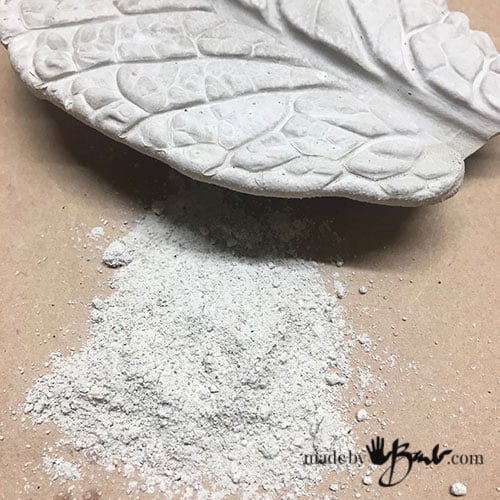
Rapidset Cementall Concrete Mix will start to thicken in about 30 seconds and can usually be taken out of the mold after 1 hour. The molds that I make are quite stiff and this mix will withstand the vigor needed to sometimes take them out. This mix is super fine, will pick up all the details and provide a super smooth white finish. A shiny finish can be achieved if the mold is also shiny material. It tends to not have many bubbles since the consistency can be fairly fine & does not need as much water as other mixes.
So Strong Concrete:
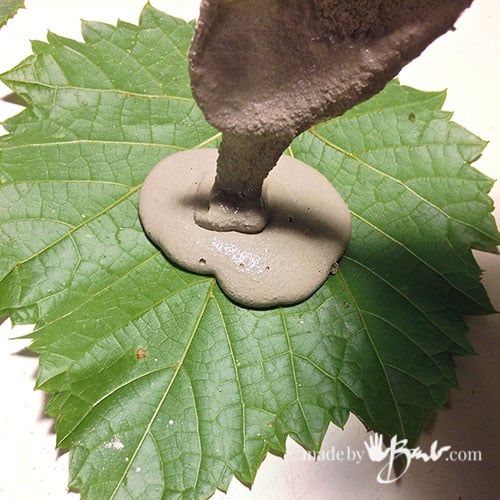
At a thin consistency it will be easily poured such as the Coasters and the Monster Eggs. The strength achieved in a thin wall is quite amazing! Check out all the projects that this mix is great for.
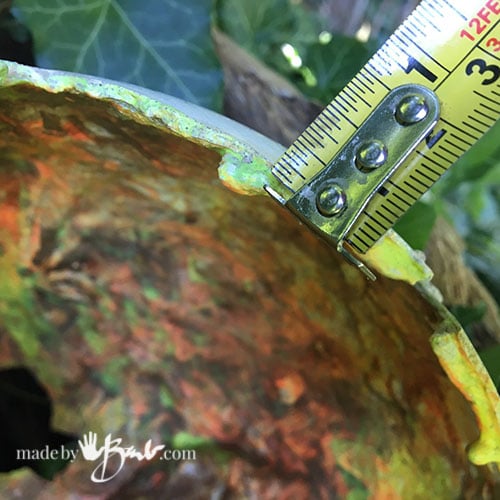
When reading the specs for different mixes it will give you a clue at how it can/should be used. ‘Featheredge’ means that it can be used at a very thin edge layer. Some mixes will state not to be used above a certain thickness.
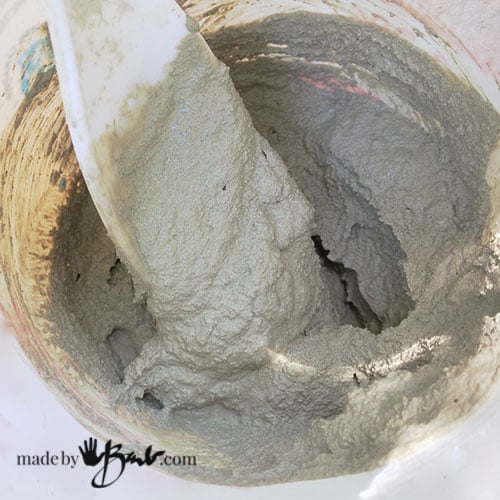
The Rapidset Cementall mix can also be used at a thick; sculptable consistency. It will still slump ( a high pile of mix will flatten and sag) but not usually run away. That makes it work well for leaf casting such as the Lacy Circle the Smiling Stones. The workflow can be quite fast since sections harden quickly allowing more material to be added such as around an Orb or a Face sculpture fairly quickly. Temperature will also accelerate the setting/curing.
Dampening the drier sections is good practice before adhering new mix so there is good adhesion..
Quikrete Fastset All-crete:
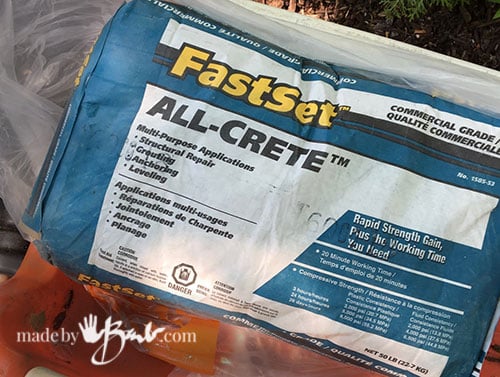
Different brands offer similar products. Since entering the Quikrete contest I wanted to use a Quikrete product that compared to the RapidSet Cementall. I find this mix is almost exactly like Rapidset Cementall. It does seem like it comes under a few different names; Dual Purpose Grout & Structural Repair, Fastset Repair Mortar and Quikrete Fastset All-Crete. (See a selector guide here) It may be a difference of countries (here in Canada) Do NOT confuse it with any regular Fastset Mix though, as it will have large aggregate in it. If it says that it is meant to make sidewalks, post foundations and foundation walls then it usually contains large aggregate.
When comparing different types of concrete mix read the fine print and specifications.
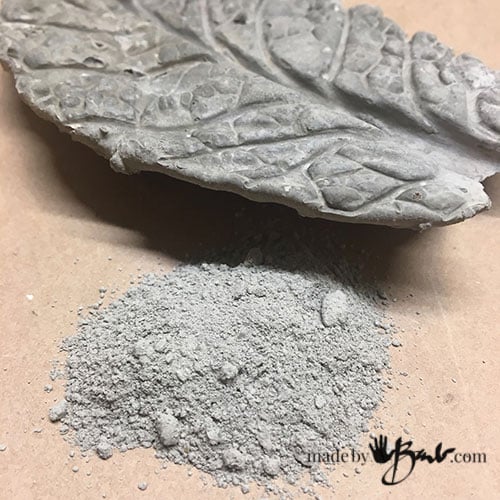
Quikrete Fastset AllCrete has much of the same qualities, workability and also stated it can be used at all kinds of consistencies. It also a fine powder but the colour is more like a true concrete ‘grey’; darker than Rapidset Cementall.
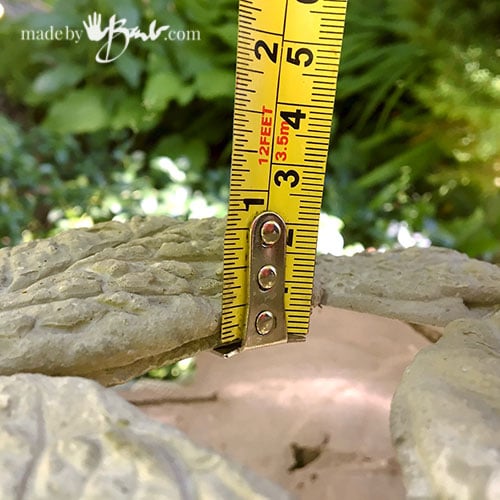
The DIY Gigantic concrete Leaf Orb used this mix. It performed well at less than 1/2″ thick and the quick-setting allowed great workflow.

Make sure to consider enough overlap as this will make the open-work structure strong.
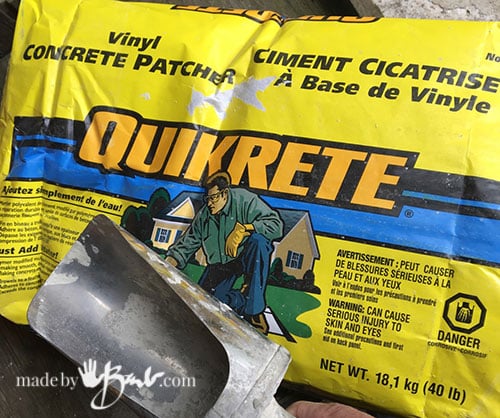
Quikrete Vinyl Concrete Patcher:
This product will also work well if you can wait a bit longer. Quikrete Vinyl Concrete Patcher also has additives to make it really strong but does not set as fast as the first 2. It has a window of 30 minutes of work time (conditions can affect it) and will be hard in 24 hours. It has good bonding abilities so layering works great as in this Giant Orb making.
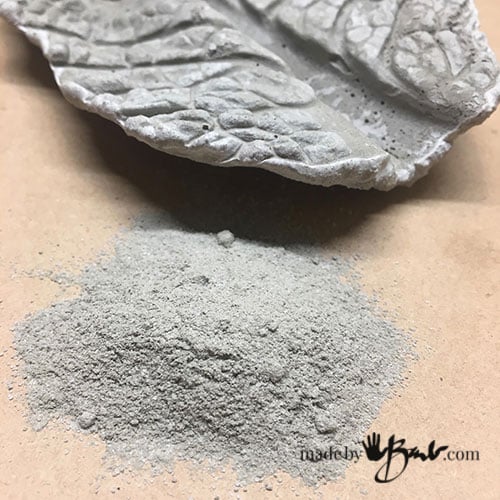
You can see it still is a fine mix but I’d say it feels a bit more sandy. It cures to a similar concrete colour to the Fastset. You can see a slight bit more texture in the final product.
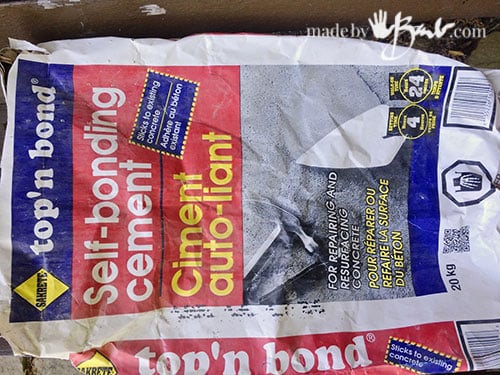
Sakrete Top’n Bond:
This is another of the bonding mixes with great strength and it performs very much like the Quikrete Vinyl Patch. Sakrete Top’n Bond will work for the continuous building around an orb shape (ball of some type) or casting of thin leaves. It will set & cure in about day as well.
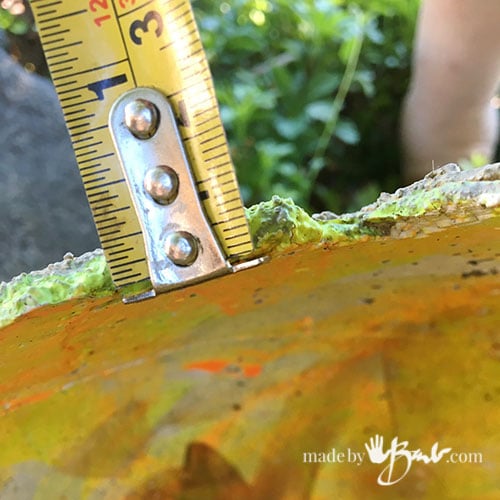
My 20″ Giant Orbs have lasted well through the canadian winters and are light enough to carry with one hand. Amazingly only 1/4″ thick. These are considered ornamental garden sculpture so if it was stepped on it would likely break.
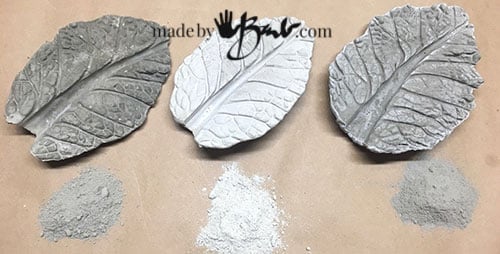
So, there you have 3 direct comparisons (left to right) Quikrete Fastset Allcrete, Rapidset Cementall, and Quikrete Vinyl Concrete Patcher. This is by no way the only available mixes but it does give me quite the selection. Also notice the difference in colours…
As for sealers; you will notice I often do not seal my orbs since I like the look of old patinated concrete. I am also happy to report I have not had any issues with cracking with these mixes. If you have issues about cracking see this post.
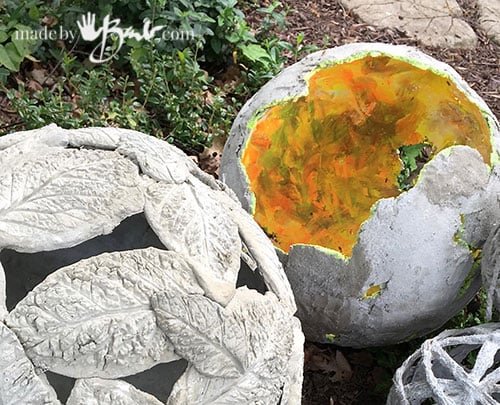
If you are still a bit apprehensive about working with concrete visit my tips post. Believe me; it does not mean that you need to be ‘covered in concrete’ to make some easy concrete crafting treasures! Concrete crafting is like making a cake mix that does not need baking… And you can almost keep it forever! Concrete crafting – made simple…
I was at my aunt’s apartment a little while ago and I guess the handy man needed to repair the stairs that connect downstairs (outside) to upstairs. So the stairs were normally concrete, with which ever color of paint went well with the rest of the apartment building, painted atop. However, I noticed that there were little scraps left behind that were possibly scraped off the rest of the area that was being repaired. ( As in feel in the gap or hole and scrap the access off.) These scraps didn’t look like the typical rough and sandy concrete you’d normally see on the ground, they were light gray but felt more like a smooth sort of clay that easily broke into flat pieces if you picked them up and attempted to fold them with three fingers; you even saw an occasional micro cluster of bubble imprints. This is the sort of “cement clay” material I’d like use for my project. I’m certain it’s exactly what I’m looking for. Would what I’m talking about be precisely what “Rapid Set Cementall” is? Or should I be looking for something else and where would I most likely find this something else?
Please and Thanks much,
Chris
I’m a bit confused at some of what you said especially the bubbles. I do know that the Rapidset Cementall IS very light colour and can work especially thin (as you see the coasters) It does however set very fast which I love, but may not be what you want. Unmoldable in one hour! Hope that helps!
Hi! Thank you so much for this great article. I plan to make a pet memorial plaque/garden stone. I plan to use a silicone mold that seems to be about 2-3 inches thick. What is your best advice for casting a smooth, DURABLE, memorial piece that can be left outside for a long time without intense deterioration. I was thinking of adding some chicken wire in the mold to add a little extra strength if cracking were to occur. Because it is such a sentimental project I want to do what is best for a long lasting product. What is your best advice for going about this project? Thank you for sharing your knowledge and being kind enough to answer so many questions. Best wishes to you!
I have been watching my concrete for years. If there is some part that will hold water then you may get cracking. I have a statue that is now 21 years old, no sealing but pretty thick/solid. It has aged nicely. Lately I have noticed how dense the Rapidset Cementall is, not letting water penetrate at all. I’d say it is much stronger than regular mixes. It also gives a very fine detailed finish. Sure, you can add extra reinforcement. There are also the fibres that can be added to the mix. Good luck. Funny, I’ve thought of making my own gravestone design…
Can acrylic paint be added for color?
Yes, I have added it sometimes but be aware some mixes do not ‘like’ the change in chemistry. I find the regular type mixes are ok with it but the fast-set type can react with what is in the mix. Best is to try a small test mix.
Thank you.
Have you ever used a parging cement? I am looking at making small mushrooms and Christmas fridge magnets.
No, I have not. I wonder what the cure time is like? And I wonder if holds well when casted.
Hi Barb, I was so glad to stumble onto your post.
I want to make some birdbaths and am still not 100 sure if I need to add aggregate or sand to the cement to do so. I guess a bird bath doesn’t have to withstand a lot of pressure, but I’d hate for it to crack. It would be made from two bowls one smaller than the out one and possibly be 2. to 3cm wall thickness. Would there be a product you would recommend for that purpose?
If you use a sandtopping mix you don not need to add sand. You can add the fibreglass fibres as a reinforcement. The cracking is usually from water freezing and pushing it outwards. My bowls have withstood pretty well outside but do not fill wit water and are turned over the winter.
Hi this is great information that I will be using for my next project. I just started a project making a small planter and used vinyl quikrete. I was not sure if it will work out but it did. Do I need to sand and put some sealer to it? I will be trying the quick set cement-all you are recommending for my next project as it will take less time to set.
I have not sealed my concrete. I see so many driveways get sealed all the time and they eventually need to be redone. My walkways are 30 years old and do not look much different than those that kept being sealed. I like my concrete crfats to develop patina over time. I also make sure there isn’t some part that collects water to freeze. Isn’t concrete fun?!
Thank you Barb so much. I was going crazy trying to figure what kind of materials everyone was using and no one was talking. Well, there was one that was talking but in portuguese. Your information and projects are just super. So grateful. Thank you for being so thoughtful and sharing. much love. .
When I am in doubt I just do tests. I have pretty well figured it all out by just doing… Happy making!
Hi Barb! Great article!! What mix to you think I should use for candles!? I’m also Canadian, keep up the crafting!
I am hesitant to just recommend regular concrete for heated vessels. Refractory concrete is made to take heat, as if it gets really how and isn’t cured properly concrete can explode. I know there are many videos where they don’t use a special concrete but you need to make that choice depending on size etc. Happy making!
Seriously feeling blessed that I somehow managed to find you Barb! Thank you for performing tests with different types of concrete, sharing this very interesting information, and for answering all my big questions in one post! I would love to learn more from your genius but due to my long term illness Im very rarely able to access my email, if at all. Curious if I can find you on a different platform like maybe YouTube? Please keep doing exactly what you have been Barb as you are a true gift to us newbie DIYers…and also make me feel proud as a fellow Canadian eh😉 Do you know how or where to find coupons, discounts or the store in Canada that sells these products at the best price? My other question is regarding food safety sealant. I’m planning to create some bowls/vessels that are to be used for food. Which food safe sealer would you recommend if any? Thank you again,
Shannon
I have not found any discounts and buy from the major chains like Home depot. Lowes and Home hardware. I am not a fan of sealers. I see my neighbours repeatedly applying it to their driveways and I do not see them last any better. I suppose you may though as for the food. I think beeswax is great but I have not tried it yet. I know there are food safe ones for countertops so start your research there. If you have a scrap, try the beeswax or something that would be applied to wood cutting boards. Hmmm, I may give it a shot. Good luck!
Hello,
So I am trying my hand at this…and I used the rapid set…way way too fast. But I like the texture. I don’t mind waiting…is there one smooth concrete that will also give me time fill my molds and vibrate the bubbles out?
Have you tried the Quikrete version of the Rapidset as it also a smooth mix. The other idea is that adding a retarder my give you the time you need. I have read that a solution of citric acid will slow it down but you would have to experiment to see the amount without losing the concrete’s strength. The heat also plays into it so using icy cold water can help. Good luck!
Hello Barbmaker, i love your work and have tried making some small concrete stone faces myself, but I want to try some of your other projects, my problem is I’m in England UK and can not buy cementall here, iv done some research to find a rapid set with fine aggregate but can’t find one, what would you recommend (if you know that is as I am UK) i could use, id like to try the Halloween witch.
The Halloween witch is made with the portland cement and burlap. I see that Portland cement is available Perhaps you can speak with a concrete sales person. Ask for an rapid setting type, often called non-shrink grout here. When I am unsure I like to try and play with it… Good luck, I’m sure there must be a version in the UK! If anyone else can help?
I am so excited to have found you. I’ve always admired cement leaves at craft fairs and wished I was so talented. Now here you are!!!!
Today I am buying a bag of cement all. So excited to start making yard art for my gardens.
Haha! Great to hear. I would suggest a really small starter project to get used to the mix and timing. Have fun!