
Needle Felting and Free-Motion Sewing: Drawing with Wool and Thread

As an illustrator I’ve always loved drawing. There is something so satisfying about taking a simple line and turning it into an image. Whether it’s a quick sketch, a detailed illustration, or just doodling on a piece of paper, drawing has always been one of my favourite ways to express creativity. But what happens when you take that love of drawing and move it off the paper?
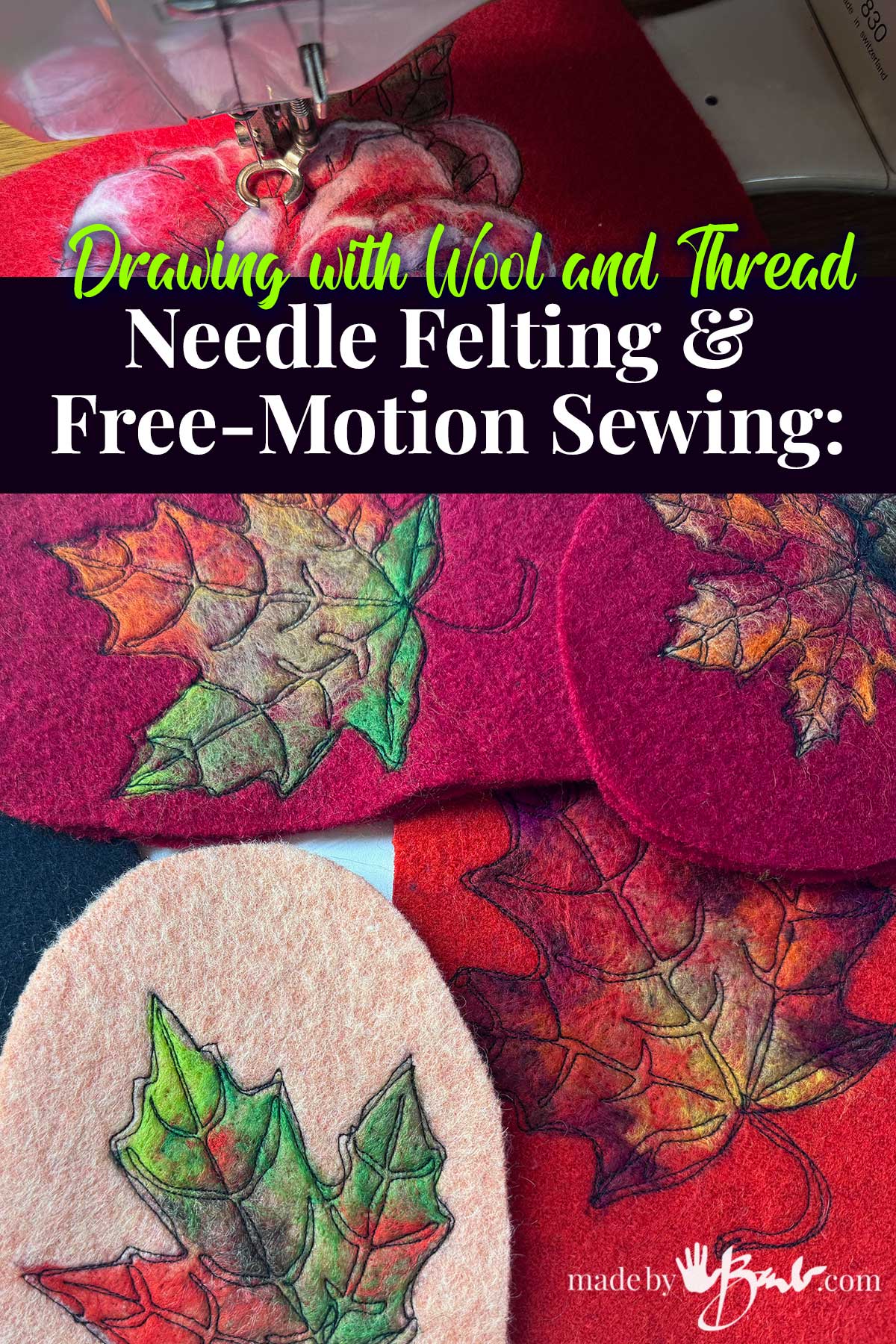
That’s exactly what I love about combining needle felting and free-motion sewing. These two techniques allow me to draw with wool and thread, creating pictures that have not only colour and detail but also texture and dimension.
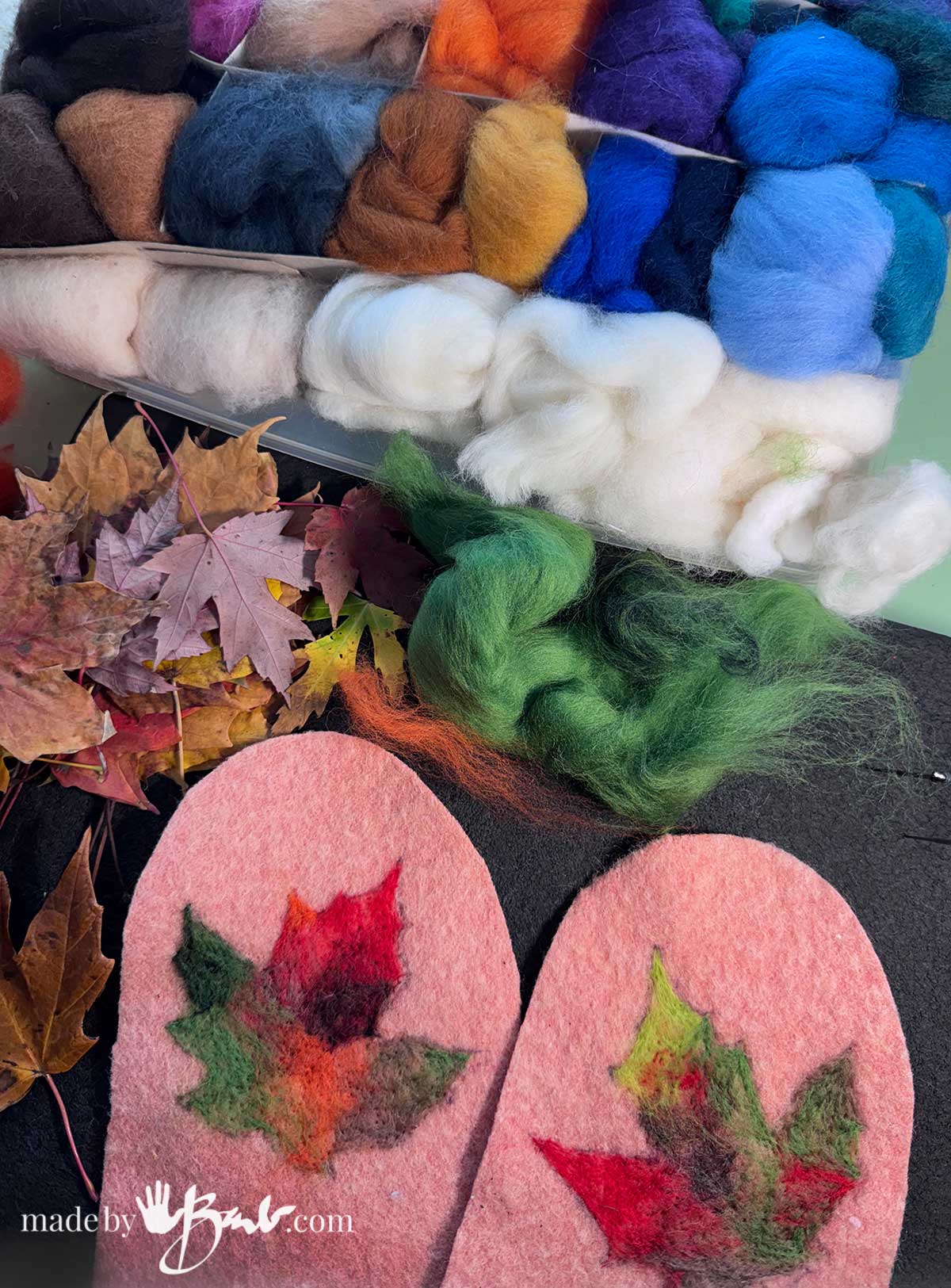
Drawing with wool
Needle felting is a wonderful way to create images using loose wool fibres. Instead of using a pencil or paintbrush, I use a felting needle to push and blend the fibres into a wool surface.
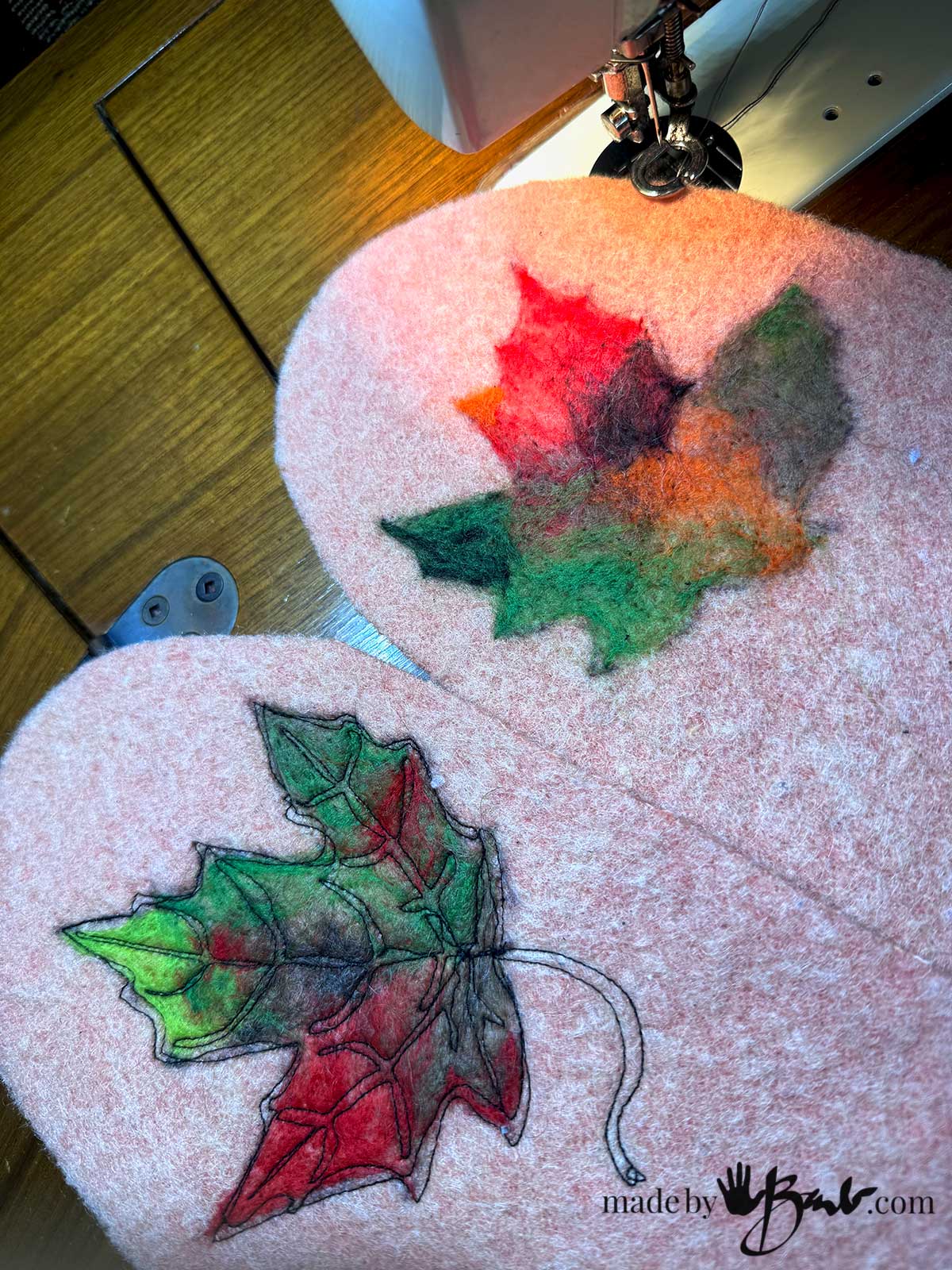
I love how forgiving and spontaneous this process can be. I can add a little more wool to create depth, blend colours together, soften an edge, or build up a detail. It’s a bit like painting, except I’m working with fibres instead of pigment, and they wait patiently…
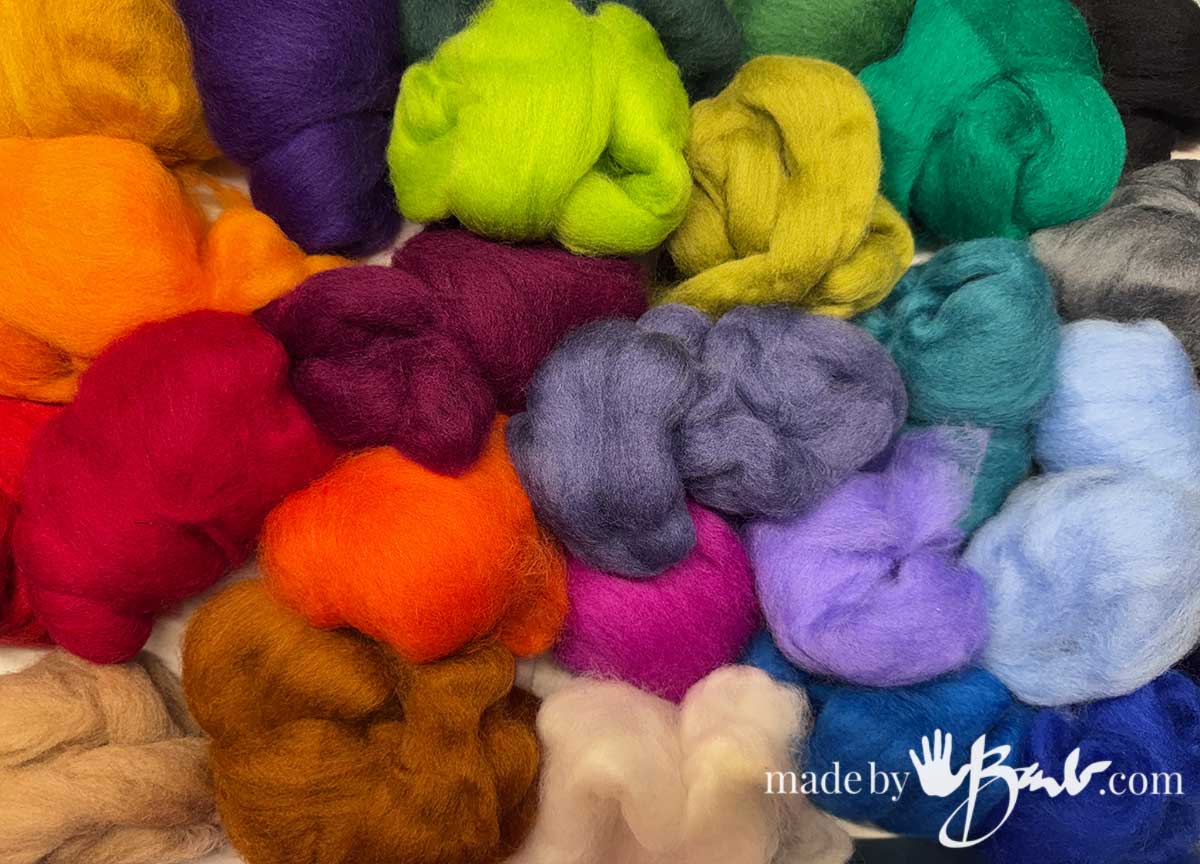
One of my favourite things is that the wool doesn’t have to be perfectly smooth. In fact, the little variations in texture often make the finished image more interesting.

I can create soft backgrounds, subtle colour changes, fine details, and even the suggestion of movement. It’s a very different experience from drawing on paper, but it satisfies that same creative urge.
Adding lines with free-motion sewing
This is where the fun really begins!
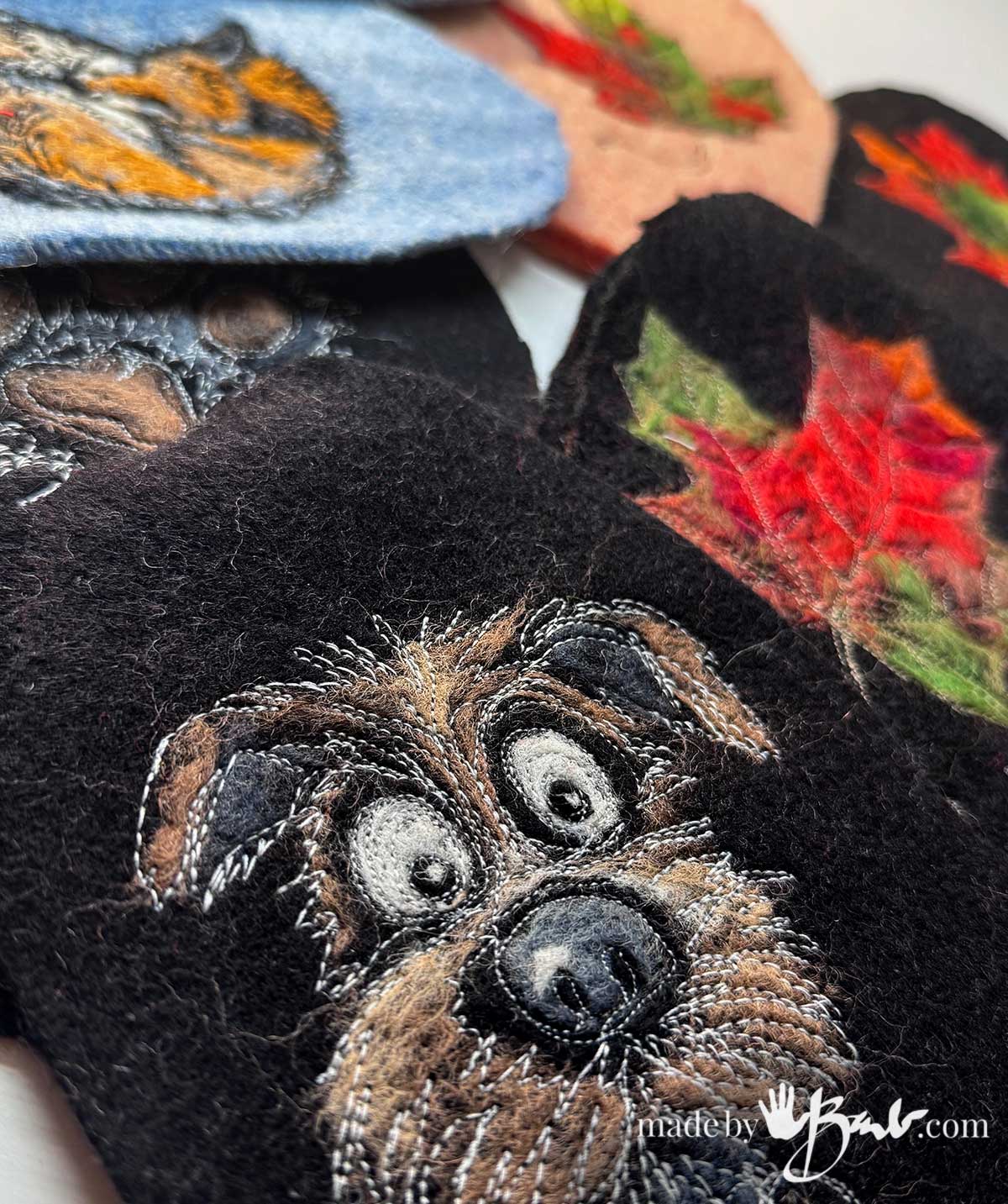
Free-motion sewing is like drawing with a sewing machine. By lowering the feed dogs and moving the fabric freely under the needle, I can stitch in almost any direction, it really is not that difficult.
The thread becomes my pencil, and the sewing machine becomes my drawing tool. My machines are all really old and were very inexpensive. My fave right now is a Bernina that I managed to get for $50.
I love using free-motion sewing to add the details that bring a felted picture to life. Fine outlines, whiskers, delicate branches, feathers, fur, and little marks that suggest shadows or movement can all be created with thread.
There is something wonderfully spontaneous about it. Unlike regular sewing, where you follow a seam or a pattern, free-motion sewing allows me to follow my imagination.
Sometimes I don’t even know exactly where the stitching will take me. I just start drawing with the thread and see what develops.
Why I love combining the two techniques
The real magic happens when I combine needle felting with free-motion sewing.
Each technique has its own personality:
- Needle felting creates colour, softness, texture, and depth.
- Free-motion sewing adds definition, fine lines, movement, and sketch-like details.
Together, they create something that neither technique could quite achieve on its own.
I often think of the wool as my paint and the thread as my pencil or pen. I can build up an image with soft layers of colour and then go back over it with stitching to add the little details that make it recognizable.
It’s a little like drawing, painting, and embroidery all rolled into one!
It’s not about making everything perfect
One of the things I enjoy most about this combination is that it doesn’t have to be perfect.
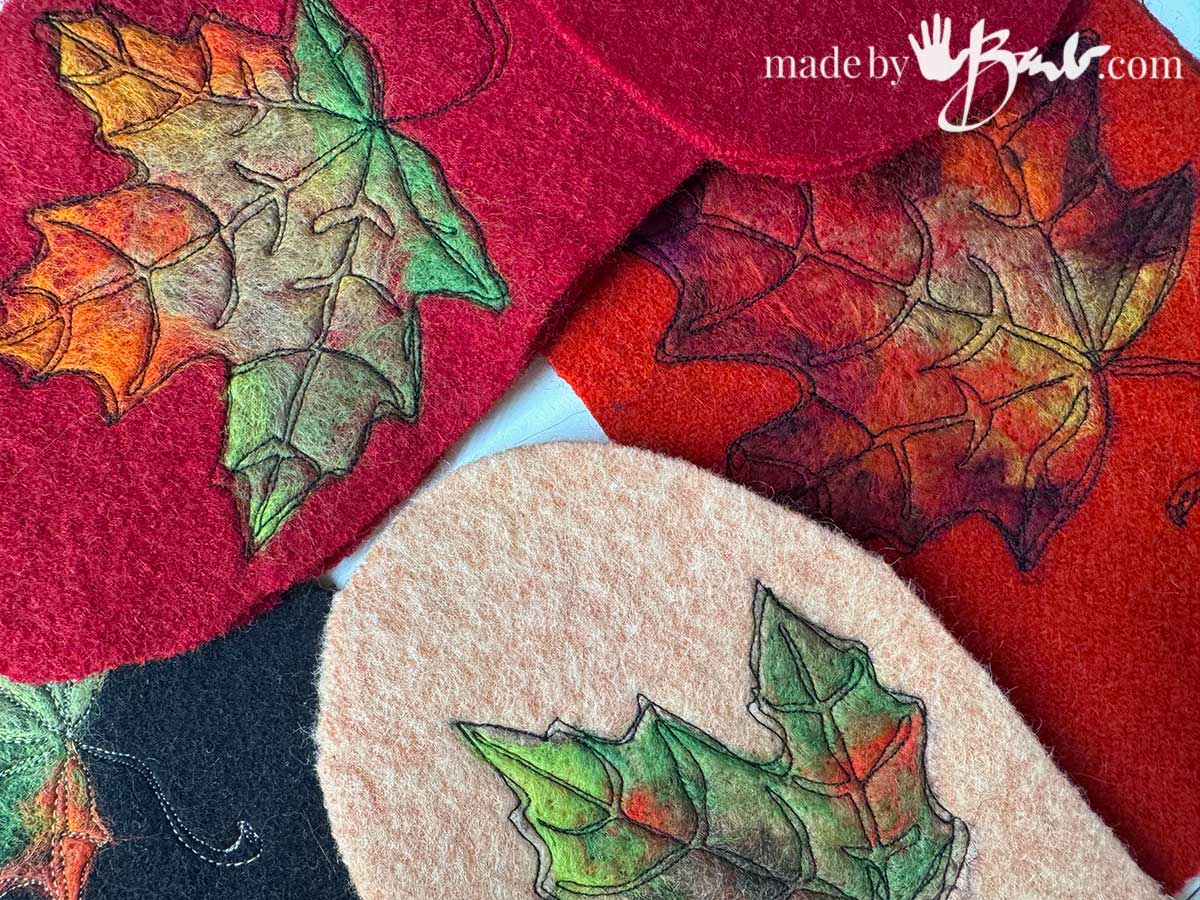
When drawing, I often enjoy the loose lines and little imperfections that give a sketch its character. The same applies to this process. I think it’s much more interesting to look a bit wobbly! A slightly uneven line of stitching, a wisp of wool extending beyond an outline, or an unexpected blend of colours can actually make the artwork more interesting.
I don’t want everything to look mechanically perfect. I want it to have personality.
The freedom to experiment is what makes this technique so enjoyable.
A creative way to use up wool and thread
Another thing I love is that this is a wonderful way to use all those little bits and pieces of wool and thread that accumulate in my craft supplies.
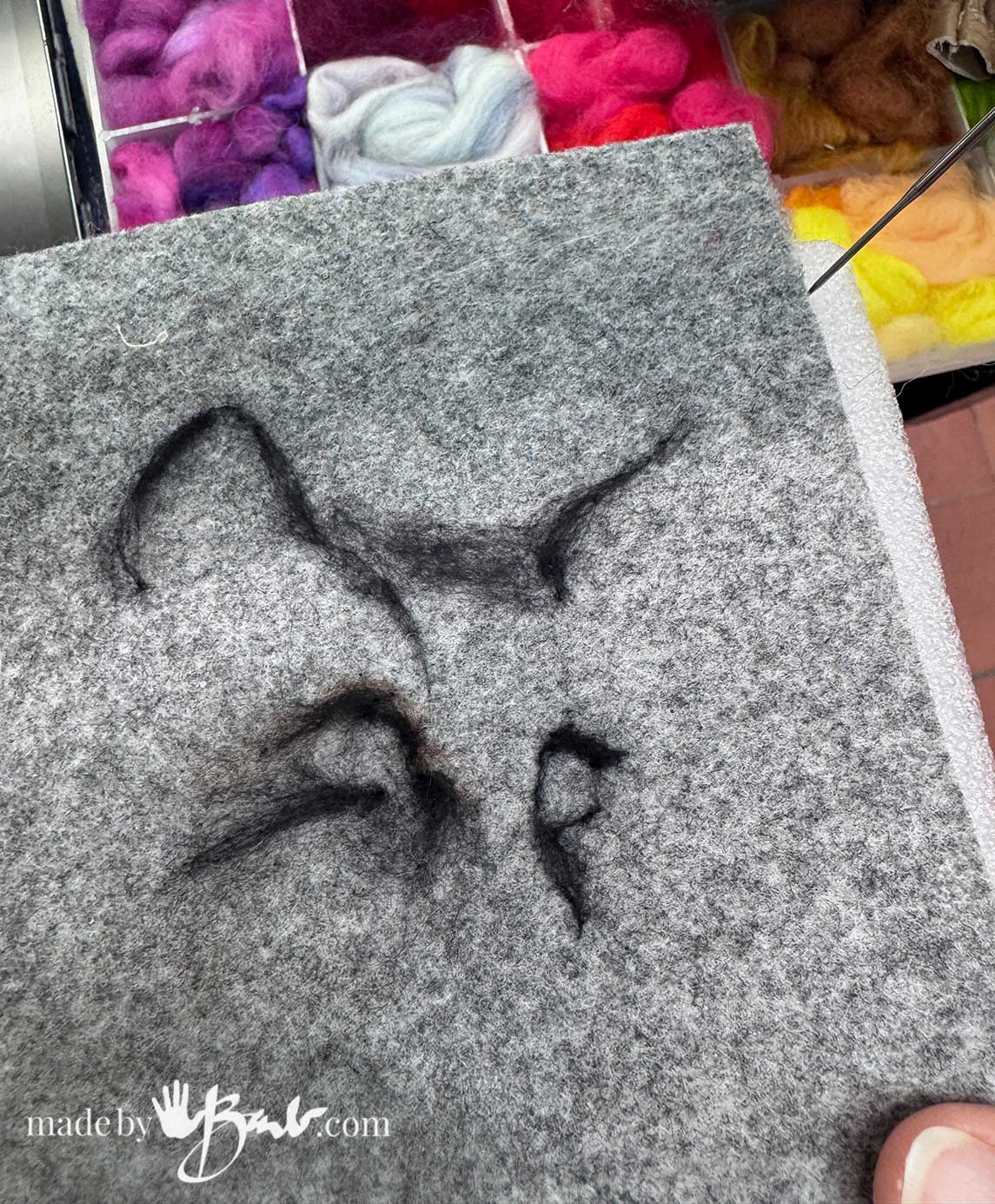
Small amounts of coloured wool can be blended together to create new shades. Leftover embroidery threads can become interesting accents. Even tiny scraps of fabric can sometimes become part of the design.
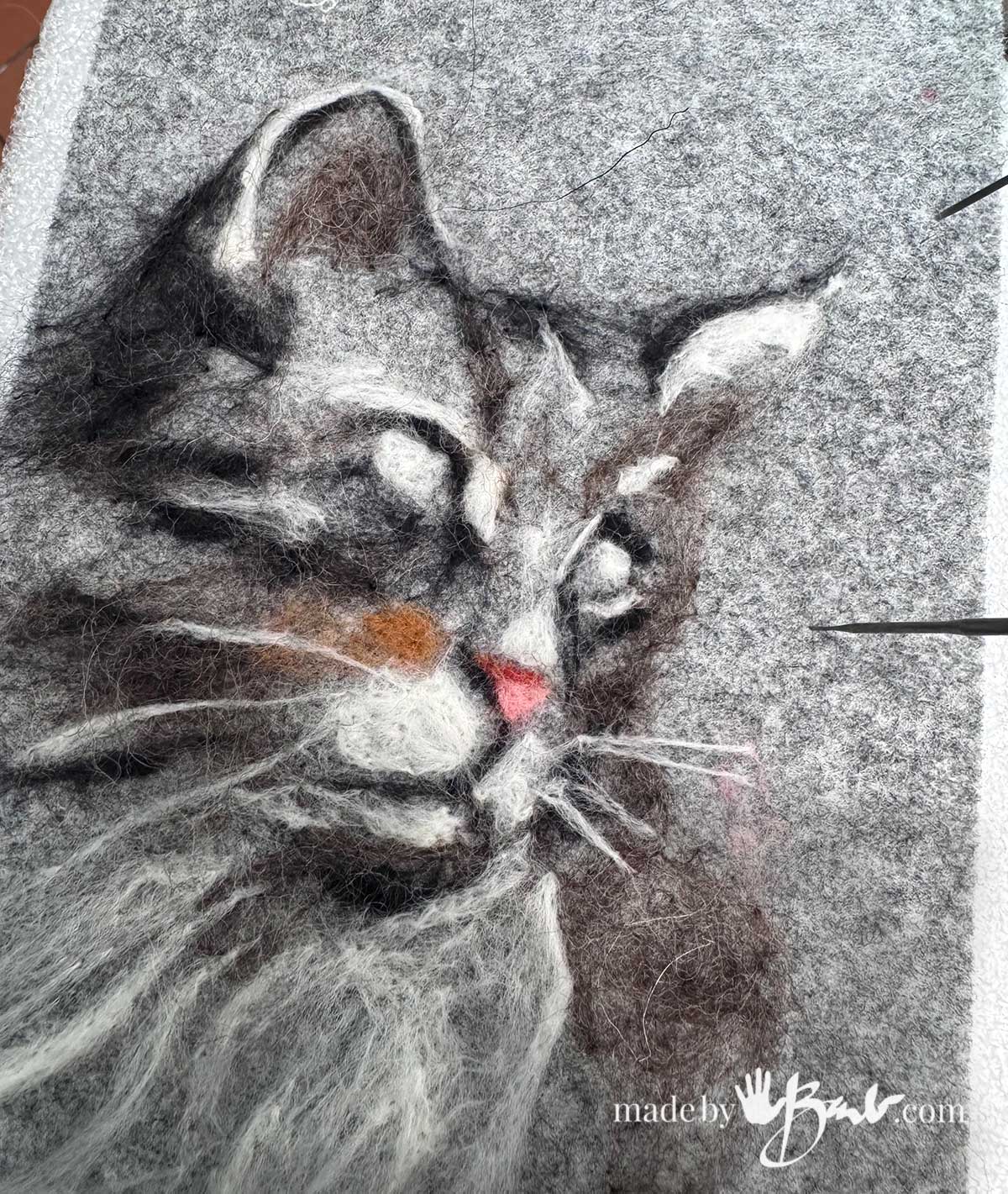
There are no strict rules about what materials or colours you have to use.
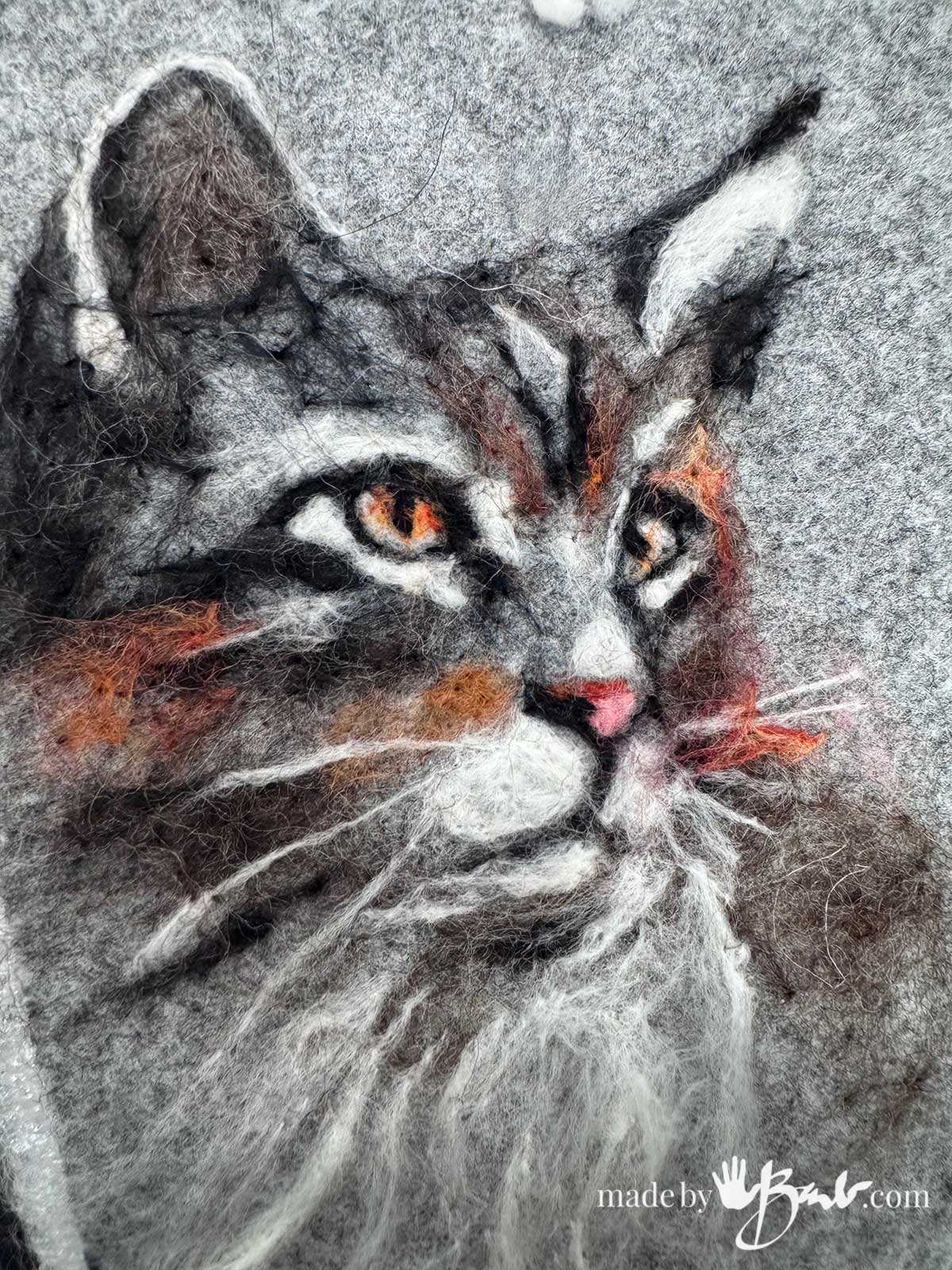
I can start with an idea, gather a few colours, and let the process evolve.
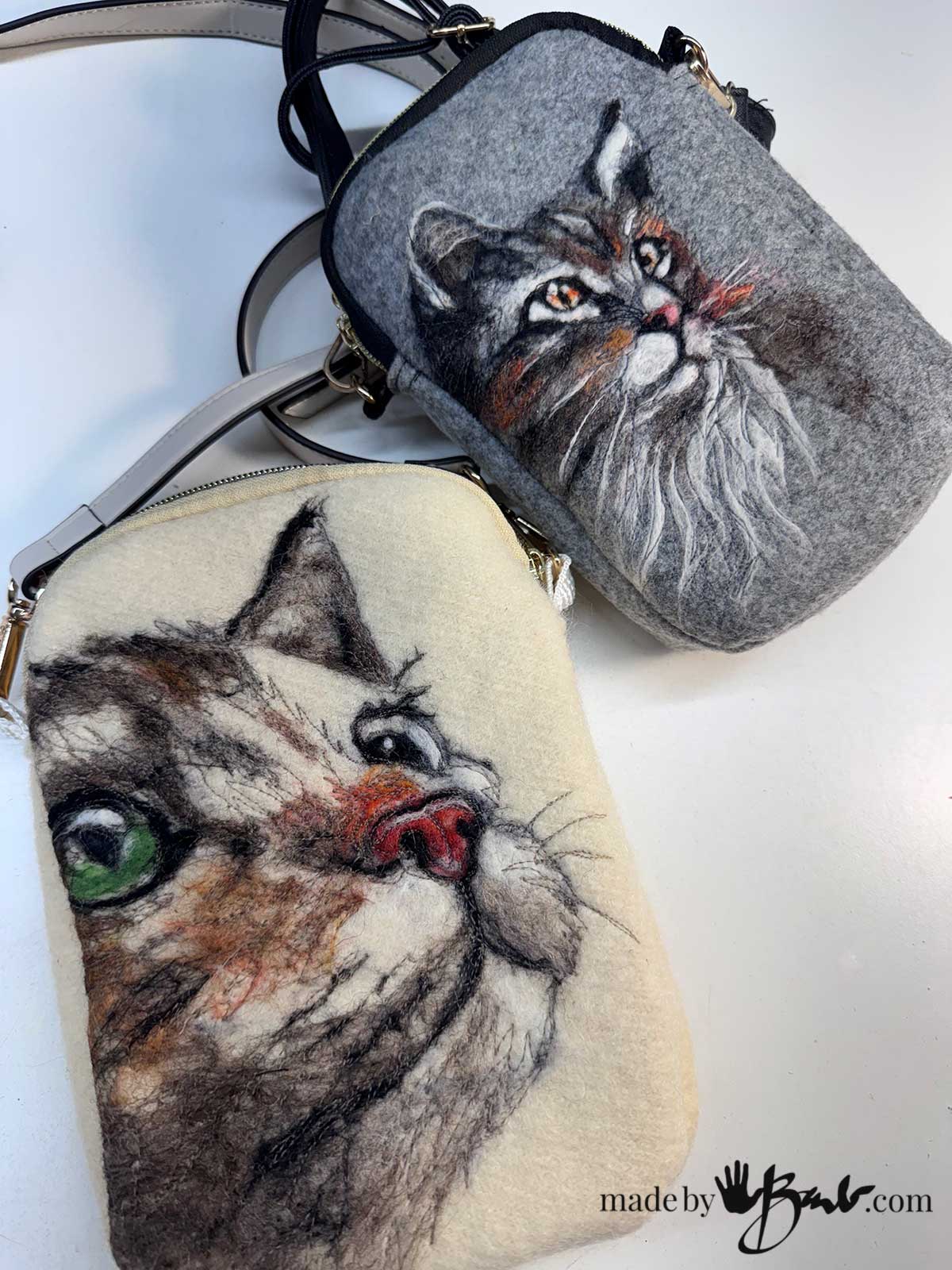
What can you create with needle felting and free-motion sewing?
The possibilities are almost endless. I particularly enjoy creating pictures inspired by nature, animals, plants, and interesting little details that catch my eye. Some ideas to experiment with include:
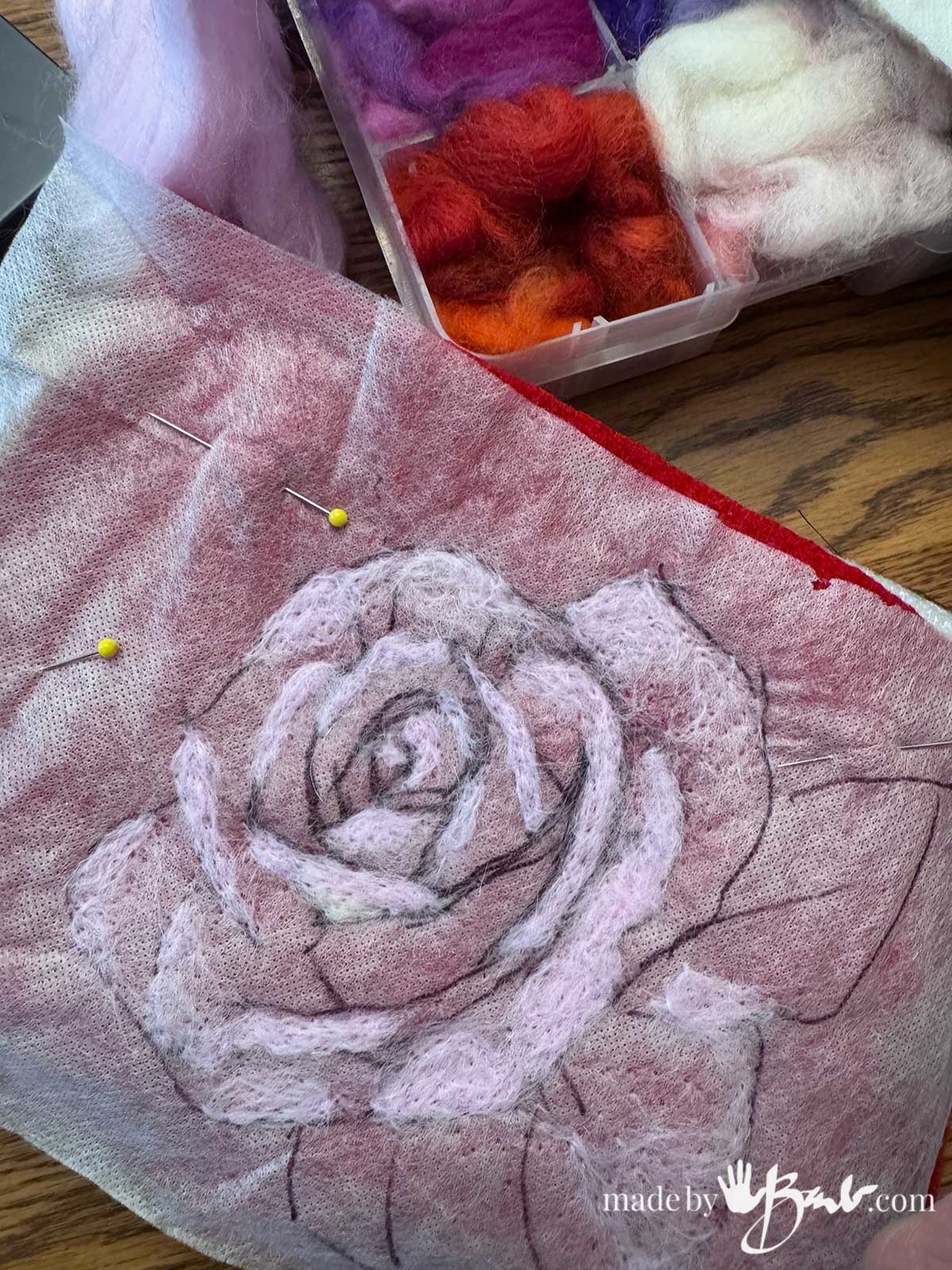
If you are worried about the drawing you can trace the image onto water soluble stabilizer. Work the wool through it and it will dissolve away when done!
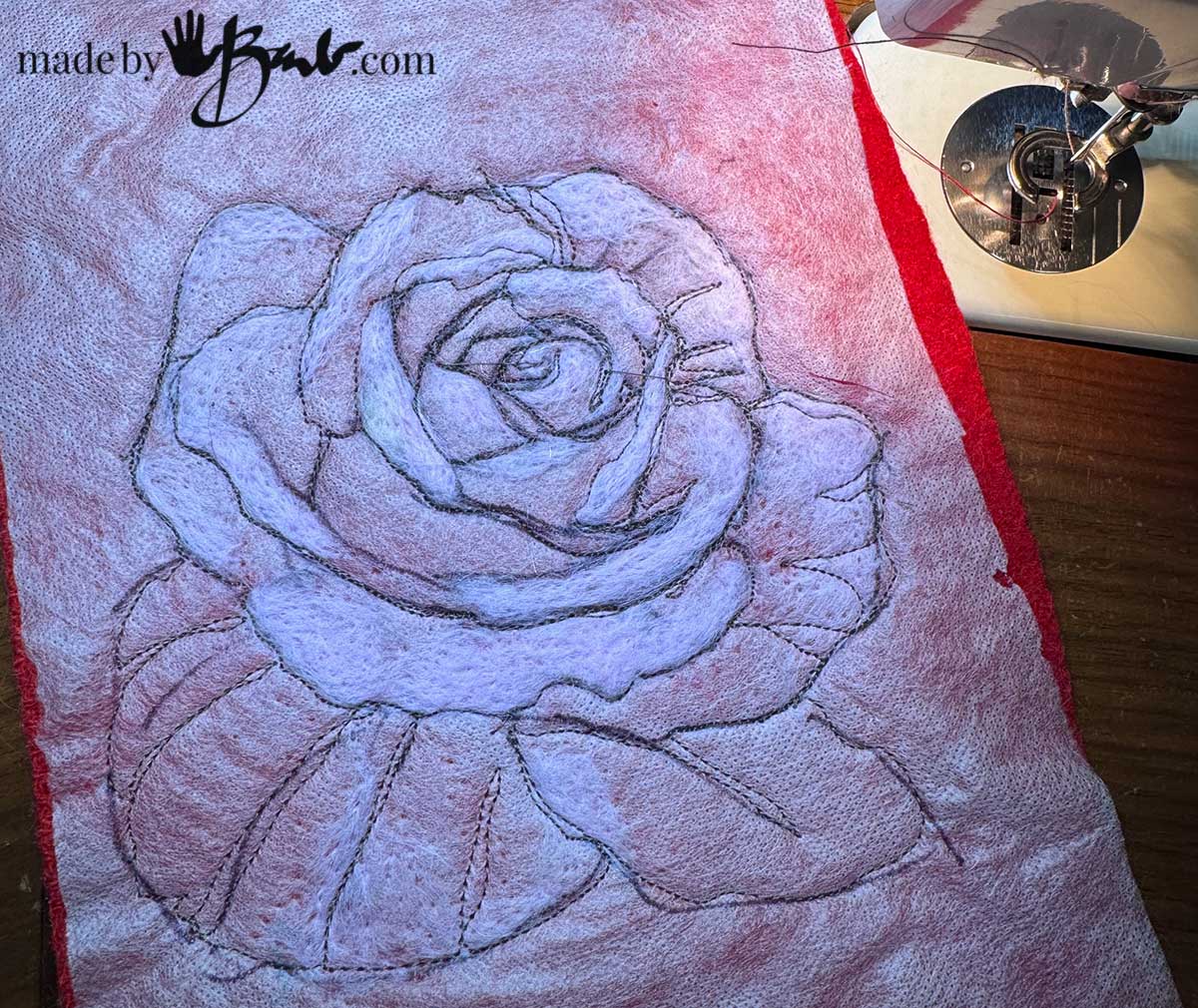
It’s amazing how strong this material is for stitching! ‘And poof, a warm water or even sponge will dissolve it…
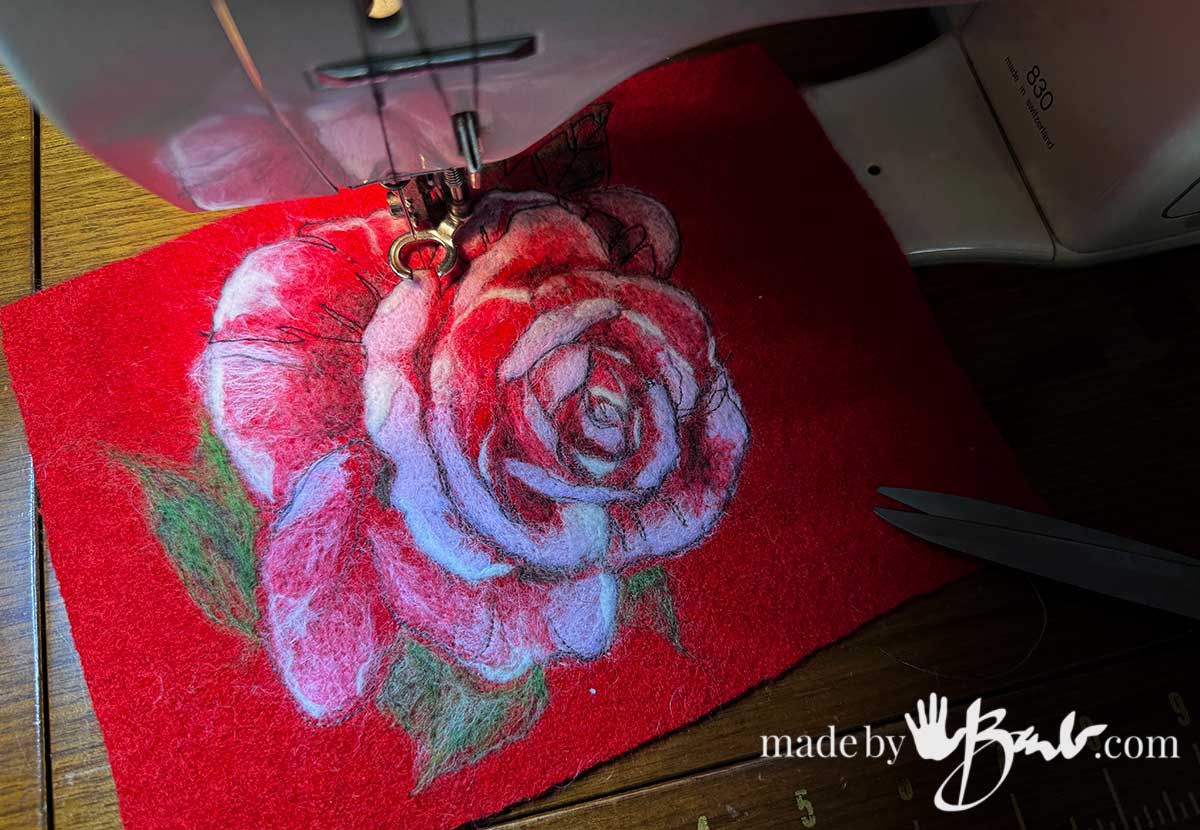
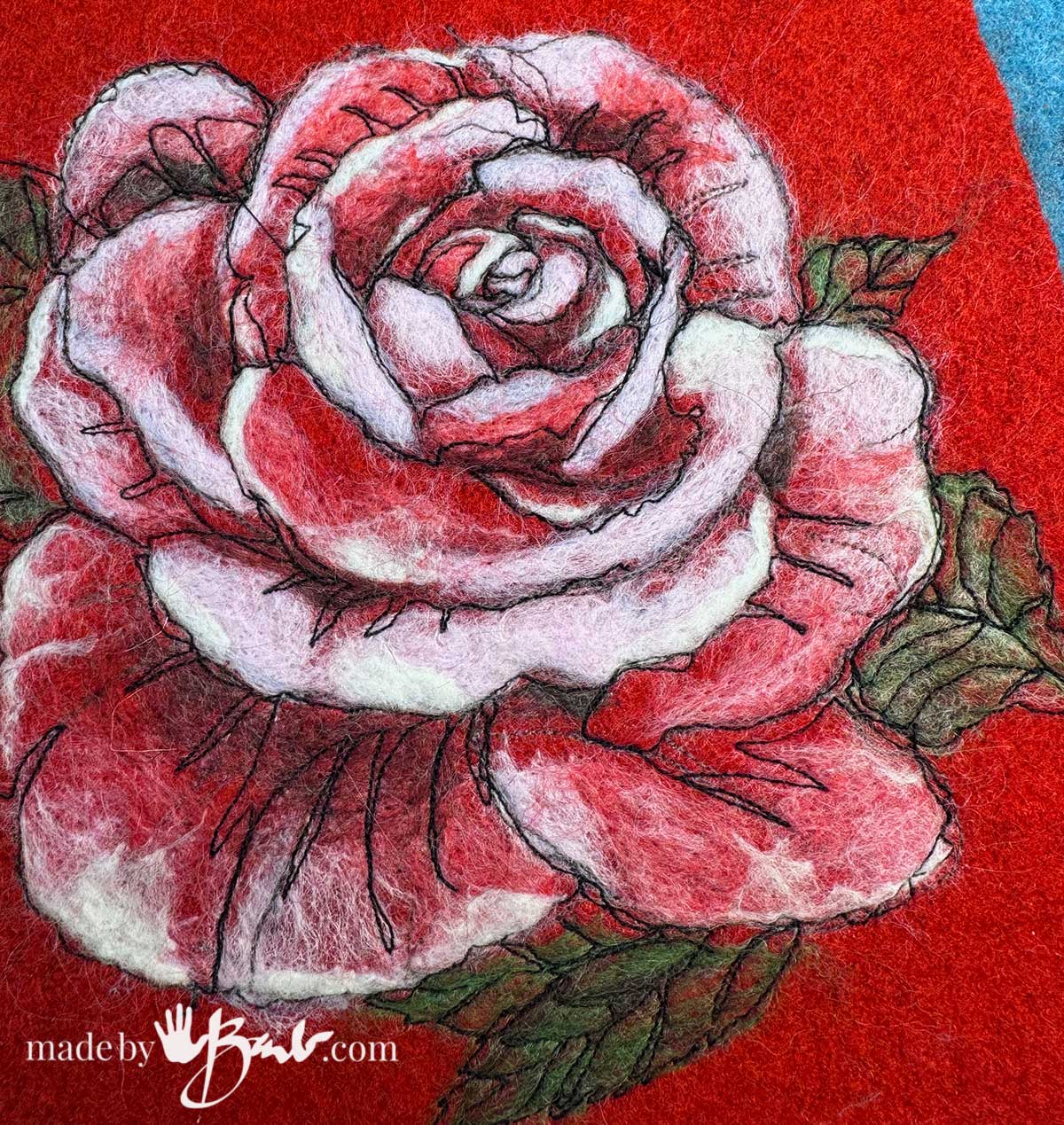
But don’t limit yourself, almost anything can be a subject!
- Animal portraits with stitched fur, whiskers, and eyes.
- Birds with layered wool feathers and fine stitched details.
- Flowers with textured petals and embroidered stems.
- Trees and landscapes with thread-drawn branches and grasses.
- Portraits and illustrations that look like mixed-media sketches.
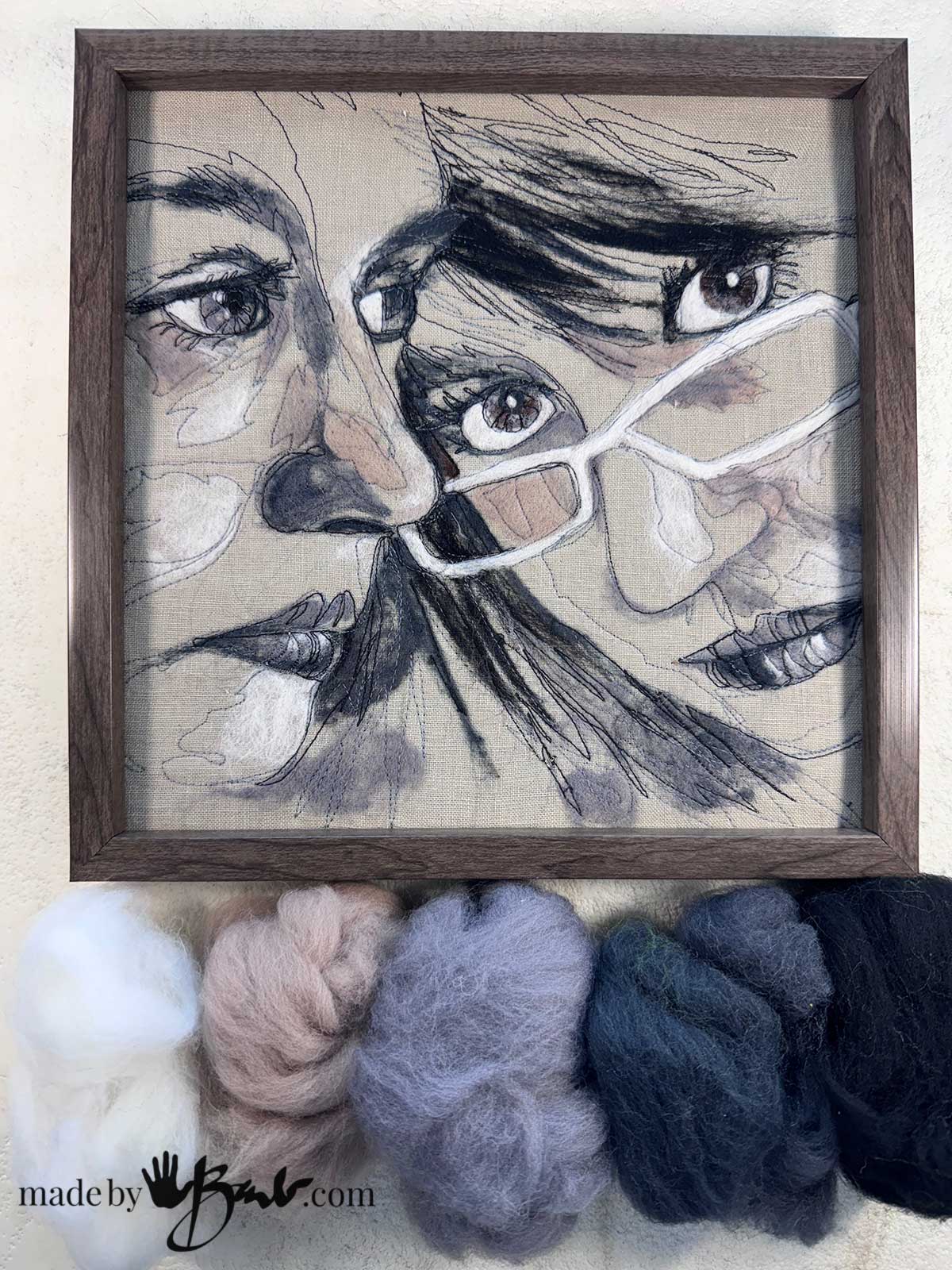
You can make small framed pictures, decorative patches, wall hangings, or even add your artwork to clothing and accessories.
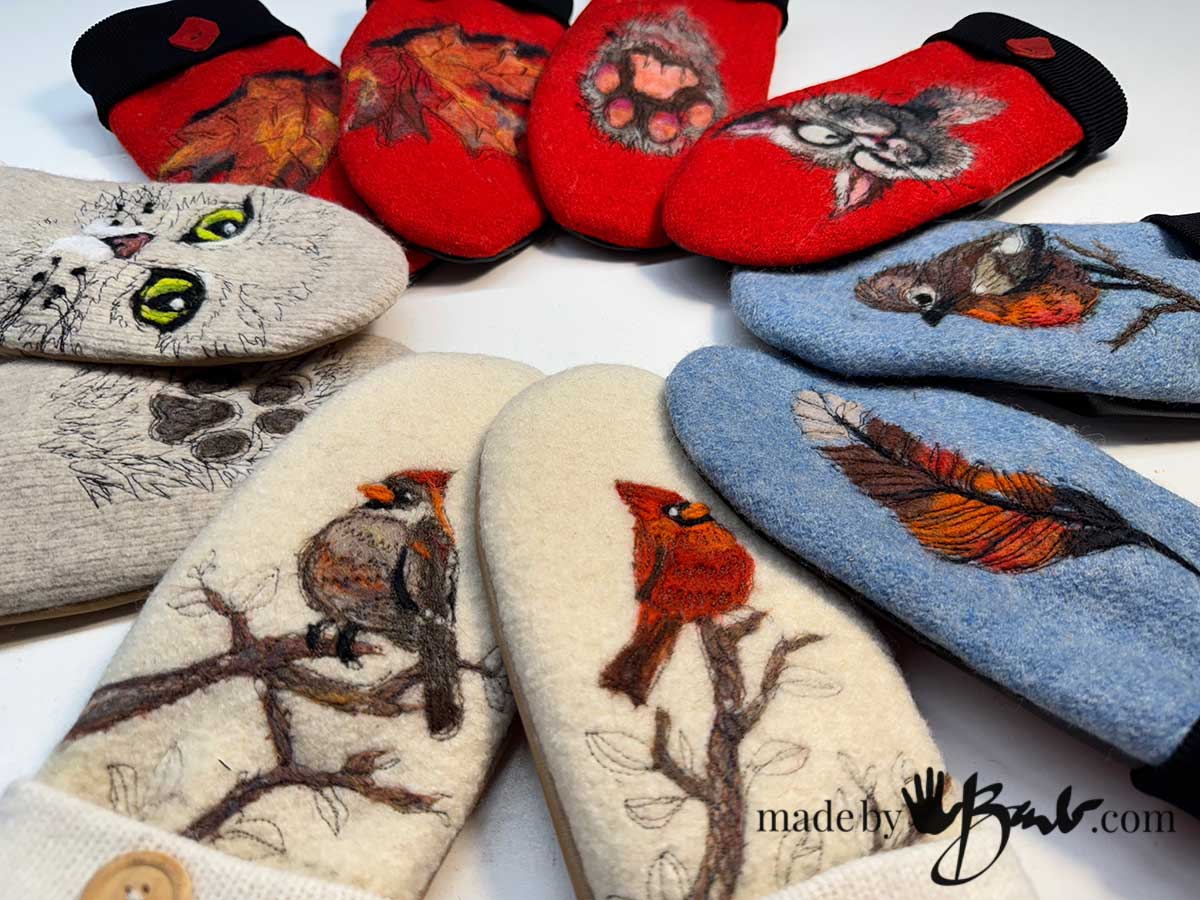
I especially love to make mittens! It is a small amount of felting and sewing, but such impact!
A few tips if you want to try it
If you enjoy drawing and would like to experiment with this technique, here are a few things I’ve learned:
- Start with a simple drawing. You don’t need a complicated pattern. Even a simple outline of a bird, leaf, flower, or animal is a good starting point.
- Build the image with wool first. Think of the needle felting as laying down the colour and basic shapes.
- Don’t worry about every detail. Save some of the finer lines for the sewing machine.
- Use contrasting thread. Sometimes a darker thread will define an area beautifully, while a lighter thread can add delicate highlights.
- Experiment with stitch direction. Just like drawing, the direction of your lines can suggest texture, movement, and form.
- Test your materials. Make sure your fabric is suitable for needle felting and that your wool and backing are stable enough for free-motion stitching.
My favourite part? It’s like drawing without a pencil!
I think that’s why I keep coming back to this combination. I love being able to draw, but I also love working with my hands and experimenting with different materials; being tactile! .
It feels less like following a traditional craft pattern and more like creating a piece of artwork. If you love drawing, but also enjoy playing with wool, fabric, and thread, I really encourage you to give this combination a try. You might discover, as I have, that sometimes the best way to draw is with a needle and thread!
You are so talented, I would love to watch you do this for real…My brain cannot fathom how it’s done…I’m getting ready to retire and looking for things to take up some of my time…I will have to give this a try.